
Back to catalogue
Floribunda / Florist's RoseAlain Meilland; Meilland International, 2005White and cream

Lovely Green

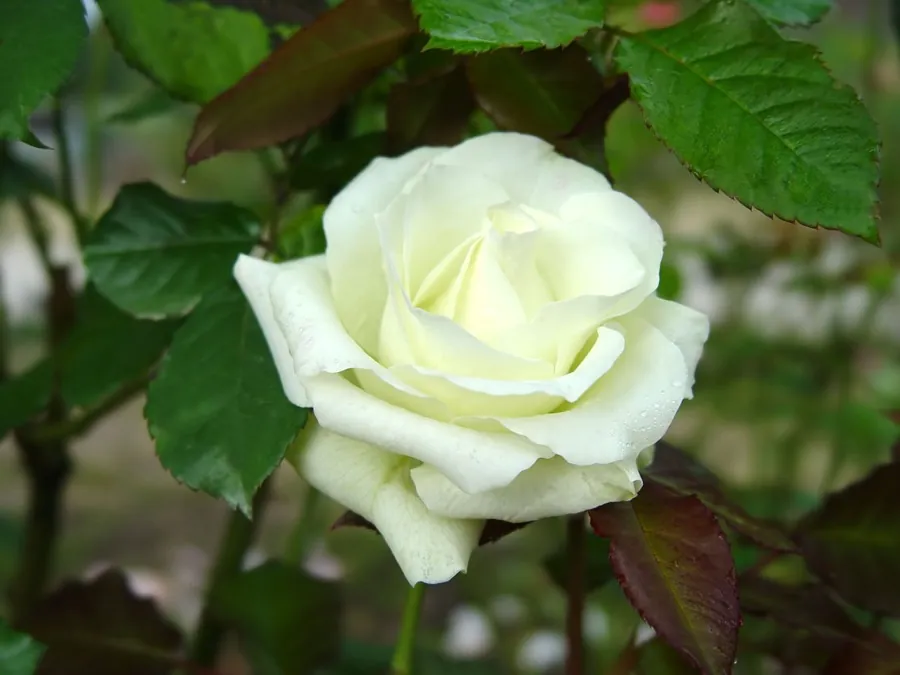
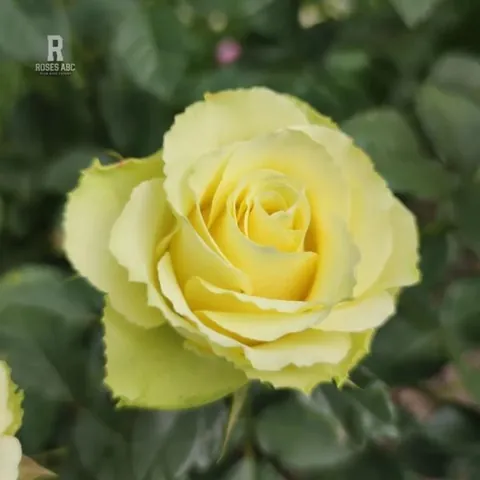
a «breakthrough green» variety for the garden — one of the 3 iconic green roses of the 2000s (alongside Limbo and Super Green); 60–70 petals, very full; creamy white with a pronounced green tint.

Dual use — garden + cut flowers

Variety profile

Flowering

Repeat-flowering, abundant

Legacy

Breakthrough of the 2000s

One of 3 'green' varieties of its era

Winter hardiness

−20 °C

Needs winter protection in the north.

Compare reference temperatures

Plant size

60–80 × 30–40 cm
person 170 cm60–80 cm
Habit
Compact, upright — a typical modern Meilland Floribunda
Dimensions
60–80 × 30–40 cm
Support
No support needed
Shoots
Medium, straight, holding the heavy double flowers well
Branching
Good

Flower

6–7 cm
Bud shape
Round, creamy white with the green tint already visible
Open flower
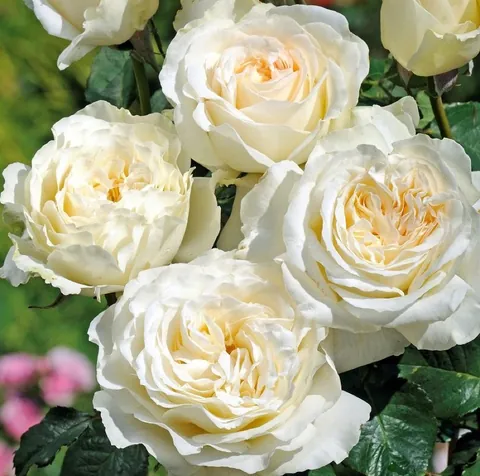
Very full, double cupped — 60–70 petals arranged in a «rosette»
Centre
Tightly packed, creamy white, no visible stamens
Fullness
Very full (41+), 60–70 petals
Flower carriage
In small clusters of 3–5 flowers

Fragrance

No fragrance

Absent — the variety's strength is its colour, not its scent.

Disease resistance

4 out of 5

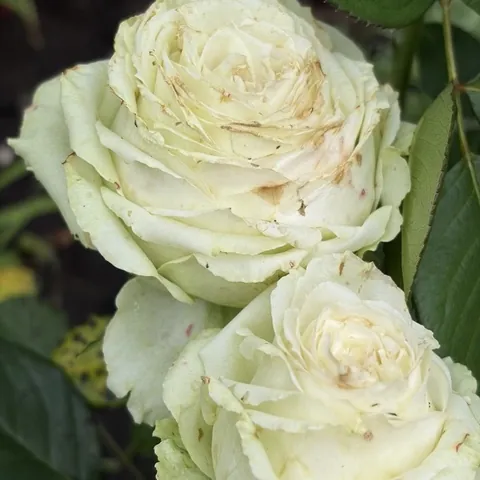
4/5 — «very disease resistant» (as Meilland states); the only drawback: the flowers can «ball» (stick together) in rain because of the dense doubling.

Sun

Full sun

Thorns

Few
thornlessfewmoderatemanyvery many

Few prickles — convenient for cutting and floristry.

Foliage

Dark green, leathery, very healthy.

All characteristics in a table
Group
Floribunda / Florist's Rose
Breeder
Alain Meilland; Meilland International, France, 2005
Bud shape
Round, creamy white with the green tint already visible
Open flower
Very full, double cupped — 60–70 petals arranged in a «rosette»
Centre
Tightly packed, creamy white, no visible stamens
Colour
Creamy white with a pronounced green tint (white–green) — a rare colour in the rose world (chlorophyll in the petals). Opens pale green with a soft pink tint in heat. A 3-stage colour play.
Fullness
Very full (41+), 60–70 petals
Flower carriage
In small clusters of 3–5 flowers
Flowering
Repeat-flowering, abundant
Fragrance
Absent — the variety's strength is its colour, not its scent
Hips
Not documented
Habit
Compact, upright — a typical modern Meilland Floribunda
Branching
Good
Shoots
Medium, straight, holding the heavy double flowers well
Thorns
Few prickles — convenient for cutting and floristry.
Dimensions
60–80 × 30–40 cm
Support
No support needed
Foliage
Dark green, leathery, very healthy
Resistance
4/5 — «very disease resistant» (as Meilland states); the only drawback: the flowers can «ball» (stick together) in rain because of the dense doubling
Variations of the variety
Code MEItiver; parentage not published by Meilland; often wrongly attributed to NIRP or Interplant (as a cut rose) — incorrect, it is Meilland. Not to be confused with 'Lovely Meilland®' (MEIvanae, 2003, a pink landscape rose)

Colour scheme

Creamy white with a pronounced green tint (white–green) — a rare colour in the rose world (chlorophyll in the petals). Opens pale green with a soft pink tint in heat. A 3-stage colour play.

Rose neighbours

Perennials to plant nearby

Neighbouring roses

The 'green-white' family — a rare colour category:

Companion perennials

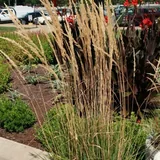
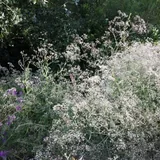
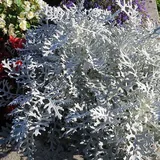
Structural greenery enhances the variety's 'green breakthrough':

ornamental grassessoft lady's mantlegypsophilacineraria

Availability worldwide

One of 3 landmark 'green' varieties of the 2000s:

🇫🇷 France: high · Meilland🇪🇺 Europe: moderate · as a rare colour🇺🇸 USA: moderate🇺🇦 Ukraine: low · via European nurseries

More about the variety

Hips
Not documented
Variations of the variety
Code MEItiver; parentage not published by Meilland; often wrongly attributed to NIRP or Interplant (as a cut rose) — incorrect, it is Meilland. Not to be confused with 'Lovely Meilland®' (MEIvanae, 2003, a pink landscape rose)

How to grow

Where to plant. «green» accent groups, white monochrome beds, the front of mixed borders, containers; ideal as a pair with Limbo — «two greens: a garden Meilland + a cut Kordes»; also for cutting into bouquets.

Climate. To −20 °C — in Ukraine with moderate protection; in the south, no protection needed.

Care. A classic Floribunda — spring pruning; in wet regions plant it in a well-ventilated site, so the flowers do not stick together in rain because of the dense doubling.

About the name

Name. «Lovely Green» — a marketing name: «lovely green», emphasising the rare green tint of the flower. In the rose world a truly green colour is very rare because roses lack anthocyanin pigments in their petals; stable green is achieved through chlorophyll, which usually breaks down.

Breeding. Raised by Alain Meilland at Meilland International (Provence, France); on the market in 2005. Code MEItiver. Parentage not published by Meilland (typical practice); HMF does not list the parents. Meilland launched Lovely Green as a breakthrough — stable green colour in the garden, not only in the greenhouse.

Significance. One of the 3 iconic «green» varieties of the 2000s in the rose world, alongside the cut rose Limbo (Kordes 1999) and Super Green (NIRP). Before this, stable green in roses was considered almost unattainable. It is often wrongly attributed to NIRP or Interplant (as a cut rose) — incorrect, it is Meilland. Not to be confused with 'Lovely Meilland®' (MEIvanae, 2003, a pink landscape rose). No official AARS/ADR/AGM awards — valued purely for its colour breakthrough.

Frequently asked questions about Lovely Green

Does Lovely Green need winter protection?

The cultivar’s reference temperature is −20 °C. Overwintering depends on the conditions.

How many times a season does Lovely Green flower?

Repeat-flowering, abundant.

How big does Lovely Green grow?

60–80 cm tall, 30–40 cm wide.

Which diseases affect Lovely Green?

Overall resistance: 4 out of 5. High; in rain the flowers stick together.

How much sun does Lovely Green need?

Sun; full sun.

What does Lovely Green smell like?

Absent — the variety's strength is its colour, not its scent.

Gardeners' photos and reviews

My climate

Choose a reference temperature to compare with the cultivar’s data. This is not an overwintering forecast or advice on winter protection; consider wind, moisture and the duration of frost.

Regional data are generalised. USDA describes average annual extreme minima, not a forecast; the values in the list are rounded. Check the conditions at your site. More information: Roses in Ukraine's climate.