Roza Book · group overview
Ornamental grasses beside roses: choose the species first
This is not a card for a single plant. It explains how to tell apart feather reed grass, switchgrass, pennisetum, miscanthus and fescue, and how to avoid buying the wrong grass based on a general photo.
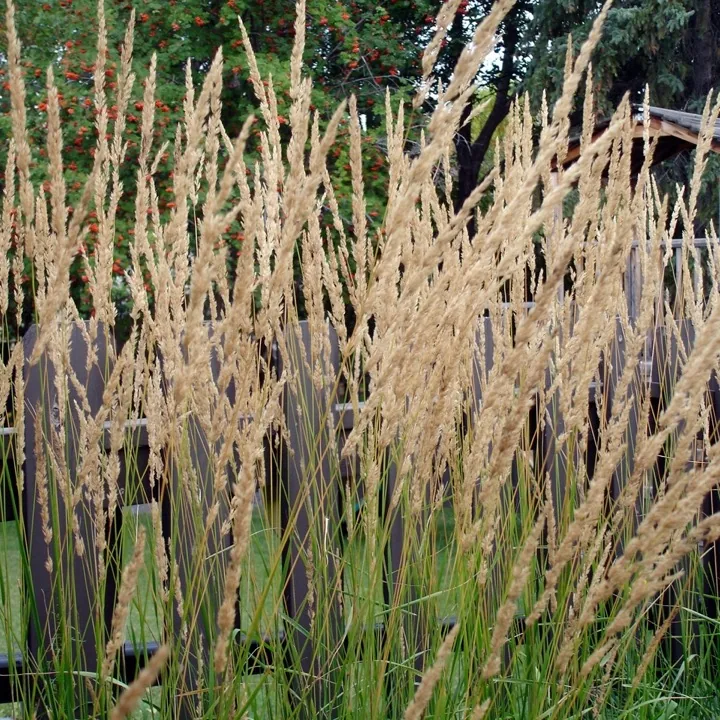
Why add grasses to roses
A well-chosen grass adds movement, airiness and vertical lines, keeps the composition going after the roses have finished flowering, and can hold its structure through winter.
How to choose a grass for a rose bed
First find the full name on the label, and only then compare its needs with the site beside the rose. For a small bed, the most practical choices are non-aggressive clump-forming forms of a suitable size.
Write down the full name
You need the genus, species and variety: for example, Calamagrostis × acutiflora ‘Karl Foerster’, not just ‘grass’.
Check the growth habit
A clump-forming grass stays where it is; a rhizomatous one can quickly creep under the rose and crowd out its neighbours.
Check the mature size
Place tall species at the back or to the side, and low ones at the front edge, without covering the base of the rose.
Compare soil and watering
Do not plant a grass that likes dry soil in the wettest part of the rose garden; excess nitrogen often weakens the stems.
Four different options to choose from
These examples are not interchangeable. They show why the full botanical name is needed before planting.
Feather reed grass ‘Karl Foerster’
Calamagrostis × acutiflora ‘Karl Foerster’ is a tall, narrow, vertical accent for sun; it suits the back of the roses.
Switchgrass
Panicum virgatum is a clump-forming warm-season grass; varieties differ in height and leaf colour.
Pennisetum
Pennisetum / Cenchrus form soft, fountain-like clumps; always check the hardiness of the specific species before buying.
Blue fescue
Festuca glauca is a low blue-grey clump for a sunny, drier front edge.
For Ukraine and Europe
A short care calendar
Before planting
Establish the exact species, variety, mature height, width and type of spread.
During the season
Water until established; after that, base the care on the specific species, not on this overview page.
At the end of winter
Deciduous grasses are usually cut back before new growth; evergreen forms are often only combed through — after checking the name.
Roses whose pairings mention ornamental grasses
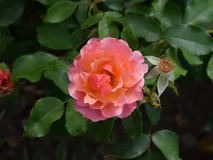
These are examples of compositional role, not a recommendation of one universal species. For each bed, the exact grass must be chosen separately by size, hardiness and growth habit.
Harmony and contrastGrasses work mainly as textural and vertical contrast; the exact colour depends on the species and the season.
Growing conditionsBefore planting, choose a specific non-aggressive species and check its mature size.
Why these varietiesEach pairing repeats a scheme already agreed in the rose card; random varieties were not added.

Source for verification
Basic requirements were checked against material from the Royal Horticultural Society. The practical placement beside a rose is worded separately and is not presented as a universal, strict rule.