

Back to catalogue
Floribunda / shrub roseAlain Meilland; Meilland International, 2009Bicolour

Jean Cocteau

5 awards (Bagatelle 2007; Monza Gold 2008; Lyon 'Grande Rose du Siècle' 2009; Asheville 2014; Adelaide 2015); reverse bicolour, salmon and copper-orange; resistance 5/5; named after the poet Jean Cocteau (1889–1963).

«Rose sans souci» · Label Rouge

Variety profile

Flowering

Repeat-flowering, abundant

Awards

5 awards

Bagatelle 2007 · Monza Gold 2008 · Lyon «Grande Rose du Siècle» 2009 · Asheville 2014 · Adelaide 2015

Winter hardiness

−20 °C

USDA zone 6b–9b. In Ukraine with moderate winter protection.

Compare reference temperatures

Plant size

80–90 × 40–50 cm
person 170 cm80–90 cm
Habit
Compact, upright: a typical modern Meilland
Dimensions
80–90 × 40–50 cm; HMF gives up to 135 × 120 cm in warm climates
Support
No support needed
Shoots
Medium length, sturdy
Branching
Good

Flower

7–8 cm
Bud shape
Round, copper-orange, oval
Open flower
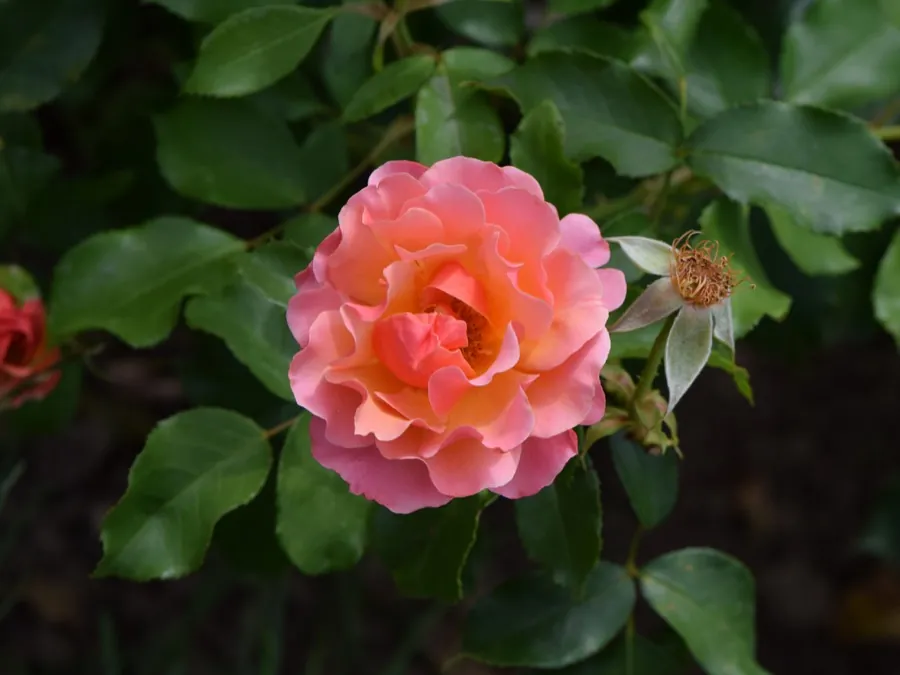
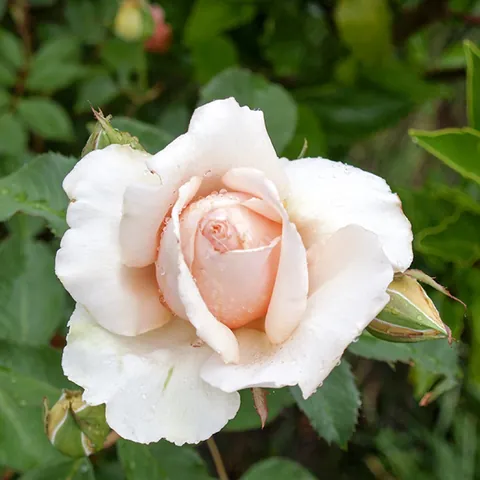
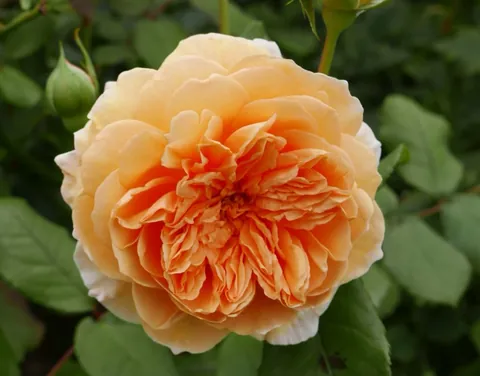
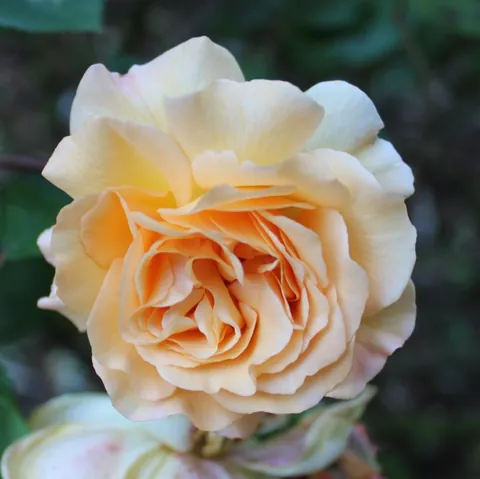
Semi-open cup with visible stamens; petals with a unique reverse bicolour: the inside is lighter, the outside darker
Centre
Visible, with a tuft of yellow stamens
Fullness
Semi-double, 25–27 petals
Flower carriage
In small clusters of 3–5 flowers

Fragrance

Faint

Faint, without pronounced notes; the variety's main strength lies not in scent but in its colour and health.

Disease resistance

5 out of 5

5/5: Label Rouge in France, the 'Rose sans souci' concept (a rose without worries).

Sun

Full sun

The colour is richer in warmth.

Thorns

Few
thornlessfewmoderatemanyvery many

Few prickles: convenient for formal sites.

Foliage

Dark green, leathery, very healthy.

Other names

Charleston, Tequila® Supreme, Jodi Lee
All characteristics in a table
Group
Floribunda / shrub rose
Breeder
Alain Meilland; Meilland International, France, 2009
Bud shape
Round, copper-orange, oval
Open flower
Semi-open cup with visible stamens; petals with a unique reverse bicolour: the inside is lighter, the outside darker
Centre
Visible, with a tuft of yellow stamens
Colour
Reverse bicolour: the inner petal surface is light orange-pink (salmon/ochre); the outer surface is darker copper-orange; it fades to a lighter tone with time. A unique terracotta-ochre palette, rare among modern floribundas.
Fullness
Semi-double, 25–27 petals
Flower carriage
In small clusters of 3–5 flowers
Flowering
Repeat-flowering, abundant
Fragrance
Faint, without pronounced notes; the variety's main strength lies not in scent but in its colour and health
Hips
Not documented
Habit
Compact, upright: a typical modern Meilland
Branching
Good
Shoots
Medium length, sturdy
Thorns
Few prickles: convenient for formal sites.
Dimensions
80–90 × 40–50 cm; HMF gives up to 135 × 120 cm in warm climates
Support
No support needed
Foliage
Dark green, leathery, very healthy
Resistance
5/5: Label Rouge in France, the 'Rose sans souci' concept (a rose without worries)
Variations of the variety
Code MEIkokan; US PP 21,271 (7.09.2010); parentage Singin' in the Rain × (La Sevillana × Centenaire de Lourdes); synonyms Charleston® (Germany), Tequila® Supreme™ (USA), Jodi Lee™

Colour scheme

Reverse bicolour: the inner petal surface is light orange-pink (salmon/ochre); the outer surface is darker copper-orange; it fades to a lighter tone with time. A unique terracotta-ochre palette, rare among modern floribundas.

Rose neighbours

Perennials to plant nearby

Rose neighbours

The apricot-terracotta family — warm-toned neighbours will set off the reverse bicolour:

Companion perennials

Greyish-purple and silver accents bring out the warm tones:

lavenderByzantine stachysechinacea 'Sunrise'ornamental grasses

Availability worldwide

A modern Meilland variety sold under several trade names:

🇫🇷 France: high · official Meilland🇩🇪 Germany: high · sold as Charleston🇺🇸 USA: high · sold as Tequila Supreme🇺🇦 Ukraine: moderate · via European nurseries

More about the variety

Hips
Not documented
Variations of the variety
Code MEIkokan; US PP 21,271 (7.09.2010); parentage Singin' in the Rain × (La Sevillana × Centenaire de Lourdes); synonyms Charleston® (Germany), Tequila® Supreme™ (USA), Jodi Lee™

How to grow

Where to plant. Formal borders, mono-terracotta groups, containers on a terrace, low hedges; one of the rare floribundas in a terracotta-ochre palette, pairing well with Just Joey as a 'duo of two warm apricot tones'.

Climate. Down to −20 °C. In Ukraine: the south and centre without protection, the north with moderate protection.

Care. Minimal: spring pruning; few worries thanks to high disease resistance (5/5, Label Rouge).

About the name

Name. The rose is named after Jean Cocteau (1889–1963), the French poet, playwright, painter and film director, a key figure of the French avant-garde of the twentieth century. Author of 'Les Enfants Terribles', 'La Belle et la Bête' and 'Orphée'. He was friends with Picasso, Modigliani and Stravinsky: a man of his era. Meilland chose the warm terracotta-ochre tone as the 'artist's palette of the twentieth century'.

Breeding. Bred by Alain Meilland at Meilland International (Provence, France), 2006-2007; market launch in France 2009; Germany and the USA 2011. Code MEIkokan. US Patent PP 21,271 (7 September 2010). Parentage: Singin' in the Rain × (La Sevillana × Centenaire de Lourdes).

Significance. 5 international awards: Bagatelle Paris Certificate (2007), Monza Gold Medal + Rose of the Year (2008), Lyon 'Grande Rose du Siècle' (2009: the 'Great Rose of the Century'), Asheville Best Shrub Rose (2014), Adelaide Best Shrub Rose + Silver (2015). In France it carries the Label Rouge certificate (high garden quality) and the concept 'Rose sans souci': 'a rose without worries'. It is often wrongly attributed to Delbard because of their 'Painters Collection' featuring Cocteau; this is Meilland, not Delbard. Not to be confused with the historic variety 'Charleston' (Meilland 1963, MEIridge, yellow-red Floribunda): that is a different rose. The modern Charleston® = Jean Cocteau = MEIkokan.

Frequently asked questions about Jean Cocteau

Does Jean Cocteau need winter protection?

The cultivar’s reference temperature is −20 °C (USDA zone 6b–9b). Overwintering depends on the conditions. In Ukraine with moderate winter protection.

How many times a season does Jean Cocteau flower?

Repeat-flowering, abundant.

How big does Jean Cocteau grow?

80–90 cm tall, 40–50 cm wide.

Which diseases affect Jean Cocteau?

Overall resistance: 5 out of 5. Label Rouge; 'Rose sans souci': a rose without worries.

How much sun does Jean Cocteau need?

Sun; full sun; the colour is richer in warmth.

What does Jean Cocteau smell like?

Faint, without pronounced notes; the variety's main strength lies not in scent but in its colour and health.

Gardeners' photos and reviews

My climate

Choose a reference temperature to compare with the cultivar’s data. This is not an overwintering forecast or advice on winter protection; consider wind, moisture and the duration of frost.

Regional data are generalised. USDA describes average annual extreme minima, not a forecast; the values in the list are rounded. Check the conditions at your site. More information: Roses in Ukraine's climate.