

Back to catalogue
Shrub / Bodendecker (single); compact, insect-friendly groundcover roseChristian Evers; Rosen TantauRed

Stadt Rom

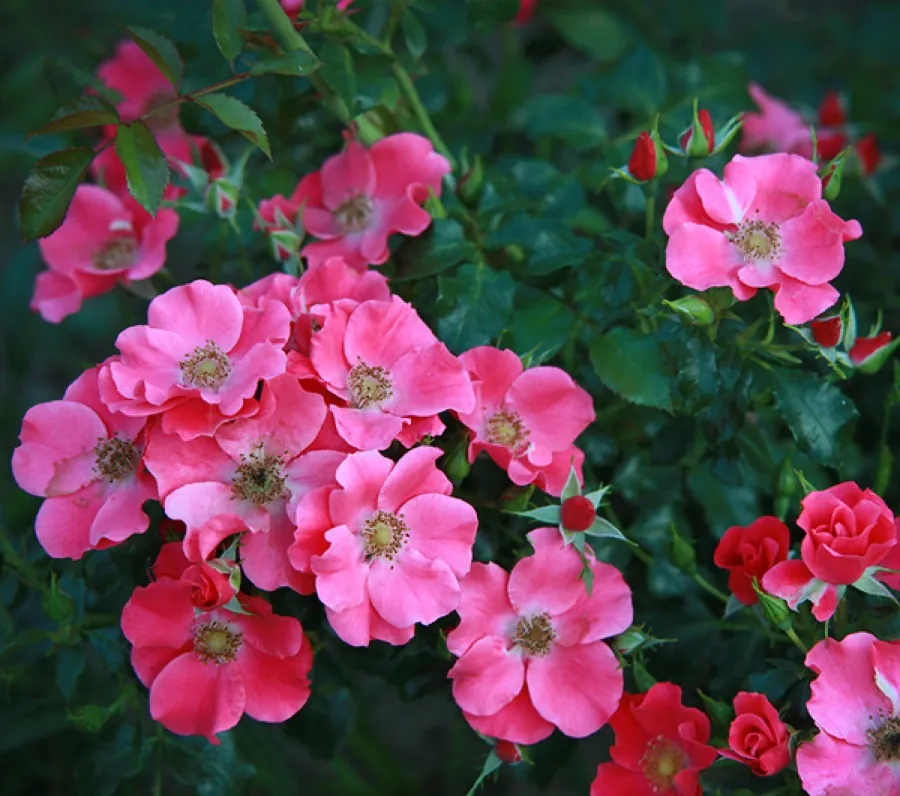
Carmine-pink single flower with golden stamens — one of the most decorated roses of the 2000s; ADR 2007 + 6 Gold Medals: Den Haag 2006, Geneva 2006, Paris 2007, Lyon 2008, Baden 2009, Monaco 2012 + Golden Rose of The Hague; insect-friendly — the simple open flower attracts bees; named after the city of Rome.

ADR 2007 + 6 GOLD MEDALS + Golden Rose of The Hague

Variety profile

Flowering

Repeat flowering

Very generous repeat flowering from June to October — hundreds of flowers on the bush at once. Months are approximate, for the climate of Ukraine.

Legacy

ADR 2007 + 6 Gold

Golden Rose of Hague

Winter hardiness

−23 °C

USDA zone 6b-9b. Central Ukraine, no winter protection.

Compare reference temperatures

Plant size

60–80 × 60 cm
person 170 cm60–80 cm
Habit
Compact and dense — a typical modern Tantau Bodendecker
Dimensions
60–80 cm tall × 60 cm wide — a compact, dense bush for small beds, borders and urban greening
Support
Not needed — self-supporting
Shoots
Flexible, spreading well
Branching
Densely branched

Flower

≈ 6.4 cm

4-8 petals.

Bud shape
Small, round, carmine
Open flower
Single — 4–8 petals: ~6.4 cm. Not a double rose — important for identification
Centre
Visible golden-yellow stamens against a bright pink background — the main decorative feature and the reason for its 'insect-friendly' status
Fullness
4–8 petals (single) — a rarity among award-winning varieties (double roses are usually the ones awarded)
Flower carriage
In dense clusters — a solid pink carpet

Fragrance

None

None — typical of modern landscape insect-friendly varieties (the stamens are the priority for bees).

Disease resistance

5 out of 5
Black spotresistantPowdery mildewresistantRustresistant

Very high, 5/5, against black spot, powdery mildew and rust — the key reason for the 2007 ADR-win. USDA 6b–9b — one of the hardiest modern Tantau roses; in central Ukraine, no winter protection.

Sun

Sun and shade

Tolerates partial shade.

Thorns

Few
thornlessfewmoderatemanyvery many

Few prickles — typical of modern Tantau-groundcover roses.

Foliage

Dark green, glossy, healthy.

Other names

Città di Roma, Xylon, Lilliana
All characteristics in a table
Group
Shrub / Bodendecker (single); compact, insect-friendly groundcover rose
Breeder
Christian Evers; Rosen Tantau, Germany
Bud shape
Small, round, carmine
Open flower
Single — 4–8 petals: ~6.4 cm. Not a double rose — important for identification
Centre
Visible golden-yellow stamens against a bright pink background — the main decorative feature and the reason for its 'insect-friendly' status
Colour
Bright carmine-pink with golden stamens — one of the most vivid pink single roses in its class. Some sources describe it as 'salmon-pink'
Fullness
4–8 petals (single) — a rarity among award-winning varieties (double roses are usually the ones awarded)
Flower carriage
In dense clusters — a solid pink carpet
Flowering
Very generous repeat flowering from June to October — hundreds of flowers on the bush at once
Fragrance
None — typical of modern landscape insect-friendly varieties (the stamens are the priority for bees)
Hips
Not documented — energy goes into repeat flowering
Habit
Compact and dense — a typical modern Tantau Bodendecker
Branching
Densely branched
Shoots
Flexible, spreading well
Thorns
Few prickles — typical of modern Tantau-groundcover roses.
Dimensions
60–80 cm tall × 60 cm wide — a compact, dense bush for small beds, borders and urban greening
Support
Not needed — self-supporting
Foliage
Dark green, glossy, healthy
Resistance
Very high, 5/5, against black spot, powdery mildew and rust — the key reason for the 2007 ADR-win. USDA 6b–9b — one of the hardiest modern Tantau roses; in central Ukraine, no winter protection
Variations of the variety
Code TAN04999 (also RT 00-999). Bred 2000, commercial introduction 2007 through Rosen Tantau. Breeder: Christian Evers. Parentage: Footloose™ × Royal Bassino®. Synonyms in different countries: Città di Roma (Italian), Xylon, Lilliana. The correct name is 'Stadt Rom', without a hyphen and without 'Rome'

Colour scheme

Bright carmine-pink with golden stamens — one of the most vivid pink single roses in its class. Some sources describe it as 'salmon-pink'

Rose neighbours

Perennials to plant nearby

Neighbouring roses

A family of modern landscape roses — creates a multicoloured carpet:

Perennial companions

All are good for pollinators, and together they form a bee-friendly planting:

lavendercatmint (Nepeta)ornamental grassessedum

Availability worldwide

⭐⭐ One of the most decorated ground-cover roses of the 2000s — a standard in Europe:

  • 🇩🇪 Germany: very high · home country
  • 🇮🇹 Italy: high · like Città di Roma
  • 🇪🇺 Europe: very high · parks and avenues
  • 🇺🇦 Ukraine: moderate · via landscape design firms

More about the variety

Hips
Not documented — energy goes into repeat flowering
Variations of the variety
Code TAN04999 (also RT 00-999). Bred 2000, commercial introduction 2007 through Rosen Tantau. Breeder: Christian Evers. Parentage: Footloose™ × Royal Bassino®. Synonyms in different countries: Città di Roma (Italian), Xylon, Lilliana. The correct name is 'Stadt Rom', without a hyphen and without 'Rome'

How to grow

Where to plant. In drifts in urban greening (its typical use); along paths as a bright edging; in small beds; on slopes to hold the soil; in bee-friendly gardens — the simple open flower attracts pollinators.

Climate. Central Ukraine without winter protection (USDA 6b–9b — one of the hardiest modern Tantau roses); tolerates summer heat well; tolerates partial shade — a rarity for roses.

Care. Minimal — sun or light shade; prune once every 2–3 years with secateurs; feed 1–2× per season; no disease treatments needed thanks to its 5/5 resistance; do not plant too densely.

About the name

Name. 'Stadt Rom' = 'City of Rome' (German). Named after the capital of Italy. Tantau traditionally names varieties after European cities (Stadt Eltville, Stadt Wiesbaden, Stadt Oberkochen). The synonym 'Città di Roma' is the Italian version of the same name.

Breeding. Bred by Christian Evers at Rosen Tantau (Uetersen, Germany). Code TAN04999 (RT 00-999). Bred 2000, commercial introduction 2007. Parentage: 'Footloose'™ × 'Royal Bassino'® — both parents belong to the family of modern healthy Tantau-varieties.

Significance. One of the most decorated modern roses of the 2000s: ADR 2007 + 6 gold medals in 6 countries: Den Haag 2006, Geneva 2006, Paris 2007, Lyon 2008, Baden 2009, Monaco 2012 + Golden Rose of The Hague. A rare achievement for a single-flowered landscape rose — usually double HTs and shrub roses win these awards. Exceptional disease resistance, 5/5, is the key reason for the ADR-win. Bee-friendly: the simple (4–8 petals) open flower with visible stamens — Tantau explicitly positions it as insect-friendly, in line with the European trend of planting for pollinators. It tolerates partial shade — a rarity among roses (like Sally Holmes). One of the early Bee-friendly roses of its era, long before this direction became popular.

Frequently asked questions about Stadt Rom

Does Stadt Rom need winter protection?

The cultivar’s reference temperature is −23 °C (USDA zone 6b−9b). Overwintering depends on the conditions. Central Ukraine, no winter protection.

How many times a season does Stadt Rom flower?

Very generous repeat flowering from June to October — hundreds of flowers on the bush at once.

How big does Stadt Rom grow?

60–80 cm tall, about 60 cm wide.

Which diseases affect Stadt Rom?

Overall resistance: 5 out of 5. Very high — the key reason for the ADR-win.

How much sun does Stadt Rom need?

Sun and shade; tolerates partial shade.

What does Stadt Rom smell like?

None — typical of modern landscape insect-friendly varieties (the stamens are the priority for bees).

Gardeners' photos and reviews

My climate

Choose a reference temperature to compare with the cultivar’s data. This is not an overwintering forecast or advice on winter protection; consider wind, moisture and the duration of frost.

Regional data are generalised. USDA describes average annual extreme minima, not a forecast; the values in the list are rounded. Check the conditions at your site. More information: Roses in Ukraine's climate.