


Back to catalogue
Hybrid TeaGerrit De Ruiter, 1965Apricot and orange

Diorama

De Ruiter Innovations; parentage Peace × Beauté; a pastel 'successor' to the legendary Peace.

A classic HT from the 'post-Peace' era

Variety profile

Flowering

Repeat-flowering, in waves all season

Awards

De Ruiter

A 1960s classic of Dutch breeding

Winter hardiness

−20 °C

USDA zone 6b–9b. In Ukraine with winter protection.

Compare reference temperatures

Plant size

90–130 × 80–120 cm
person 170 cm90–130 cm
Habit
Upright, classic HT
Dimensions
90–130 cm tall × 80–120 cm wide
Support
Not needed
Shoots
Sturdy, straight; they carry the large flowers well
Branching
Moderate

Flower

≈ 11.5 cm

Full, ~27 petals (range 25–30) petals.

Bud shape
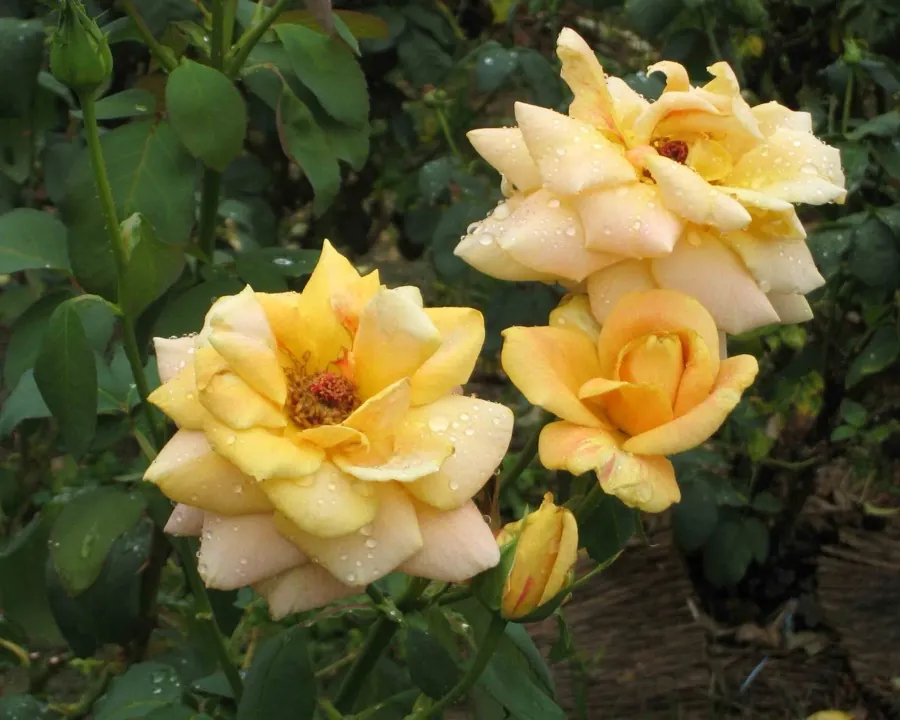
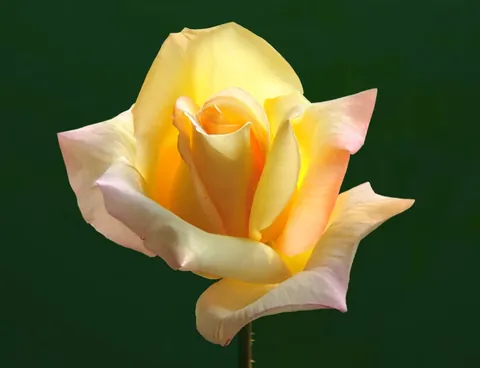
Elongated, high-centred, apricot-yellow
Open flower
Large, very double, high-centred (classic HT); about 11.5 cm across
Centre
Brighter apricot-orange petals
Fullness
Full, ~27 petals (range 25–30)
Flower carriage
Mostly large flowers borne singly on the stem

Fragrance

Moderate

Moderate, with spicy notes.

Disease resistance

3 out of 5
Black spotsusceptible

Susceptible to black spot, a widely known weakness of the variety; needs regular preventive fungicide treatments.

Sun

6 hours

At least 6 hours of direct sun for abundant flowering.

Thorns

Moderate
thornlessfewmoderatemanyvery many

Moderate number; typical for HT.

Foliage

Dark green, typical HT.

All characteristics in a table
Group
Hybrid Tea
Breeder
Gerrit De Ruiter, 1965
Bud shape
Elongated, high-centred, apricot-yellow
Open flower
Large, very double, high-centred (classic HT); about 11.5 cm across
Centre
Brighter apricot-orange petals
Colour
Outer petals soft buttery yellow, inner petals brighter apricot-orange with a peachy tint; a rare warm palette for the 1960s
Fullness
Full, ~27 petals (range 25–30)
Flower carriage
Mostly large flowers borne singly on the stem
Flowering
Repeat-flowering, in waves all season
Fragrance
Moderate, with spicy notes
Hips
Formed rarely; cut off together with spent buds
Habit
Upright, classic HT
Branching
Moderate
Shoots
Sturdy, straight; they carry the large flowers well
Thorns
Moderate number; typical for HT.
Dimensions
90–130 cm tall × 80–120 cm wide
Support
Not needed
Foliage
Dark green, typical HT
Resistance
Susceptible to black spot, a widely known weakness of the variety; needs regular preventive fungicide treatments
Variations of the variety
No official sports

Colour scheme

Outer petals soft buttery yellow, inner petals brighter apricot-orange with a peachy tint; a rare warm palette for the 1960s

Rose neighbours

Perennials to plant nearby

Neighbouring roses

Warm apricot-orange palette + parent variety 'Peace':

Perennial companions

Blue and purple — a classic cool contrast to the warm yellow:

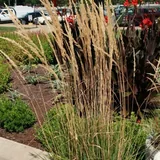
catmint 'Walker's Low'sage 'Caradonna'lavender 'Hidcote'feather grass (Stipa tenuissima)

Availability worldwide

A niche legacy variety, rarely sold today:

🇪🇺 Europe: PharmaRosa · small Dutch growers🇺🇸 USA: almost none · Friends of Vintage Roses🇯🇵 Asia: practically absent🇺🇦 Ukraine: not found in catalogues

More about the variety

Hips
Formed rarely; cut off together with spent buds
Variations of the variety
No official sports

How to grow

Where to plant. Classic showy borders in the style of the 1960s, roses for cutting; because of its weak resistance to black spot, plant it in an airy, sunny spot.

Climate. Down to −20 °C; in Ukraine with winter protection in the northern and central regions.

Care. A classic HT; needs regular preventive treatments against black spot, formative pruning in spring and removal of spent flowers.

About the name

Name. 'Diorama', from the Greek 'through + to look': the name of a nineteenth-century optical-theatre technique for creating three-dimensional, realistic scenes. It reflects the 'lavish', multi-layered flowering of the variety.

Breeding. Raised by Gerrit De Ruiter in the Netherlands, before 1965; introduced in 1968 (Australia, through Ross Roses). Parentage: Peace (Meilland, 1935) × Beauté (Mallerin, 1953). It has no modern patent code: this is an old variety, from before the system of breeding codes.

Significance. One of the apricot-yellow Hybrid Teas of the 'post-Peace' era, created as a pastel sister and successor to the famous parent rose. Valued in Australia in the 1970s for its warm colour range, which was rare at the time. Today it is a rare legacy variety, kept mainly in heritage collections.

Frequently asked questions about Diorama

Does Diorama need winter protection?

The cultivar’s reference temperature is −20 °C (USDA zone 6b–9b). Overwintering depends on the conditions. In Ukraine with winter protection.

How many times a season does Diorama flower?

Repeat-flowering, in waves all season.

How big does Diorama grow?

90–130 cm tall, 80–120 cm wide.

Which diseases affect Diorama?

Overall resistance: 3 out of 5. Susceptible to black spot, a weak point of the variety; needs preventive treatment.

How much sun does Diorama need?

Sun; at least 6 hours of direct sun for abundant flowering.

What does Diorama smell like?

Moderate, with spicy notes.

Gardeners' photos and reviews

My climate

Choose a reference temperature to compare with the cultivar’s data. This is not an overwintering forecast or advice on winter protection; consider wind, moisture and the duration of frost.

Regional data are generalised. USDA describes average annual extreme minima, not a forecast; the values in the list are rounded. Check the conditions at your site. More information: Roses in Ukraine's climate.