Roza Book · companion card
Perovskia beside roses
Practical compatibility, planting, care and climate limits, without exaggerated promises.
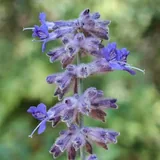
Why it makes a good neighbour
Silvery stems and a haze of blue flowers add light and air, especially beside white, pink and dark red roses.
How to plant it beside a rose
Perovskia suits the drier, sunny edge of a rose garden. In rich, moist soil it may flop apart.
Give it a separate, drier zone
Do not direct all the watering meant for roses onto it.
Plant it in full sun
Shade makes the shoots weak.
Do not overfeed
Moderate soil gives a more compact shape.
Leave the stems over winter
They protect the base until spring pruning.
For Ukraine and Europe
Short care calendar
Spring
When new shoots appear, cut the old stems back to a low framework of 5–10 cm.
Summer
Water only during prolonged drought, once it has rooted.
Autumn and winter
Do not cut back low or cover with wet organic mulch.
Roses in Roza Book's agreed pairings
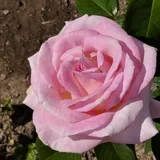
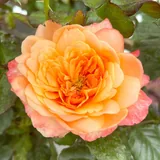
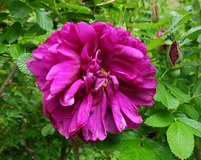
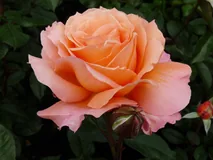
For Perovskia we show 4 varieties where this companion is already part of an agreed pairing. The caption repeats the actual palette from the rose card.
Harmony and contrastThe selection includes both related colour transitions and sharper colour contrast.
Growing conditionsBasic conditions: full sun. Leave room for air circulation, and set the final spacing according to the mature size of the plants.
Why these varietiesEach pair repeats a scheme already agreed in the rose card; random varieties were not added.
Source for verification
Basic requirements were checked against materials from the Royal Horticultural Society. The practical placement beside a rose is worded separately and is not presented as a universal, strict rule.