


Back to catalogue
Rugosa Hybrid; Old Garden Rose; historic classic from 1901Cochet-Cochet, 1901Red

Roseraie de l'Haÿ

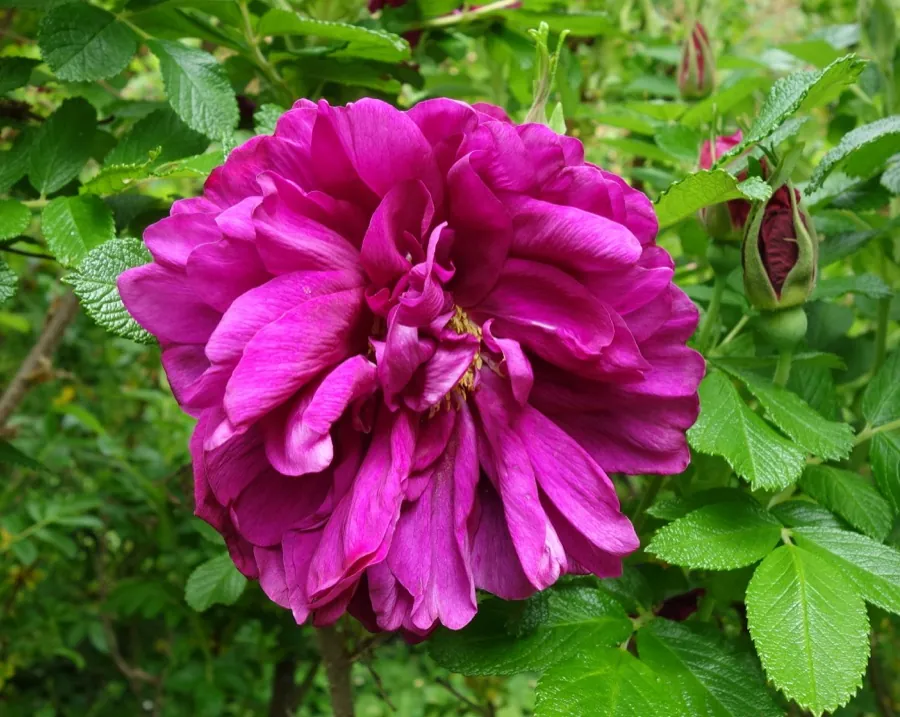
A purple-crimson Rugosa Hybrid with a powerful perfume; named after the Roseraie du Val-de-Marne (Roseraie de l'Haÿ-les-Roses), the famous Paris rose garden (founded 1894); apple-green glossy foliage plus decorative red hips; replaced the phantom “Red Eye” (Dümmen 2014, discontinued).

125 years of legendary status · named in honour of the famous Paris rose garden

Variety profile

Flowering

Repeat, in flushes

One of the most continuously flowering varieties — June to October with periodic flushes; a rare combination for the Rugosa-family. Months are approximate, for the climate of Ukraine.

Legacy

Classic of 1901

Roseraie du Val-de-Marne

Winter hardiness

−40 °C

USDA zone 3. Exceptional Rugosa-hardiness; all of Ukraine! Exceptional Rugosa winter hardiness · all of Ukraine!

Compare reference temperatures

Plant size

250 × 250 cm
person 170 cm250 cm
Habit
A powerful upright shrub rose
Dimensions
~2.5 m tall × ~2.5 m wide — a powerful bush
Support
Not needed — self-supporting thanks to sturdy stems
Shoots
Sturdy, with the prickly texture typical of Rugosa
Branching
Well branched, with sturdy stems

Flower

≈ 10 cm

30 petals.

Bud shape
Elongated, elegant, dark raspberry-crimson
Open flower
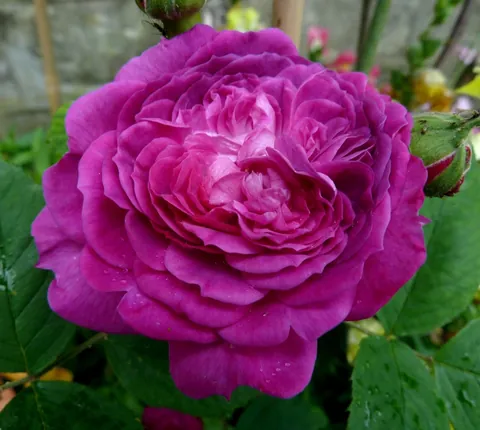
Very large full double: ~10 cm, ~30 petals, with the typical Rugosa-type texture
Centre
Tightly packed, with prominent yellow stamens when fully open
Fullness
~30 petals (full)
Flower carriage
Singly or in small clusters

Fragrance

Very strong; classic Damask

Very strong, classic Damask — one of the most fragrant of all Rugosa-type varieties.

Disease resistance

5 out of 5

Maximum 5/5: Rugosa-genetics give extremely healthy foliage; tolerates poor soils, exposures, drought and frost; hardiness USDA 3–9 — exceptional (down to −40 °C).

Sun

Sun and shade

Tolerates poor soils and exposures.

Thorns

Very many
thornlessfewmoderatemanyvery many

Very many thorns — typical of the Rugosa-family.

Foliage

Luxuriant apple-green, glossy — a typical Rugosa-trait, extremely healthy.

All characteristics in a table
Group
Rugosa Hybrid; Old Garden Rose; historic classic from 1901
Breeder
Cochet-Cochet, France, 1901
Bud shape
Elongated, elegant, dark raspberry-crimson
Open flower
Very large full double: ~10 cm, ~30 petals, with the typical Rugosa-type texture
Centre
Tightly packed, with prominent yellow stamens when fully open
Colour
Bright “rich bright magenta” — raspberry-violet; a unique saturated colour, rare for roses
Fullness
~30 petals (full)
Flower carriage
Singly or in small clusters
Flowering
One of the most continuously flowering varieties — June to October with periodic flushes; a rare combination for the Rugosa-family
Fragrance
Very strong, classic Damask — one of the most fragrant of all Rugosa-type varieties
Hips
Decorative red rose hips — an extra autumn accent
Habit
A powerful upright shrub rose
Branching
Well branched, with sturdy stems
Shoots
Sturdy, with the prickly texture typical of Rugosa
Thorns
Very many thorns — typical of the Rugosa-family.
Dimensions
~2.5 m tall × ~2.5 m wide — a powerful bush
Support
Not needed — self-supporting thanks to sturdy stems
Foliage
Luxuriant apple-green, glossy — a typical Rugosa-trait, extremely healthy
Resistance
Maximum 5/5: Rugosa-genetics give extremely healthy foliage; tolerates poor soils, exposures, drought and frost; hardiness USDA 3–9 — exceptional (down to −40 °C)
Variations of the variety
No official code (historic variety of 1901). Breeder: Cochet-Cochet (France). Introduced 1901. Parentage: seedling of R. rugosa. The catalogue entry replaced “Red Eye” — Red Eye (Dümmen Orange 2014) was a niche cut flower with a green “eye”, now discontinued

Colour scheme

Bright “rich bright magenta” — raspberry-violet; a unique saturated colour, rare among roses

Rose neighbours

Perennials to plant nearby

Neighbouring roses

Old Garden Roses + the violet family — a 'historic violet-raspberry corner':

Perennial companions

A classic violet, silver and grey palette:

lavendercatmintlady's mantlePerovskia

Availability worldwide

The legendary Rugosa, essential for cold climates:

🇫🇷 France: high · home country, 1901🇬🇧 UK: high · David Austin, Peter Beales🇨🇦 Canada: high · cold-climate zones🇺🇦 Ukraine: moderate · collector demand

More about the variety

Hips
Decorative red rose hips — an extra autumn accent
Variations of the variety
No official code (historic variety of 1901). Breeder: Cochet-Cochet (France). Introduced 1901. Parentage: seedling of R. rugosa. The catalogue entry replaced “Red Eye” — Red Eye (Dümmen Orange 2014) was a niche cut flower with a green “eye”, now discontinued

How to grow

Where to plant. As a hedge, thanks to its powerful size of 2.5 × 2.5 m and prickly stems; as a solo shrub in a border; essential for cold regions thanks to its outstanding hardiness; as an “autumn accent” through its decorative hips; in the “Victorian” corners of the garden.

Climate. All of Ukraine without cover (USDA 3–9, down to −40 °C); tolerates poor soils, exposures and drought — one of the least demanding roses there is.

Care. Full sun or light shade; minimal care thanks to Rugosa-genetics; feed 1–2× per season; prune ¼ in spring (Rugosa do not like hard pruning); do not cut the hips for decoration in autumn.

About the name

Name. “Roseraie de l'Haÿ” — named after the Roseraie du Val-de-Marne (also called Roseraie de l'Haÿ-les-Roses), the famous Paris rose garden in the town of L'Haÿ-les-Roses near Paris. The garden was founded in 1894 by Jules Gravereaux — the first rose garden in the world devoted entirely to roses (before that, roses were always mixed with other plants). The variety was bred for the garden's 7th anniversary and given to it as a symbol.

Breeding. Bred by Cochet-Cochet (a family of rose breeders, France) in 1901. Parentage: a seedling of R. rugosa (a Japanese species rose, brought to Europe from Japan at the end of the XVIII century). Classification: Rugosa Hybrid — a rare group among Old Garden Roses, with exceptional hardiness and fragrance. The catalogue entry replaced “Red Eye”: Red Eye (Dümmen Orange ~2014) was a niche cut flower with a green “eye”, now discontinued.

Significance. One of the most famous and influential Rugosa-varieties in history — a true classic of Victorian gardens. One of the most fragrant of all Rugosas — a strong classic Damask scent, rare for R. rugosa (most Rugosas have a specific clove-like scent). One of the most continuously flowering Rugosas — June to October. Outstanding hardiness, USDA 3 (−40 °C) — essential for the cold regions of Canada, Scandinavia and Siberia. A unique “rich bright magenta” colour. Decorative red hips plus apple-green glossy foliage — multi-faceted ornamental value. 125 years of legendary status.

Frequently asked questions about Roseraie de l'Haÿ

Does Roseraie de l'Haÿ need winter protection?

The cultivar’s reference temperature is −40 °C (USDA zone 3). Overwintering depends on the conditions. Exceptional Rugosa-hardiness; all of Ukraine!

How many times a season does Roseraie de l'Haÿ flower?

One of the most continuously flowering varieties — June to October with periodic flushes; a rare combination for the Rugosa-family.

How big does Roseraie de l'Haÿ grow?

About 250 cm tall, about 250 cm wide.

Which diseases affect Roseraie de l'Haÿ?

Overall resistance: 5 out of 5. Rugosa-genetics; exceptionally healthy.

How much sun does Roseraie de l'Haÿ need?

Sun and shade; tolerates poor soils and exposures.

What does Roseraie de l'Haÿ smell like?

Very strong, classic Damask — one of the most fragrant of all Rugosa-type varieties.

Gardeners' photos and reviews

My climate

Choose a reference temperature to compare with the cultivar’s data. This is not an overwintering forecast or advice on winter protection; consider wind, moisture and the duration of frost.

Regional data are generalised. USDA describes average annual extreme minima, not a forecast; the values in the list are rounded. Check the conditions at your site. More information: Roses in Ukraine's climate.