


Back to catalogue
Hybrid TeaMeilland (Jacques Mouchotte), 2000Pink

Elle

Named after the French magazine ELLE; AARS-2005 winner (USA); Paris Bagatelle fragrance prize.

PERFUMELLA line — fragrant Meilland roses

Variety profile

Flowering

Repeat, in flushes

Repeat in waves, from June until frosts. Months are approximate, for the climate of Ukraine.

Awards

AARS 2005

Silver medal, Geneva 1999 · fragrance prize, Paris-Bagatelle · silver medal, Buenos Aires 2000

Winter hardiness

−18 °C

USDA zone 6b–9. Heat-loving; in the north — with protection. Warmth-loving · in the north, with winter cover.

Compare reference temperatures

Plant size

70–90 × 50 cm
person 170 cm70–90 cm
Habit
Compact, bushy, upright
Dimensions
70–90 cm high × ~50 cm wide
Support
Not needed — a self-supporting bush
Shoots
Strong-growing, sturdy
Branching
Good

Flower

up to 13 cm
Bud shape
Pointed, egg-shaped
Open flower
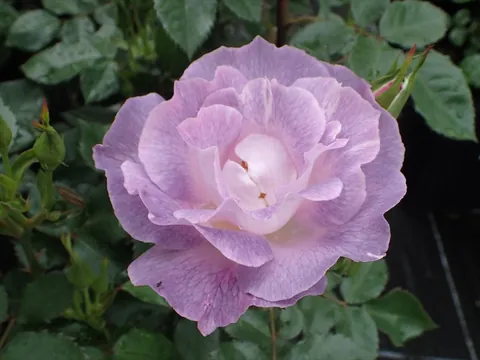
Large, high-centred, very double; diameter up to ~13 cm
Centre
High, classic hybrid tea form
Fullness
Very double, ~50–55 petals
Flower carriage
Mostly singly, on a sturdy straight stem — a good cut flower

Fragrance

Strong; rose, with notes of apple, citrus and spice

Strong — rich rose, with notes of apple, green banana, citrus and spice (prize-winning fragrance).

Disease resistance

4 out of 5

Good against the main diseases; in a humid climate — preventive treatment.

Sun

Full sun

Tolerates heat well; in sun the colour takes on warmer tones.

Thorns

Moderate
thornlessfewmoderatemanyvery many

Moderate prickliness, as in most hybrid teas.

Foliage

Large, glossy, dark green; 3–7 leaflets.

Other names

Breeder's code MEIbderos.

All characteristics in a table
Group
Hybrid Tea
Breeder
Meilland (Jacques Mouchotte), France, 2000
Bud shape
Pointed, egg-shaped
Open flower
Large, high-centred, very double; diameter up to ~13 cm
Centre
High, classic hybrid tea form
Colour
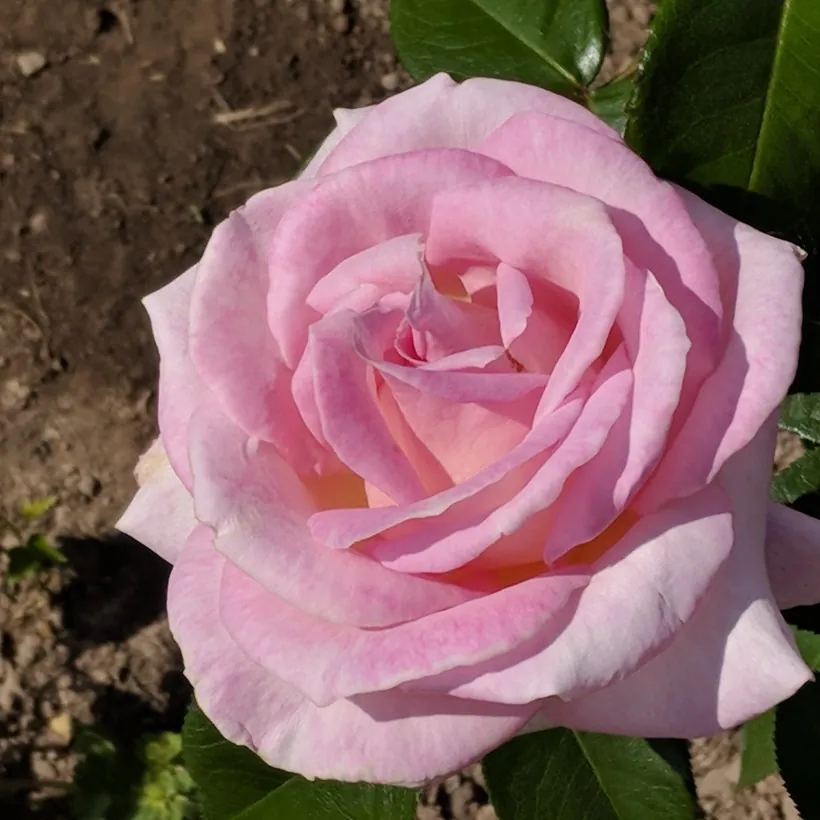
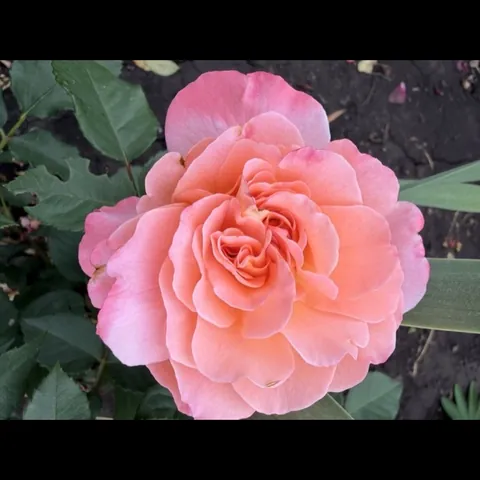
Rose-apricot blend: a light pink tone with an ochre-yellow and orange sheen that shifts as the flower opens; the reverse of the petals is warmer
Fullness
Very double, ~50–55 petals
Flower carriage
Mostly singly, on a sturdy straight stem — a good cut flower
Flowering
Repeat in waves, from June until frosts
Fragrance
Strong — rich rose, with notes of apple, green banana, citrus and spice (prize-winning fragrance)
Hips
Usually not left — spent flowers are cut off to encourage repeat flowering
Habit
Compact, bushy, upright
Branching
Good
Shoots
Strong-growing, sturdy
Thorns
Moderate prickliness, as in most hybrid teas.
Dimensions
70–90 cm high × ~50 cm wide
Support
Not needed — a self-supporting bush
Foliage
Large, glossy, dark green; 3–7 leaflets
Resistance
Good against the main diseases; in a humid climate — preventive treatment
Variations of the variety
Part of the PERFUMELLA® fragrance line; no separate sports recorded

Colour scheme

Rose-apricot blend: a light pink tone with an ochre-yellow and orange sheen that shifts as the flower opens; the reverse of the petals is warmer

Rose neighbours

Perennials to plant nearby

Rose neighbours

Apricot-pink varieties with a warm sheen keep the same 'couture' palette as Elle.

Companion perennials

Blue-violet and silver flowers give a clean contrast to the warm pink-apricot:

catmintSalvia 'Caradonna'Perovskiagypsophila

Contrast accents

Blue spires and a sheer 'haze' add depth to the warm palette:

DelphiniumNepeta Six Hills GiantPerovskia

More about the variety

Hips
Usually not left — spent flowers are cut off to encourage repeat flowering
Variations of the variety
Part of the PERFUMELLA® fragrance line; no separate sports recorded

How to grow

Where to plant. In a formal flower bed, in the first or second row of a mixed border, near seating areas — for its strong scent; excellent for cutting.

Climate. South and centre of Ukraine — no protection needed; in the north (USDA 6b) — winter protection. Heat-loving, tolerates heat well.

Care. Moderate; full sun, rich soil, feeding twice per season; in wet weather — disease prevention.

About the name

Name. Dedicated to the French magazine ELLE — part of the fragrance line PERFUMELLA®, conceived as 'a fragrance that renews every season, like a fashion accessory'.

Breeding. Bred by Jacques Mouchotte for Meilland International (France) before 1999, introduced around 2000. Patent code MEIbderos. Parentage: 'Purple Splendour' × ('Chicago Peace' × 'Parador').

Significance. A modern, strongly scented hybrid tea, honoured with a number of international awards — a silver medal in Geneva (1999), fragrance prizes in Paris and Tokyo, a silver medal in Buenos Aires (2000) and, finally, AARS-2005 in the USA.

Frequently asked questions about Elle

Does Elle need winter protection?

The cultivar’s reference temperature is −18 °C (USDA zone 6b–9). Overwintering depends on the conditions. Heat-loving; in the north — with protection.

How many times a season does Elle flower?

Repeat in waves, from June until frosts.

How big does Elle grow?

70–90 cm tall, about 50 cm wide.

Which diseases affect Elle?

Overall resistance: 4 out of 5. Good — resistant to the main diseases; in wet weather preventive treatment is advised.

How much sun does Elle need?

Full sun; tolerates heat well; in sun the colour takes on warmer tones.

What does Elle smell like?

Strong — rich rose, with notes of apple, green banana, citrus and spice (prize-winning fragrance).

Gardeners' photos and reviews

My climate

Choose a reference temperature to compare with the cultivar’s data. This is not an overwintering forecast or advice on winter protection; consider wind, moisture and the duration of frost.

Regional data are generalised. USDA describes average annual extreme minima, not a forecast; the values in the list are rounded. Check the conditions at your site. More information: Roses in Ukraine's climate.