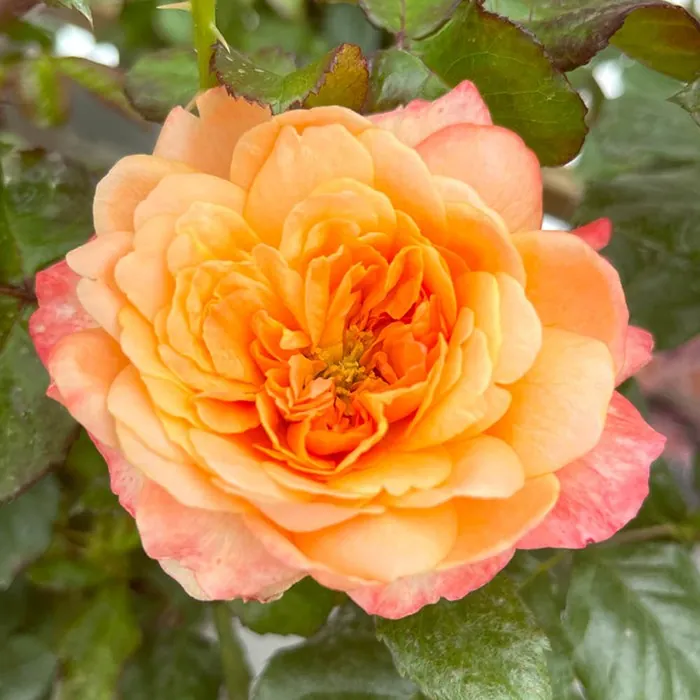

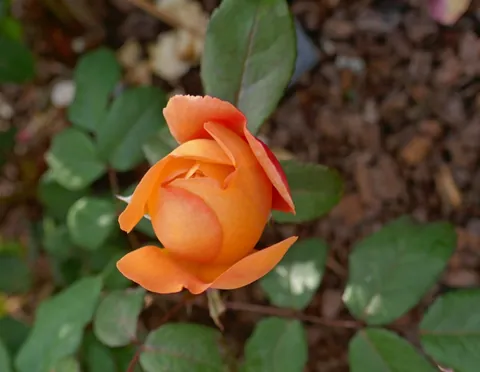



Samaritan, close-up of the flower
Back to catalogue
Hybrid Tea (HT)Apricot and orange

Samaritan

Multicoloured orange-apricot flower of old-fashioned form, with a strong spicy-fruity scent (cinnamon, aniseed).

Synonyms: Samaritan · Harverag

Variety profile

Flowering

Repeat flowering

Repeat-flowering, from summer to autumn. Months are approximate, for the climate of Ukraine.

Winter hardiness

−20 °C

USDA zone 5–9. RHS H6 (to −20 °C), zones 5–9; sunny spot.

Compare reference temperatures

Plant size

80–100 × 60 cm
person 170 cm80–100 cm
Habit
Upright, bushy
Dimensions
80–100 cm tall, around 60 cm wide
Support
Not needed

Flower

≈ 12 cm

50 petals.

Flower shape
Old-fashioned: the round bud first opens into a high-centred rose, then into a very double, cupped and quartered rose
Flower size
About 12 cm, around 50 petals
Clusters
Singly or in small clusters

Fragrance

Strong; cinnamon, aniseed

Strong, spicy and fruity, with notes of cinnamon and aniseed.

Sun

Needs a sunny spot

Foliage

Dark green, glossy; a striking contrast with the warm colour of the flowers.

All characteristics in a table
Group
Hybrid Tea (HT)
Flower shape
Old-fashioned: the round bud first opens into a high-centred rose, then into a very double, cupped and quartered rose
Colour
Orange-apricot: rich, almost orange centre, peach-apricot edges with a pink blush; with age it darkens to orange-red tones
Flower size
About 12 cm, around 50 petals
Clusters
Singly or in small clusters
Flowering
Repeat-flowering, from summer to autumn
Fragrance
Strong, spicy and fruity, with notes of cinnamon and aniseed
Habit
Upright, bushy
Dimensions
80–100 cm tall, around 60 cm wide
Foliage
Dark green, glossy; a striking contrast with the warm colour of the flowers
Resistance
Winter hardy (RHS H6); good disease resistance
Support
Not needed
Use
Mixed and rose borders, containers; tolerant of poor soils and windy spots
Care
A sunny spot; feeding and sanitary pruning

Colour scheme

Orange-apricot: rich, almost orange centre, peach-apricot edges with a pink blush; with age it darkens to orange-red tones

Rose neighbours

Perennials to plant nearby

More about the variety

Use
Mixed and rose borders, containers; tolerant of poor soils and windy spots
Care
A sunny spot; feeding and sanitary pruning

How to grow

Where to plant. In mixed and rose borders and in containers; tolerant of poor soils and windy spots. Highlight: bright, multicoloured orange-apricot flowers against dark glossy foliage, and a strong scent of cinnamon and aniseed.

Care. Choose a sunny spot; the variety is undemanding and copes well with poor soil and wind.

About the name

Name. 'Samaritan' (registration code Harverag); in Ukraine it is also known as 'Samaritan'. Origin: bred by the Harkness nursery (Great Britain). The exact year is not documented: reliable sources (RHS, the Harkness nursery) give only the code Harverag, and the date '1988' that some sellers quote is not confirmed. Photo: official photo from the Harkness Roses nursery (roses.co.uk).

Frequently asked questions about Samaritan

Does Samaritan need winter protection?

The cultivar’s reference temperature is −20 °C (USDA zone 5–9). Overwintering depends on the conditions.

How many times a season does Samaritan flower?

Repeat-flowering, from summer to autumn.

How big does Samaritan grow?

80–100 cm tall, about 60 cm wide.

How much sun does Samaritan need?

Sun; needs a sunny spot.

What does Samaritan smell like?

Strong, spicy and fruity, with notes of cinnamon and aniseed.

Gardeners' photos and reviews

My climate

Choose a reference temperature to compare with the cultivar’s data. This is not an overwintering forecast or advice on winter protection; consider wind, moisture and the duration of frost.

Regional data are generalised. USDA describes average annual extreme minima, not a forecast; the values in the list are rounded. Check the conditions at your site. More information: Roses in Ukraine's climate.