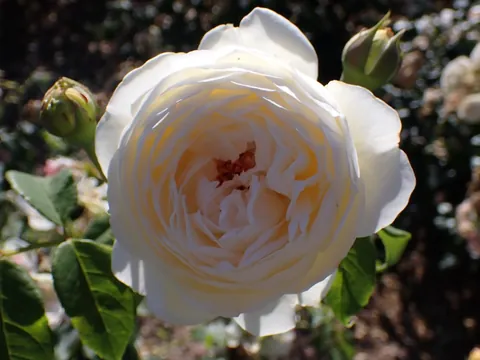
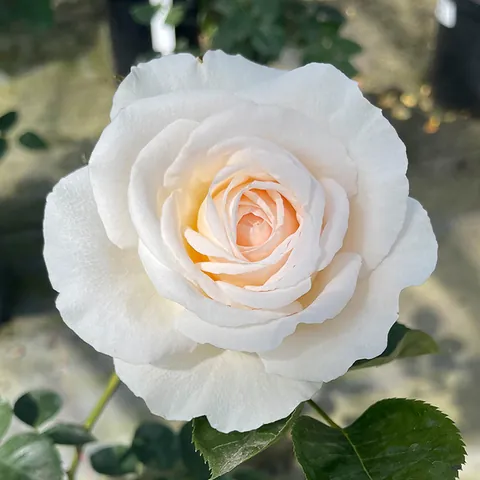
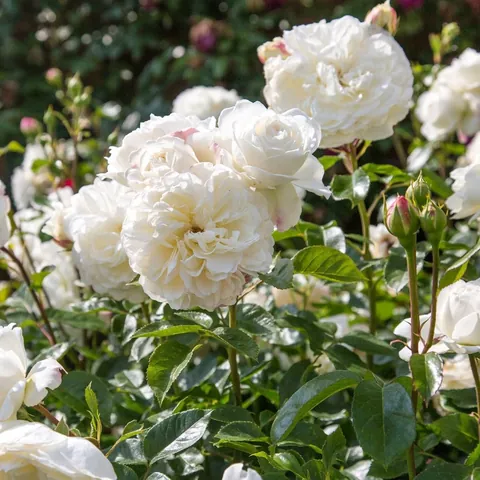
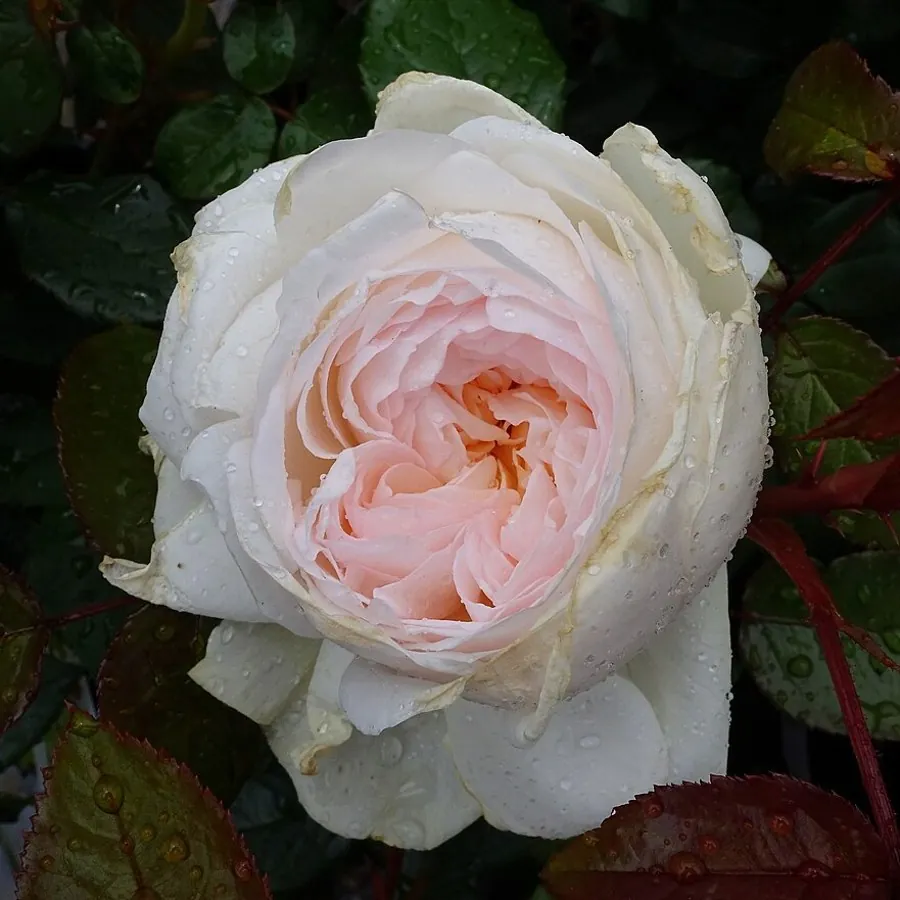
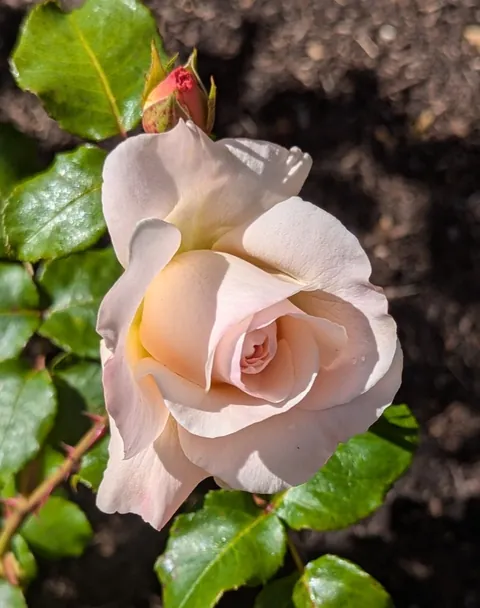
Bolero, close-up of the flower
Photo: Daderot, CC0
Back to catalogue
FloribundaMeilland, 2004White and cream

Bolero

Creamy quartered rosette with a soft blush; strong citrus fragrance; old-fashioned form.

Romantica series

Variety profile

Flowering

Repeat-flowering in flushes all season

Awards

Romantica

From the Meilland Romantica series — old-fashioned form + modern health

Winter hardiness

−26 °C

USDA zone 5b+. Most of Ukraine; north/east – with light winter protection.

Compare reference temperatures

Plant size

70–120 × 60–70 cm
person 170 cm70–120 cm
Habit
Compact, bushy, spreading
Dimensions
70–120 cm tall × 60–70 cm wide
Support
No support needed
Shoots
Strong
Branching
Good

Flower

7–8 cm
Bud shape
White-cream with a pinkish-red blush at the edge and a yellowish base
Open flower
Flat cup-shaped old-fashioned quartered rosette; diameter 7–8 cm
Fullness
Very dense, ~140–160 petals
Flower carriage
In small clusters

Fragrance

Strong, citrus-rose

Strong – rich citrus-rose, with notes of lemon and verbena.

Disease resistance

4 out of 5

Good (≈4/5, reputation of the Romantica series).

Sun

Full sun

The pink blush fades quickly to white.

Thorns

Moderate
thornlessfewmoderatemanyvery many

Moderate number (precise data are limited).

Foliage

Large, glossy, medium green, dense.

Other names

Bolero Romantica
All characteristics in a table
Group
Floribunda
Breeder
Meilland, France, 2004
Bud shape
White-cream with a pinkish-red blush at the edge and a yellowish base
Open flower
Flat cup-shaped old-fashioned quartered rosette; diameter 7–8 cm
Colour
Ivory / cream-white; a fresh flower with a soft pink-apricot blush and a warm cream-yellow centre, which fades to pure creamy white over time
Fullness
Very dense, ~140–160 petals
Flower carriage
In small clusters
Flowering
Repeat-flowering in flushes all season
Fragrance
Strong – rich citrus-rose, with notes of lemon and verbena
Hips
Usually does not set hips (very double)
Habit
Compact, bushy, spreading
Branching
Good
Shoots
Strong
Thorns
Moderate number (precise data are limited).
Dimensions
70–120 cm tall × 60–70 cm wide
Support
No support needed
Foliage
Large, glossy, medium green, dense
Resistance
Good (≈4/5, reputation of the Romantica series)
Variations of the variety
Code MEIdelweis; synonym – Bolero Romantica; Romantica® series (Meilland)
Colour scheme

Ivory / cream-white; a fresh flower with a soft pink-apricot blush and a warm cream-yellow centre, which fades to pure creamy white over time

Rose neighbours

Perennials to plant nearby

Neighbouring roses

Other creamy and cream-white varieties — a warm white mood:

Perennial companions

Small white, green and silver flowers and foliage — a classic companion palette for white bouquets and 'moonlit' gardens:

astrantia 'Roma'hosta 'Patriot'veronicastrum 'Album'heuchera 'Silver Scrolls'

Variety features

What makes this variety appealing:

Strong citrus fragranceOld-fashioned quartered formRomantica series

More about the variety

Hips
Usually does not set hips (very double)
Variations of the variety
Code MEIdelweis; synonym – Bolero Romantica; Romantica® series (Meilland)
How to grow

Where to plant. Borders and beds, fragrance gardens, containers, romantic flower gardens in an old-fashioned style.

Climate. USDA 5b and warmer; most of Ukraine, in the north/east – with light winter protection. Full sun; the blush fades to white.

Care. A sunny spot; spring pruning; feeding; watering at the base; moderate disease prevention.

About the name

Name. 'Bolero' – after the bolero (a Spanish dance and music).

Breeding. Bred by Meilland (breeder Jacques Mouchotte) in France, on sale since 2004; from the Romantica® series – modern roses in the style of old roses.

Significance. A combination of the lush quartered form of old roses, strong citrus fragrance and modern health – an elegant cream floribunda.

Frequently asked questions about Bolero

Does Bolero need winter protection?

The cultivar’s reference temperature is −26 °C (USDA zone 5b+). Overwintering depends on the conditions. Most of Ukraine; north/east – with light winter protection.

How many times a season does Bolero flower?

Repeat-flowering in flushes all season.

How big does Bolero grow?

70–120 cm tall, 60–70 cm wide.

Which diseases affect Bolero?

Overall resistance: 4 out of 5. Good (according to the reputation of the Romantica series).

How much sun does Bolero need?

Sun; full sun; the pink blush fades quickly to white.

What does Bolero smell like?

Strong – rich citrus-rose, with notes of lemon and verbena.

Gardeners' photos and reviews

My climate

Choose a reference temperature to compare with the cultivar’s data. This is not an overwintering forecast or advice on winter protection; consider wind, moisture and the duration of frost.

Regional data are generalised. USDA describes average annual extreme minima, not a forecast; the values in the list are rounded. Check the conditions at your site. More information: Roses in Ukraine's climate.