

Back to catalogue
English Shrub / ClimberDavid Austin, 2007White and cream

Claire Austin

US PP 19465; one of the three most fragrant white David Austin varieties.

English Musk hybrids

Variety profile

Flowering

Repeat flowering

Repeat-flowering in flushes from late spring to early winter — one of the longest-flowering Austins. Months are approximate, for the climate of Ukraine.

Awards

PP 19465

Best For Health · Austin collection

Winter hardiness

−29 °C

USDA zone 5–11. All of Ukraine, no cover needed in open ground.

Compare reference temperatures

Plant size

130–150 × 120 cm
person 170 cmon a supportup to 3.5 m130–150 cm
Habit
Elegant, with arching stems; a versatile rose — it can grow as a large shrub or as a small climber
Dimensions
As a shrub: 130–150 cm × 120 cm; as a climber: 240–350 cm tall (RHS: 1.5–2.5 m × 1–1.5 m)
Support
Optional — as a shrub it needs no support; as a climber — on a low trellis, obelisk or fence
Shoots
Flexible, arching — a characteristic trait; easy to bend horizontally for abundant side flowering
Branching
Good; the stems are long, flexible, with a natural curve

Flower

≈ 9 cm

Up to 120 petals.

Bud shape
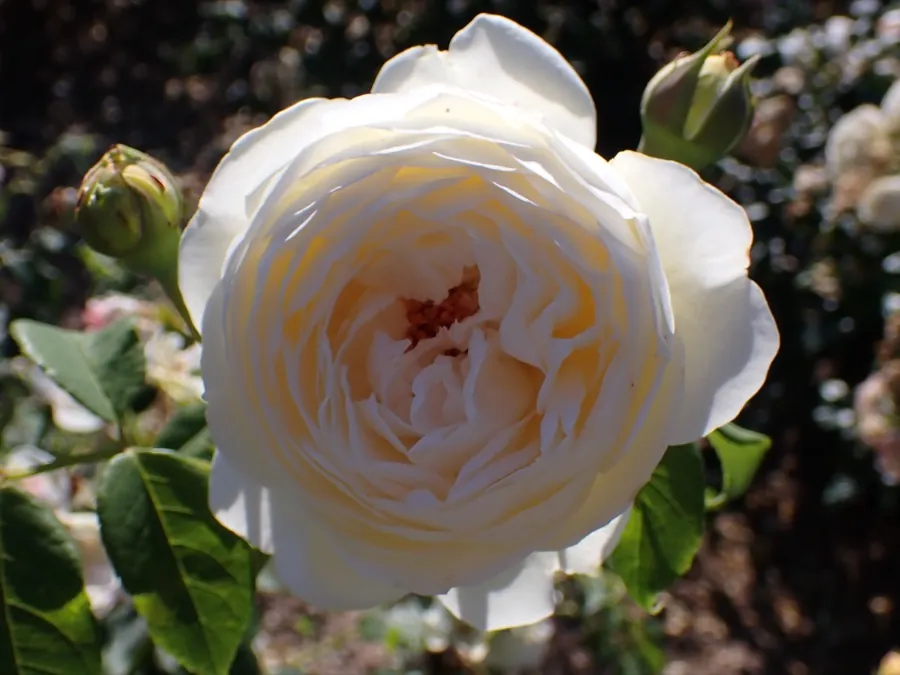
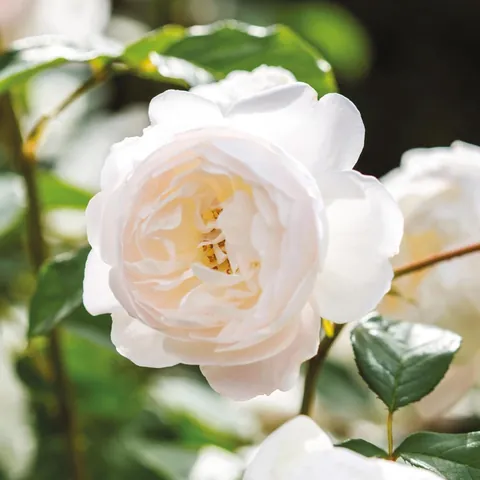
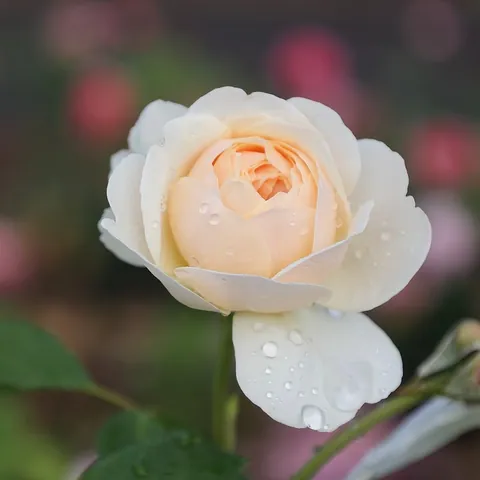
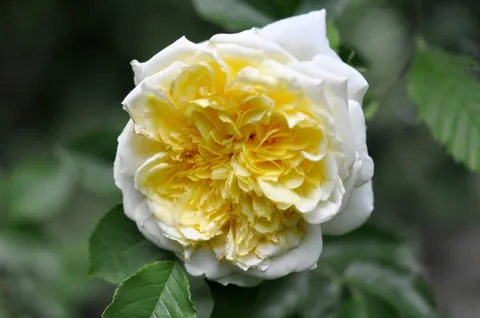
Lemon-cream 'cupped', with barely visible yellow tones
Open flower
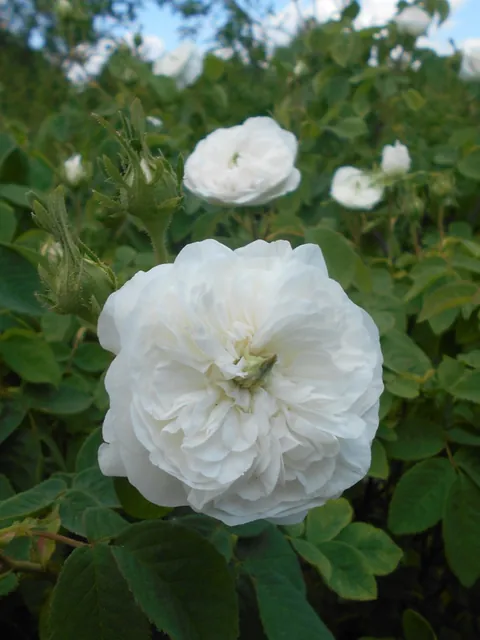
A large full cup, then a flat nostalgic rosette; diameter 9 cm
Centre
Dense centre of petal curls; a faintly yellowish tone in the depths
Fullness
Very double — up to 120 petals
Flower carriage
Small clusters of 1–3 per stem

Fragrance

Strong

Very strong — a classic powerful myrrh note with vanilla, honey, woodruff and a light heliotrope.

Disease resistance

4 out of 5

Part of the Austin 'Best For Health' collection; in wet weather the flowers may ball (a typical problem of very full white varieties).

Sun

Sun or light shade

In partial shade the cup shape lasts longer; in sun — abundant flowering.

Thorns

Moderate
thornlessfewmoderatemanyvery many

Moderate number of thorns, reddish in colour.

Foliage

Light green, matt.

Other names

Breeder's code AUSprior.

All characteristics in a table
Group
English Shrub / Climber
Breeder
David Austin, 2007
Bud shape
Lemon-cream 'cupped', with barely visible yellow tones
Open flower
A large full cup, then a flat nostalgic rosette; diameter 9 cm
Centre
Dense centre of petal curls; a faintly yellowish tone in the depths
Colour
One of the best white Austin varieties — a clean creamy white with barely visible lemon notes at the centre
Fullness
Very double — up to 120 petals
Flower carriage
Small clusters of 1–3 per stem
Flowering
Repeat-flowering in flushes from late spring to early winter — one of the longest-flowering Austins
Fragrance
Very strong — a classic powerful myrrh note with vanilla, honey, woodruff and a light heliotrope
Hips
Occasionally — small round orange hips
Habit
Elegant, with arching stems; a versatile rose — it can grow as a large shrub or as a small climber
Branching
Good; the stems are long, flexible, with a natural curve
Shoots
Flexible, arching — a characteristic trait; easy to bend horizontally for abundant side flowering
Thorns
Moderate number of thorns, reddish in colour.
Dimensions
As a shrub: 130–150 cm × 120 cm; as a climber: 240–350 cm tall (RHS: 1.5–2.5 m × 1–1.5 m)
Support
Optional — as a shrub it needs no support; as a climber — on a low trellis, obelisk or fence
Foliage
Light green, matt
Resistance
Part of the Austin 'Best For Health' collection; in wet weather the flowers may ball — a typical problem of very full white varieties
Variations of the variety
No official sports

Colour scheme

One of the best white Austin varieties — a clean creamy white with barely visible lemon notes at the centre

Rose neighbours

Perennials to plant nearby

Neighbouring roses

Other white English Roses and classic whites — for a 'moon garden':

Companion perennials

Blue and purple spires — a classic 'white and blue' contrast:

purple foxglovedelphiniumsage 'Caradonna'soft lady's mantle (Alchemilla)

Contrasting accents

Dark-leaved 'shadows' that bring out the lightness of the rose:

Siberian iris 'Caesar's Brother'dark purple heucherablack heronica

More about the variety

Hips
Occasionally — small round orange hips
Variations of the variety
No official sports

How to grow

Where to plant. 'moon gardens' (beds of white roses that glow at night), formal borders, beside paths (for the scent), on a low trellis or obelisk as a climber.

Climate. To −29 °C — no problem in open ground throughout Ukraine, including the northern regions.

Care. In wet weather, remove flowers that ball (do not open because of waterlogged petals). Regular removal of spent blooms encourages new flushes. As a climber — in spring, train the main shoots horizontally.

About the name

Name. Named after the daughter of David Austin Sr., Claire, who owns a perennial nursery. A personal, warm family dedication.

Breeding. Bred by David C. H. Austin Sr. at David Austin Roses Ltd. (Shropshire, England), 2007. Patent code — AUSprior; US Plant Patent PP 19465. Parentage not disclosed (a cross of two unnamed seedlings). In Austin's internal classification it belongs to the English Musk hybrids.

Significance. One of the three most fragrant white varieties in the David Austin collection. It was created with the aim of producing a very healthy repeat-flowering variety with large creamy-white flowers, a powerful myrrh fragrance and vigorous arching growth. A versatile rose — it grows as a shrub or as a small climber.

Frequently asked questions about Claire Austin

Does Claire Austin need winter protection?

The cultivar’s reference temperature is −29 °C (USDA zone 5–11). Overwintering depends on the conditions.

How many times a season does Claire Austin flower?

Repeat-flowering in flushes from late spring to early winter — one of the longest-flowering Austins.

How big does Claire Austin grow?

130–150 cm tall, about 120 cm wide. On a support — up to 350 cm.

Which diseases affect Claire Austin?

Overall resistance: 4 out of 5. Part of the Austin 'Best For Health' collection; in wet weather the flowers may ball (a typical problem of very full white varieties).

How much sun does Claire Austin need?

Sun or light shade; in partial shade the cup shape lasts longer; in sun — abundant flowering.

What does Claire Austin smell like?

Very strong — a classic powerful myrrh note with vanilla, honey, woodruff and a light heliotrope.

Gardeners' photos and reviews

My climate

Choose a reference temperature to compare with the cultivar’s data. This is not an overwintering forecast or advice on winter protection; consider wind, moisture and the duration of frost.

Regional data are generalised. USDA describes average annual extreme minima, not a forecast; the values in the list are rounded. Check the conditions at your site. More information: Roses in Ukraine's climate.