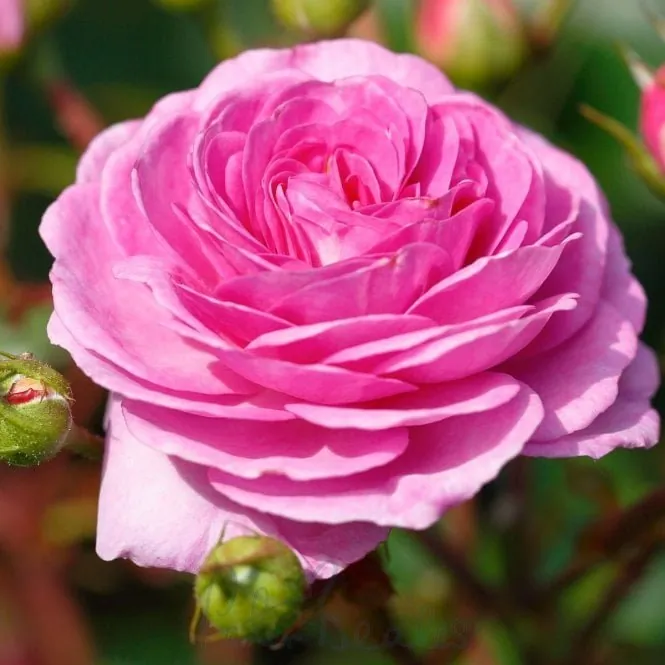
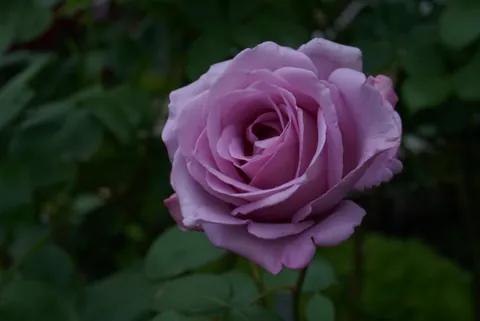
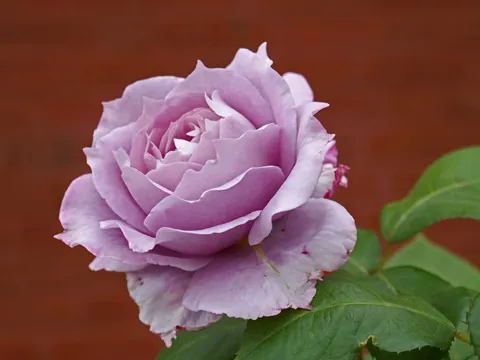
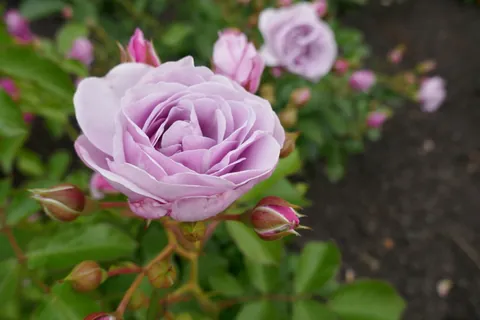



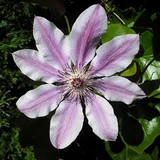
Ozeana, close-up of the flower
Photo: official nursery Peter Beales Roses (Rosen Tantau)
Back to catalogue
Large-Flowered Climber; climbing; nostalgicChristian Evers; Rosen Tantau, 2016Lilac and purple

Ozeana

A rare lilac-lavender colour among climbers; strong sweet oriental fragrance (5/5), the variety's main strength; the name plays on the image of an 'ocean wave' of lilac flowers; dark green, glossy, healthy foliage (a Tantau hallmark).

Bronze at the Echigo competition (Japan) 2017 · 'a sea of lilac flowers'

Variety profile

Flowering

Repeat, in flushes

Repeat or continuous, in flushes through the season (June–October). Months are approximate, for the climate of Ukraine.

Awards

Bronze

Echigo competition, Japan · 2017

Plant size

200–300 × 45–60 cm
person 170 cm200–300 cm
Habit
Strong-growing, arching-upright, bushy and straight; can be trained vertically as a tall shrub
Dimensions
200–300 cm tall × ~45–60 cm wide; a tall climber
Support
Needs: pergola, arch, trellis, wall, fence
Shoots
Strong; better tied horizontally or in arcs for flowering along the full length
Branching
Strong upright shoots that branch well

Flower

10–12 cm
Bud shape
Round, lilac-pink
Open flower
Large, cupped, nostalgic very full bloom with a rosette centre
Centre
Dense rosette of numerous smaller petals
Fullness
Very double; the exact number of petals is not given in the sources
Flower carriage
In small clustered inflorescences

Fragrance

Strong

Strong (5/5): sweet oriental fragrance; one of the variety's main strengths.

Disease resistance

3 out of 5
Black spotmoderatePowdery mildewmoderate

Moderate: black spot 3/5, powdery mildew 3/5 (Tantau's official ratings).

Sun

Sun and partial shade

The lilac becomes paler in full sun.

Thorns

Moderate
thornlessfewmoderatemanyvery many

The sources give no numerical level; approximately moderate in number.

Foliage

Dark green, glossy, healthy; characteristic of Tantau.

All characteristics in a table
Group
Large-Flowered Climber; climbing; nostalgic
Breeder
Christian Evers; Rosen Tantau, Germany, 2016
Bud shape
Round, lilac-pink
Open flower
Large, cupped, nostalgic very full bloom with a rosette centre
Centre
Dense rosette of numerous smaller petals
Colour
Lilac-mauve-pink (lavender); officially Tantau 'Pink, rosa, violett'; lightens in full sun
Fullness
Very double; the exact number of petals is not given in the sources
Flower carriage
In small clustered inflorescences
Flowering
Repeat or continuous, in flushes through the season (June–October)
Fragrance
Strong (5/5): sweet oriental fragrance; one of the variety's main strengths
Hips
As a repeat-flowering variety it is usually not left to form hips
Habit
Strong-growing, arching-upright, bushy and straight; can be trained vertically as a tall shrub
Branching
Strong upright shoots that branch well
Shoots
Strong; better tied horizontally or in arcs for flowering along the full length
Thorns
The sources give no numerical level; approximately moderate in number.
Dimensions
200–300 cm tall × ~45–60 cm wide; a tall climber
Support
Needs: pergola, arch, trellis, wall, fence
Foliage
Dark green, glossy, healthy; characteristic of Tantau
Resistance
Moderate: black spot 3/5, powdery mildew 3/5 (Tantau's official ratings)
Variations of the variety
Variety code TAN11616 (breeding number RT 11-616). Do not confuse with other varieties: 'Oceana', 'Osiana'. Parentage is not given in open sources

Colour scheme

Lilac-mauve-pink (lavender); officially Tantau 'Pink, rosa, violett'; lightens in full sun

Rose neighbours

Perennials to plant nearby

Rose neighbours

White and pink climbers set off the rare lilac tone:

Perennial companions

Lavender and blue perennials — a 'tone-on-tone' play with the lilac flower:

lavendercatmint (Nepeta)woodland sageclematis

What makes it special

⭐ A rare combination among climbers:

💜 lilac-lavender colour · uncommon in climbers🍬 strong oriental fragrance 5/5🌿 healthy glossy Tantau foliage🇺🇦 Ukraine: to order from nurseries

More about the variety

Hips
As a repeat-flowering variety it is usually not left to form hips
Variations of the variety
Variety code TAN11616 (breeding number RT 11-616). Do not confuse with other varieties: 'Oceana', 'Osiana'. Parentage is not given in open sources

How to grow

Where to plant. By an arch, pergola, wall or fence in a sunny or lightly shaded spot; it is most striking where its strong scent can be enjoyed, such as by a seating area, an entrance or a window.

Climate. Approximately USDA zones 6–9 (official exact zones are not given); in Ukraine it overwinters with winter protection for the base.

Care. Fertile, well-drained soil; tie shoots horizontally or in arcs for abundant flowering; preventive treatments against black spot (moderate resistance); formative pruning plus removal of spent flowers for repeat flushes.

About the name

Name. 'Ozeana', from German Ozean / Latin Oceanus = ocean. The name plays on Tantau's marketing image: 'a sea of lilac flowers' and 'a wave of sweet oriental fragrance'. It is an evocative, 'oceanic' name, not tied to any particular person.

Breeding. Bred by Christian Evers at Rosen Tantau (2011), launched on the market in 2016. Code TAN11616. The Tantau house was founded in 1906 by Mathias Tantau in Uetersen (near Hamburg), one of the leading global rose-breeding houses, known for healthy glossy foliage and for nostalgic and cut roses.

Significance. The lilac-lavender colour is rare among climbers, and combined with the strong oriental fragrance (5/5) it makes Ozeana a striking accent for a romantic garden. Bronze medal at the Echigo competition (Japan, 2017).

Frequently asked questions about Ozeana

How many times a season does Ozeana flower?

Repeat or continuous, in flushes through the season (June–October).

How big does Ozeana grow?

200–300 cm tall, 45–60 cm wide.

Which diseases affect Ozeana?

Overall resistance: 3 out of 5. Moderate; prevention against black spot.

How much sun does Ozeana need?

Sun and partial shade; the lilac becomes paler in full sun.

What does Ozeana smell like?

Strong (5/5): sweet oriental fragrance; one of the variety's main strengths.

Gardeners' photos and reviews

My climate

Choose a reference temperature to compare with the cultivar’s data. This is not an overwintering forecast or advice on winter protection; consider wind, moisture and the duration of frost.

Regional data are generalised. USDA describes average annual extreme minima, not a forecast; the values in the list are rounded. Check the conditions at your site. More information: Roses in Ukraine's climate.