Roza Book · companion card
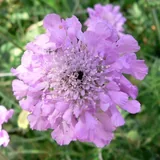
Scabious beside roses
Practical compatibility, planting, care and climate limits, without exaggerated promises.
Why it makes a good neighbour
Light, pincushion-like flowers on slender stems add airiness and combine well with roses in natural and romantic planting schemes.
How to plant it beside a rose
Most garden scabious need a sunny, well-drained border. Heavy, wet soil is especially dangerous in winter.
Check the species
Find out its life cycle and mature height.
Plant it on a sunny edge
Do not hide it among dense rose foliage.
Provide drainage
Do not plant it in a low spot.
Cut off spent flowers
This prolongs the display and limits unwanted self-seeding.
For Ukraine and Europe
A short care calendar
Spring
Plant or refresh the clump after the frosts.
Summer
Remove spent flower heads regularly and water in dry spells.
Autumn and winter
Cut back seasonal plants; leave perennials in dry soil.
Roses in Roza Book's agreed pairings
For scabious, 4 varieties are shown where this companion already appears in an agreed pairing. The caption repeats the actual colour palette from the rose card.
Harmony and contrastThe selection includes both related transitions and a more pronounced colour contrast.
Growing conditionsBasic conditions: full sun. Leave room for air circulation, and decide the final spacing according to the mature size of the plants.
Why these varietiesEach pairing repeats a scheme already agreed in the rose card; random varieties were not added.




Source for verification
Basic requirements were checked against material from the Royal Horticultural Society. The practical placement beside a rose is worded separately and is not presented as a universal, strict rule.