



Back to catalogue
Florist's Rose; Hybrid Tea; greenhouse-grown cut flowerJ.E. Steenks; De Ruiter (selection), 1994Pink

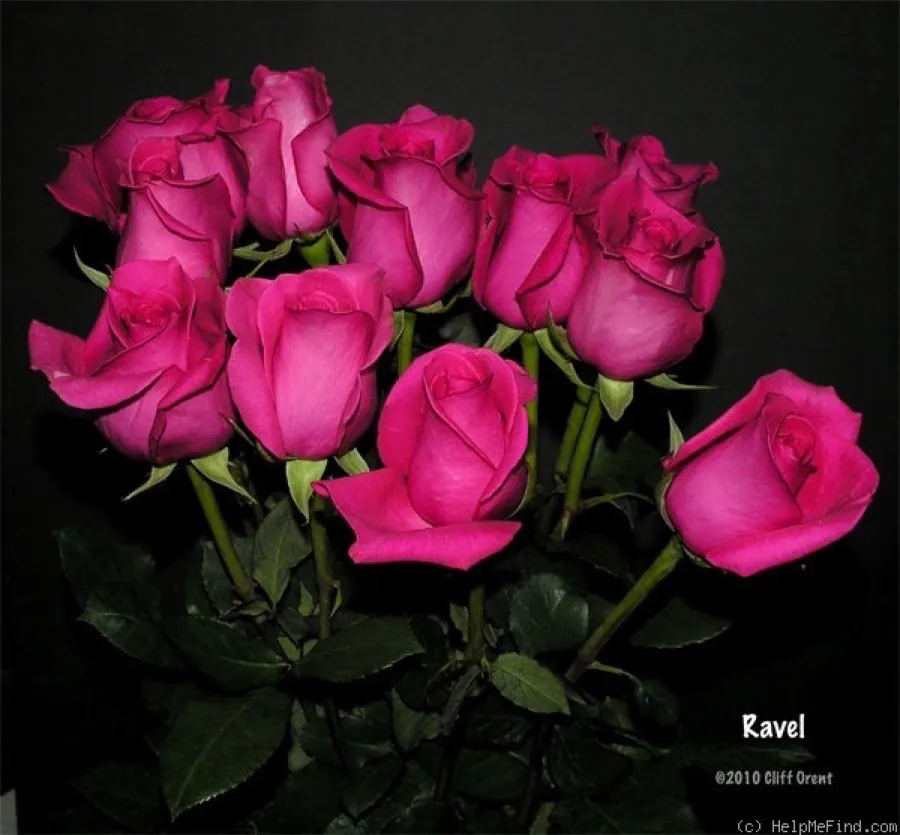
Ravel

Deep pink greenhouse cut-flower HT; a sport of Vivaldi (De Ruiter 1989) — from a series of musical names; named after Maurice Ravel, the French composer; not to be confused with Meilland — it is De Ruiter/Steenks, 1994.

A sport of Vivaldi · De Ruiter's musical names

Variety profile

Flowering

Continuous in greenhouse conditions

Use

Cut flowers

Greenhouse production

Plant size

180 cm
person 170 cm180 cm
Habit
Upright greenhouse plant with long stems
Dimensions
About 180 cm high (greenhouse: grown on a long stem)
Support
Greenhouse stem training
Shoots
Strong, straight — good for cutting
Branching
Well branched — typical of greenhouse HTs

Flower

12-13 cm
Bud shape
Elongated, deep pink
Open flower
High cup: about 12-13 cm (5"), classic HT form
Centre
Densely packed, with hidden stamens
Fullness
17-25 petals (semi-double to double)
Flower carriage
Mostly singly, on long stems

Fragrance

Absent or very light

Absent or very light — typical of cut-flower varieties.

Disease resistance

4 out of 5

Greenhouse variety; USDA 6b+ in a greenhouse.

Sun

Warmth

Greenhouse light.

Thorns

Few
thornlessfewmoderatemanyvery many

Few thorns — typical of greenhouse HT De Ruiter roses.

Foliage

Dark green — a background effect.

All characteristics in a table
Group
Florist's Rose; Hybrid Tea; greenhouse-grown cut flower
Breeder
J.E. Steenks; De Ruiter (selection), Netherlands, 1994
Bud shape
Elongated, deep pink
Open flower
High cup: about 12-13 cm (5"), classic HT form
Centre
Densely packed, with hidden stamens
Colour
Deep pink — rich, stable
Fullness
17-25 petals (semi-double to double)
Flower carriage
Mostly singly, on long stems
Flowering
Continuous in greenhouse conditions
Fragrance
Absent or very light — typical of cut-flower varieties
Hips
Not documented — greenhouse plants do not set fruit
Habit
Upright greenhouse plant with long stems
Branching
Well branched — typical of greenhouse HTs
Shoots
Strong, straight — good for cutting
Thorns
Few thorns — typical of greenhouse HT De Ruiter roses.
Dimensions
About 180 cm high (greenhouse: grown on a long stem)
Support
Greenhouse stem training
Foliage
Dark green — a background effect
Resistance
Greenhouse variety; USDA 6b+ in a greenhouse
Variations of the variety
Code RUIsteenka. Breeder: J.E. Steenks (within the De Ruiter breeding structure). Introduced 1994. Parentage: sport of Vivaldi (HT, De Ruiter 1989). US Patent PP 8,632 (1994). NOT Meilland (a common myth in catalogues)

Colour scheme

Deep pink — rich, stable

Rose neighbours

Perennials to plant nearby

Neighbouring roses

A cut-flower family creates a 'premium florist collection':

Companion perennials

A classic wedding and florist family:

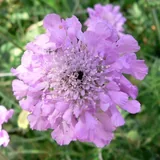
gypsophilacinerarialavenderscabious

Availability worldwide

A niche cut-flower variety from De Ruiter:

🇳🇱 Netherlands: moderate · De Ruiter🇪🇺 Europe: moderate · cut flowers🇺🇸 USA: rare🇺🇦 Ukraine: rare · as cut flowers

More about the variety

Hips
Not documented — greenhouse plants do not set fruit
Variations of the variety
Code RUIsteenka. Breeder: J.E. Steenks (within the De Ruiter breeding structure). Introduced 1994. Parentage: sport of Vivaldi (HT, De Ruiter 1989). US Patent PP 8,632 (1994). NOT Meilland (a common myth in catalogues)

How to grow

Where to plant. First and foremost a florist's HT cut-flower rose — bred for greenhouses and wedding flowers, it is best in wedding and pastel bouquets. But it also grows well in the garden: in the Forest-Steppe and Steppe, in the open; in the north, with protection. A sunny spot and fertile soil. A niche variety, rarely found on the market outside the Netherlands.

Climate. USDA 6b+. Bred for greenhouses, but it overwinters in open ground too: in the Forest-Steppe/Steppe with light cover, in the north with full cover. Each winter is different — in harsh snowless years, dieback is possible.

Care. In greenhouse conditions, control of light and temperature.

About the name

Name. 'Ravel' — after Maurice Ravel (1875–1937), the French composer and author of the famous 'Boléro' (1928). De Ruiter's series of musical names: Vivaldi (the parent of Ravel), Ravel, and other composer names. De Ruiter's tradition of naming cut-flower varieties after composers.

Breeding. Bred by J.E. Steenks within De Ruiter's breeding structure (Netherlands). Code RUIsteenka. Introduced 1994. Parentage: sport of Vivaldi (HT, De Ruiter 1989). US Patent PP 8,632 (1994). A common myth: it is sometimes credited to Meilland — this is wrong.

Significance. A niche cut-flower variety from De Ruiter in the 1990s. The Vivaldi-Ravel pair: two cut-flower varieties from De Ruiter with a musical theme. No major official awards. Rarely seen in garden cultivation — by origin a greenhouse cut-flower variety, but it grows perfectly well in the garden. For amateur gardeners, other cut-flower varieties are more accessible: Pink Avalanche+, Peach Avalanche+, Red Naomi!.

Frequently asked questions about Ravel

How many times a season does Ravel flower?

Continuous in greenhouse conditions.

How big does Ravel grow?

About 180 cm tall.

Which diseases affect Ravel?

Overall resistance: 4 out of 5. Typical of greenhouse varieties.

How much sun does Ravel need?

Warmth; greenhouse light.

What does Ravel smell like?

Absent or very light — typical of cut-flower varieties.

Gardeners' photos and reviews

My climate

Choose a reference temperature to compare with the cultivar’s data. This is not an overwintering forecast or advice on winter protection; consider wind, moisture and the duration of frost.

Regional data are generalised. USDA describes average annual extreme minima, not a forecast; the values in the list are rounded. Check the conditions at your site. More information: Roses in Ukraine's climate.