

Back to catalogue
Florist's Rose; Hybrid Tea; one of the top red cut roses of the 1990s–2000sHans Jürgen Evers; Rosen Tantau, 1994Red

Red Velvet

A dark red velvety cut HT; HMF description: 'currently probably the best florist red worldwide' (for its time); named for the velvety texture of its petals; breeder Hans Jürgen Evers / Rosen Tantau 1994 (NOT De Ruiter — a common myth).

Tantau/Evers 1994 (NOT De Ruiter)

Variety profile

Flowering

Continuous under greenhouse conditions

Use

Top cut flower

Top red cut-flower rose of the 1990s

Plant size

150–180 cm
person 170 cm150–180 cm
Habit
Greenhouse upright, with long stems
Dimensions
~150–180 cm tall (greenhouse)
Support
Greenhouse standard training
Shoots
Sturdy, straight — good for cutting
Branching
Well branched — typical of greenhouse HTs

Flower

≈ 11 cm

35 petals.

Bud shape
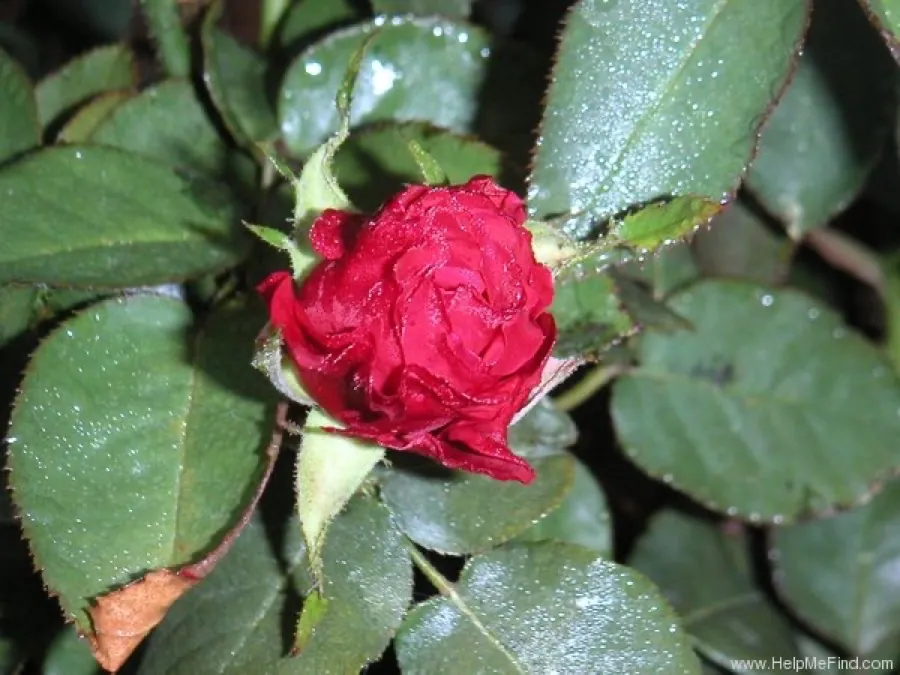
Elongated, dark red with a velvety tinge
Open flower
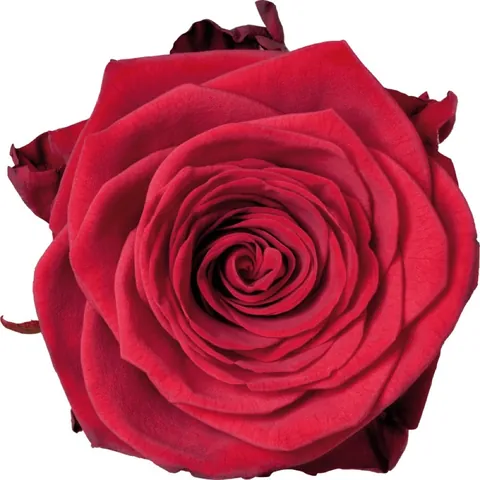
Tall cup of the classic HT form: ~11 cm (4.25"), slow to open
Centre
Tightly packed, with hidden stamens
Fullness
~35 petals
Flower carriage
Mostly singly on long stems

Fragrance

Light or absent

Light or absent — typical of cut HTs (a compromise for vase life and uniformity).

Disease resistance

4 out of 5

Good, 4/5 — typical of greenhouse Tantau roses; USDA 6b+ in the greenhouse.

Sun

Warmth

Greenhouse lighting.

Thorns

Few
thornlessfewmoderatemanyvery many

Few thorns — typical of greenhouse Tantau roses.

Foliage

Very dark and dense — a distinctive feature, a good contrast to dark red.

All characteristics in a table
Group
Florist's Rose; Hybrid Tea; one of the top red cut roses of the 1990s–2000s
Breeder
Hans Jürgen Evers; Rosen Tantau, Germany, 1994
Bud shape
Elongated, dark red with a velvety tinge
Open flower
Tall cup of the classic HT form: ~11 cm (4.25"), slow to open
Centre
Tightly packed, with hidden stamens
Colour
Dark red with a distinctive velvety texture — for its time, 'the best red cut rose in the world' (according to the HMF description)
Fullness
~35 petals
Flower carriage
Mostly singly on long stems
Flowering
Continuous under greenhouse conditions
Fragrance
Light or absent — typical of cut HTs (a compromise for vase life and uniformity)
Hips
Not documented — does not set fruit in greenhouses
Habit
Greenhouse upright, with long stems
Branching
Well branched — typical of greenhouse HTs
Shoots
Sturdy, straight — good for cutting
Thorns
Few thorns — typical of greenhouse Tantau roses.
Dimensions
~150–180 cm tall (greenhouse)
Support
Greenhouse standard training
Foliage
Very dark and dense — a distinctive feature, a good contrast to dark red
Resistance
Good, 4/5 — typical of greenhouse Tantau roses; USDA 6b+ in the greenhouse
Variations of the variety
Code TANorelav. Breeder: Hans Jürgen Evers (Rosen Tantau, Germany) — the same as Polo. Bred by 1992, introduced 1994. Parentage not disclosed. A common myth in catalogues: sometimes credited to De Ruiter — this is wrong; the true breeder is Tantau, 1994

Colour scheme

Dark red with a distinctive velvety texture — for its time, 'the best red cut rose in the world' (according to the HMF description)

Rose neighbours

Perennials to plant nearby

Neighbouring roses

The cut-flower family — creates a 'top florist collection':

Perennial companions

A classic wedding-florist family:

gypsophilacinerarialamb's ear (Stachys)scabious

Availability worldwide

One of the top red cut-flower roses of the 1990s–2000s:

🇩🇪 Germany: high · Rosen-Tantau🇪🇺 Europe: high · cut flowers🇺🇸 USA: high · FiftyFlowers, florists🇺🇦 Ukraine: high · florists

More about the variety

Hips
Not documented — does not set fruit in greenhouses
Variations of the variety
Code TANorelav. Breeder: Hans Jürgen Evers (Rosen Tantau, Germany) — the same as Polo. Bred by 1992, introduced 1994. Parentage not disclosed. A common myth in catalogues: sometimes credited to De Ruiter — this is wrong; the true breeder is Tantau, 1994

How to grow

Where to plant. First and foremost a cut florist's HT — bred for greenhouses and floristry; the leader for classic red bouquets (weddings, Valentine's, romantic arrangements). But it also grows well in the garden: in the Forest-Steppe and Steppe — outdoors or with light protection, further north — with full protection. A sunny spot and fertile soil.

Climate. USDA 6b+. Bred for greenhouses, but it also overwinters outdoors: in the Forest-Steppe/Steppe with light protection, further north with full protection. Winter hardiness is moderate; after a snowless winter, especially back-to-back ones, dieback is possible.

Care. In greenhouses — control of light and temperature; good vase life.

About the name

Name. 'Red Velvet' = 'red velvet' — for the velvety texture of the petals. A classic marketing name that highlights the variety's textural feature: the petals look like velvet in sunlight.

Breeding. Bred by Hans Jürgen Evers at Rosen Tantau (Uetersen, Germany) — the same breeder as Polo (1997). Code TANorelav. Bred by 1992, introduced 1994. Parentage not disclosed. A common myth in catalogues: it is sometimes credited to De Ruiter — this is wrong; the true breeder is Tantau, 1994.

Significance. One of the top red cut roses of the 1990s–2000s; per the HMF description — 'currently probably the best florist red worldwide' (at the time). The velvety petal texture is a distinctive feature, valued by florists. Very dark, dense foliage — a good contrast. The Tantau series of dark red cut roses: Red Velvet – Piano (2007) – Royal Piano. No major official awards (AARS, ADR not awarded for cut roses). Today it is gradually being replaced by Red Naomi! (Schreurs 2006), but Red Velvet remains a classic alternative in floristry.

Frequently asked questions about Red Velvet

How many times a season does Red Velvet flower?

Continuous under greenhouse conditions.

How big does Red Velvet grow?

150–180 cm tall.

Which diseases affect Red Velvet?

Overall resistance: 4 out of 5. Typical of greenhouse Tantau roses.

How much sun does Red Velvet need?

Warmth; greenhouse lighting.

What does Red Velvet smell like?

Light or absent — typical of cut HTs (a compromise for vase life and uniformity).

Gardeners' photos and reviews

My climate

Choose a reference temperature to compare with the cultivar’s data. This is not an overwintering forecast or advice on winter protection; consider wind, moisture and the duration of frost.

Regional data are generalised. USDA describes average annual extreme minima, not a forecast; the values in the list are rounded. Check the conditions at your site. More information: Roses in Ukraine's climate.