Roza Book · companion card
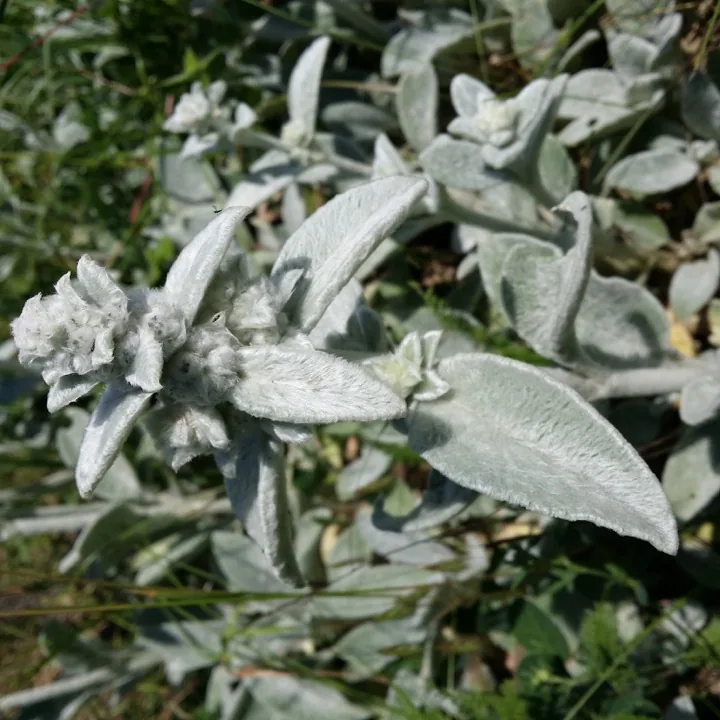
Lamb's ear beside roses
Practical compatibility, planting, care and climate limits, without exaggerated promises.
Why it makes a good neighbour
Its silver, soft carpet lightens dark roses, calms busy plantings and gives the bed a clear front edge.
How to plant it beside a rose
Lamb's ear likes sun and well-drained soil. Like lavender, it is best kept apart from the wettest and most nutrient-rich zone around the rose.
Plant it at the front edge
Keep the centre around the rose open and leave room to tend it.
Do not soak the foliage
Excess moisture makes the silver carpet untidy and raises the risk of rot.
Keep the edge in check
In spring or after flowering, remove rosettes that have spread too far.
Decide about the flower stems
You can leave them for pollinators or cut them off if you want a clean silver carpet.
For Ukraine and Europe
A short care calendar
Spring
Clear away blackened leaves and divide overcrowded clumps.
Summer
Cut off flower stems if needed; water rarely but deeply in drought.
Autumn and winter
Do not cover with wet organic mulch that presses down on and rots the leaves.
Roses in Roza Book's agreed pairings
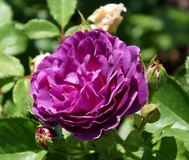
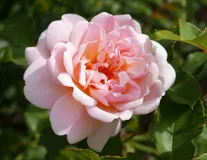
For lamb's ear, 4 varieties are shown where this companion already appears in an agreed pairing. The caption repeats the actual colour palette from the rose card.
Harmony and contrastThe selection includes both related transitions and a more pronounced colour contrast.
Growing conditionsBasic conditions: full sun. Leave room for air circulation, and decide the final spacing according to the mature size of the plants.
Why these varietiesEach pairing repeats a scheme already agreed in the rose card; random varieties were not added.


Source for verification
Basic requirements were checked against material from the Royal Horticultural Society. The practical placement beside a rose is worded separately and is not presented as a universal, strict rule.