



Back to catalogue
Floribunda; gardenMartin Vissers; Vissers, 2010Lilac and purple

Minerva

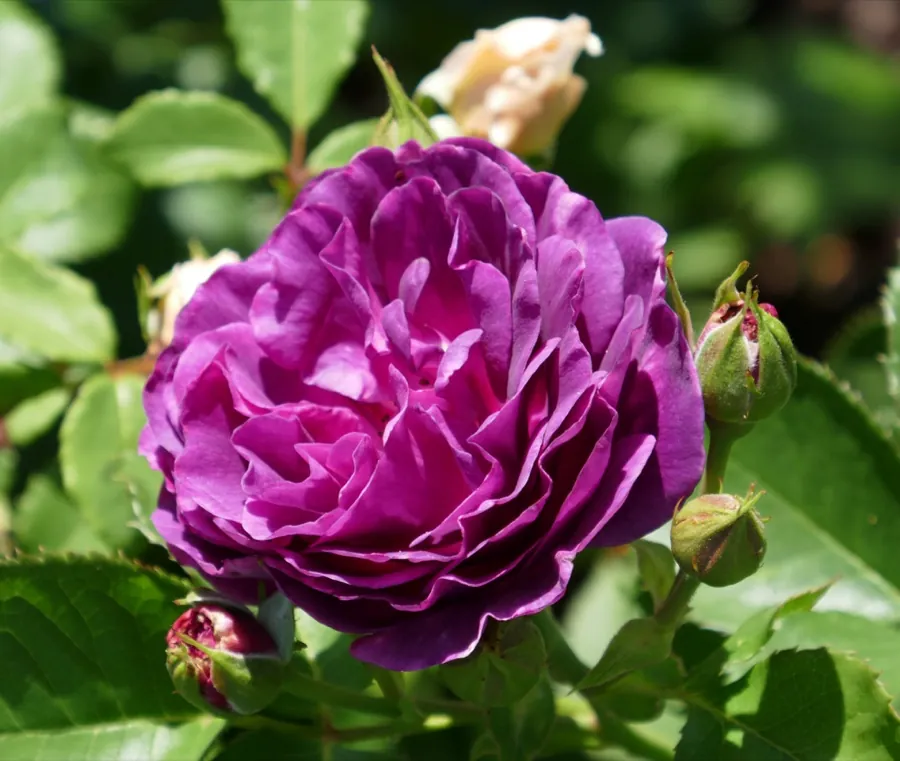
Purple with golden-yellow stamens, fading to light blue. A rare colour dynamic; the 1st Belgian variety from Vissers in the catalogue; the 'blue wave' of modern varieties.

VISancar / VMX 4010 · Vissers, Belgium

Variety profile

Flowering

Repeat, in flushes

Repeat flowering, in waves from June to October. Months are approximate, for the climate of Ukraine.

Legacy

Vissers

Belgian breeding · daughter of Sharon's Love + Marie-Louise Velge

Winter hardiness

−20 °C

USDA zone 6b. In Ukraine with moderate winter protection.

Compare reference temperatures

Plant size

70–90 × 50–70 cm
person 170 cm70–90 cm
Habit
A compact, upright Floribunda
Dimensions
70–90 × 50–70 cm
Support
Needs no support
Shoots
Sturdy, straight, medium length
Branching
Good, from the base

Flower

7–8 cm
Bud shape
Rounded, saturated purple
Open flower
Open semi-double cupped flower; the golden-yellow stamens stand out clearly against the purple
Centre
Open golden yellow, with golden stamens against a purple background
Fullness
About 30 petals (semi-double)
Flower carriage
In clusters of 3–7 flowers, typical of floribundas

Fragrance

Strong; sweet

Strong and sweet. Rare for 'blue' or purple varieties, which usually have a weak scent.

Disease resistance

4 out of 5

4/5. Good, typical of modern Belgian floribundas.

Sun

Full sun

The colour fades faster in shade.

Thorns

Moderate
thornlessfewmoderatemanyvery many

Moderate number, typical of floribundas.

Foliage

Medium green, leathery.

All characteristics in a table
Group
Floribunda; garden
Breeder
Martin Vissers; Vissers, Belgium, 2010
Bud shape
Rounded, saturated purple
Open flower
Open semi-double cupped flower; the golden-yellow stamens stand out clearly against the purple
Centre
Open golden yellow, with golden stamens against a purple background
Colour
Colour dynamics: a saturated purple bud, an open purple flower with yellow stamens, fading to a light blue / lavender-grey tone. This makes the bush 'three-coloured' at once (buds + young flowers + ageing flowers).
Fullness
About 30 petals (semi-double)
Flower carriage
In clusters of 3–7 flowers, typical of floribundas
Flowering
Repeat flowering, in waves from June to October
Fragrance
Strong and sweet. Rare for 'blue' or purple varieties, which usually have a weak scent.
Hips
Not documented
Habit
A compact, upright Floribunda
Branching
Good, from the base
Shoots
Sturdy, straight, medium length
Thorns
Moderate number, typical of floribundas.
Dimensions
70–90 × 50–70 cm
Support
Needs no support
Foliage
Medium green, leathery
Resistance
4/5. Good, typical of modern Belgian floribundas.
Variations of the variety
Code VISancar (=VMX 4010); bred and released on the market in 2010. Parentage: Sharon's Love × Marie-Louise Velge. Do not confuse it with the historic gallica 'Minerva' (Vibert, France, 1841), which is a different antique variety.

Colour scheme

Colour dynamics: a saturated purple bud, an open purple flower with yellow stamens, fading to a light blue / lavender-grey tone. This makes the bush 'three-coloured' at once (buds + young flowers + ageing flowers).

Rose neighbours

Perennials to plant nearby

Neighbouring roses

'Blue Wave': purple-lavender roses for a rare colour group:

Companion perennials

A silvery-violet family that supports the blue-purple palette:

lavenderByzantine stachyscatmintheliotrope

Availability worldwide

Modern Belgian breeding — limited availability:

🇧🇪 Belgium: high · Vissers🇳🇱 Netherlands: moderate🇪🇺 Europe: moderate · via dealers🇺🇦 Ukraine: low · rare in our nurseries

More about the variety

Hips
Not documented
Variations of the variety
Code VISancar (=VMX 4010); bred and released on the market in 2010. Parentage: Sharon's Love × Marie-Louise Velge. Do not confuse it with the historic gallica 'Minerva' (Vibert, France, 1841), which is a different antique variety.

How to grow

Where to plant. A mixed border with blue-violet perennials; an accent in classic-style gardens; a container (thanks to its compact 70–90 cm height); works well with silver-leaved plants in the background.

Climate. Down to −20 °C; in Ukraine with moderate winter protection, and in the south without protection.

Care. Classic Floribunda. Prune in spring; removing spent flowers encourages new flushes; standard seasonal disease prevention.

About the name

Name. 'Minerva', after the Roman goddess of wisdom, crafts and war (the Greek equivalent is Athena). Minerva is one of the three goddesses of the Capitoline Triad (with Jupiter and Juno), a symbol of strategic wisdom, art and science. Minerva's owl is the goddess's attribute and a symbol of philosophy. Hegel wrote: “The owl of Minerva spreads its wings only with the coming of dusk”, meaning philosophy that makes sense of what has been lived.

Breeding. Bred by Martin Vissers at the Vissers house (Belgium), released on the market in 2010. Code VISancar (=VMX 4010). Parentage: Sharon's Love × Marie-Louise Velge. Vissers is a Belgian family nursery that works in the shadow of the large French and German houses but produces rare 'signature' varieties. It is the 1st Belgian variety in the catalogue from Vissers (next to the house of Lens, another Belgian house, represented by 4 cards in our catalogue).

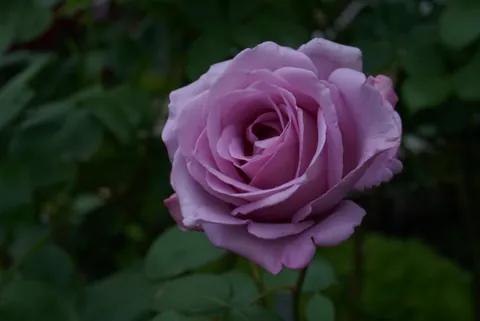
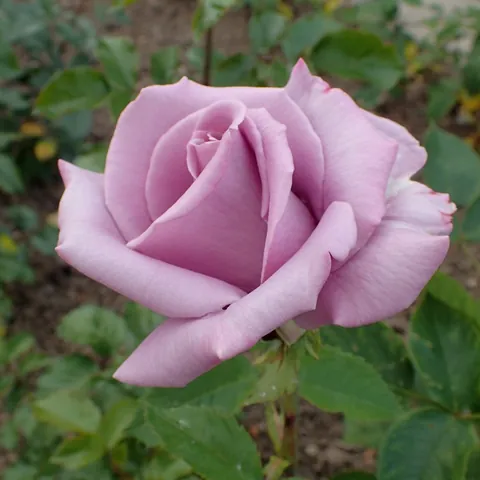
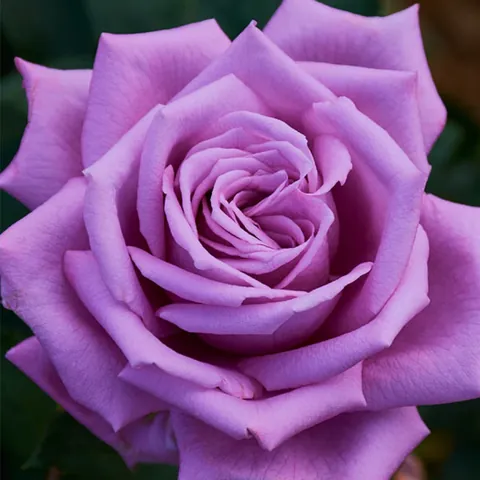
Significance. The 'Blue Wave' of the catalogue. It is the 5th purple-lavender rose, alongside Blue Moon (1964), Blue Nile (1981), Mamy Blue (1991), Ebb Tide (2004) and Indigoletta (1981). Minerva's distinctive trait is a strong, sweet fragrance, which is rare for 'blue' varieties. The colour dynamic (purple to light blue) is a characteristic feature, letting a single bush show a 'three-colour effect' at once (bud + young flower + old flower). Do not confuse it with the historic gallica 'Minerva' (Vibert, France, 1841), which is a different antique variety.

Frequently asked questions about Minerva

Does Minerva need winter protection?

The cultivar’s reference temperature is −20 °C (USDA zone 6b). Overwintering depends on the conditions. In Ukraine with moderate winter protection.

How many times a season does Minerva flower?

Repeat flowering, in waves from June to October.

How big does Minerva grow?

70–90 cm tall, 50–70 cm wide.

Which diseases affect Minerva?

Overall resistance: 4 out of 5. Good; a modern Belgian breed.

How much sun does Minerva need?

Sun; full sun; the colour fades faster in shade.

What does Minerva smell like?

Strong and sweet. Rare for 'blue' or purple varieties, which usually have a weak scent.

Gardeners' photos and reviews

My climate

Choose a reference temperature to compare with the cultivar’s data. This is not an overwintering forecast or advice on winter protection; consider wind, moisture and the duration of frost.

Regional data are generalised. USDA describes average annual extreme minima, not a forecast; the values in the list are rounded. Check the conditions at your site. More information: Roses in Ukraine's climate.