



Back to catalogue
Climbing Hybrid Tea; fragrant climberMichel Adam, 1997Red

Red Flame

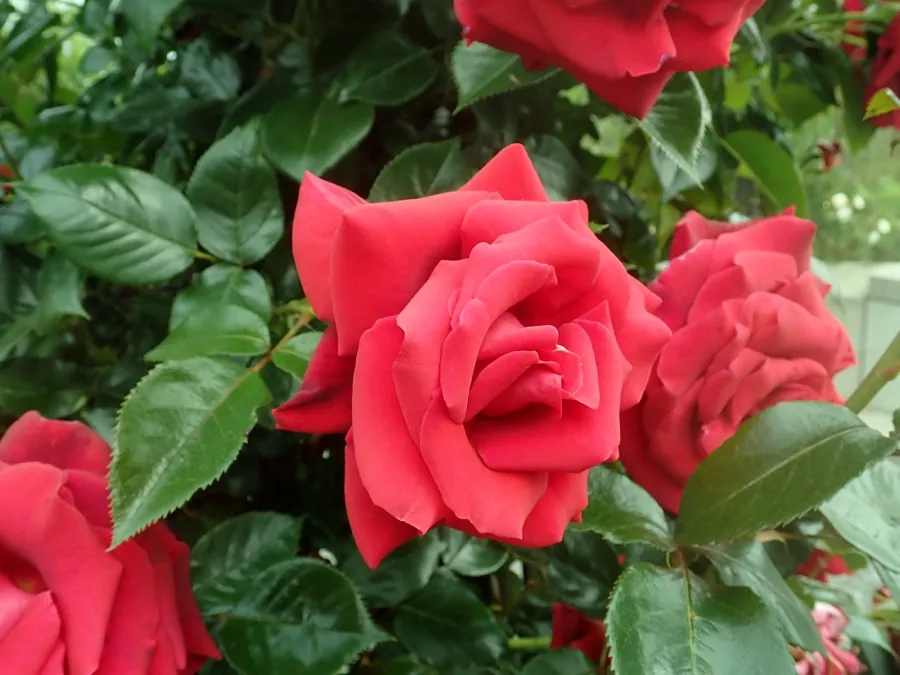
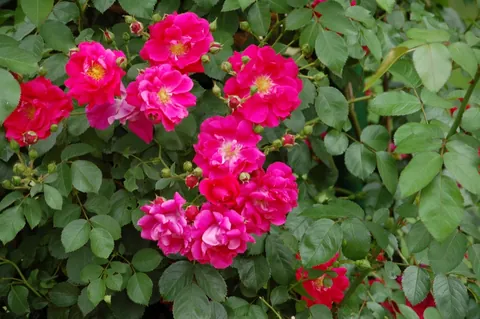
A rich red climber with a strong spicy scent; parentage Messire Delbard × Manou Meilland — two French classics; it is Adam 1997, NOT Boerner 1949 (a common myth in catalogues — Boerner released Masquerade in 1949, not Red Flame); 23–30 petals in a very double form.

US PP17,552 · NZ PT 31316 · Adam 1997 (NOT Boerner 1949)

Variety profile

Flowering

Repeat flowering

Repeat-flowering from June to October. Months are approximate, for the climate of Ukraine.

Legacy

Adam 1997

EXCELLENT HMF rating · NZ PT 2016

Winter hardiness

−18 °C

USDA zone 6b-9b. Central/Southern Ukraine, with light protection.

Compare reference temperatures

Plant size

200–400 × 150–180 cm
person 170 cm200–400 cm
Habit
A large climber with strong canes
Dimensions
200–400 cm tall × 150–180 cm wide — a large climber
Support
Essential — wall, pergola, trellis
Shoots
Sturdy, straight
Branching
Well branched, with strong main canes and moderately flexible side shoots

Flower

14-15 cm
Bud shape
Elongated, rich red
Open flower
Very double, high-centred, cup-shaped: ~14–15 cm (5.75″), 23–30 petals
Centre
Tightly packed, with a pointed centre
Fullness
23–30 petals (very full)
Flower carriage
Mostly singly or in small clusters

Fragrance

Strong; spicy

Strong spicy scent — rare among climbers, especially red ones.

Disease resistance

4 out of 5

Good, 4/5; USDA 6b–9b. EXCELLENT-rating in HMF.

Sun

Full sun

The colour is brighter in cool weather.

Thorns

Moderate
thornlessfewmoderatemanyvery many

Moderate number of thorns — typical for a Climbing HT.

Foliage

Glossy dark green leathery — healthy, typical of modern Adam roses.

All characteristics in a table
Group
Climbing Hybrid Tea; fragrant climber
Breeder
Michel Adam, France, 1997
Bud shape
Elongated, rich red
Open flower
Very double, high-centred, cup-shaped: ~14–15 cm (5.75″), 23–30 petals
Centre
Tightly packed, with a pointed centre
Colour
Rich medium red — holds its colour in the sun
Fullness
23–30 petals (very full)
Flower carriage
Mostly singly or in small clusters
Flowering
Repeat-flowering from June to October
Fragrance
Strong spicy scent — rare among climbers, especially red ones
Hips
Not documented — spent blooms are cut for repeat flowering
Habit
A large climber with strong canes
Branching
Well branched, with strong main canes and moderately flexible side shoots
Shoots
Sturdy, straight
Thorns
Moderate number of thorns — typical for a Climbing HT.
Dimensions
200–400 cm tall × 150–180 cm wide — a large climber
Support
Essential — wall, pergola, trellis
Foliage
Glossy dark green leathery — healthy, typical of modern Adam roses
Resistance
Good, 4/5; USDA 6b–9b. EXCELLENT-rating in HMF
Variations of the variety
Code ADAbaring. US Patent PP17,552 (2007); NZ Patent 31316 (2016). Breeder: Michel Adam (Roses Michel Adam, France) — the same breeder as Paco Rabanne. Introduced 1997. Parentage: 'Messire Delbard' × 'Manou Meilland' — two French classics. IMPORTANT: do not confuse with the phantom 'Red Flame Wichuriana 1949 Boerner' — in 1949 Boerner released Masquerade, not Red Flame

Colour scheme

Rich medium red — holds its colour in the sun

Rose neighbours

Perennials to plant nearby

Neighbouring roses

Climbers and fragrant reds create an 'arch gallery':

Perennial companions

A classic palette for climbers:

lavenderlamb's ear (Stachys)gypsophilacatmint (Nepeta)

Availability worldwide

European fragrant climber classic of the 1990s:

  • 🇫🇷 France: high · Roses Michel Adam
  • 🇬🇧 UK: high · Peter Beales
  • 🇮🇹 Italy: high · Rose Barni, Le Rose di Firenze
  • 🇺🇦 Ukraine: moderate · via NIRP partners

More about the variety

Hips
Not documented — spent blooms are cut for repeat flowering
Variations of the variety
Code ADAbaring. US Patent PP17,552 (2007); NZ Patent 31316 (2016). Breeder: Michel Adam (Roses Michel Adam, France) — the same breeder as Paco Rabanne. Introduced 1997. Parentage: 'Messire Delbard' × 'Manou Meilland' — two French classics. IMPORTANT: do not confuse with the phantom 'Red Flame Wichuriana 1949 Boerner' — in 1949 Boerner released Masquerade, not Red Flame

How to grow

Where to plant. On walls, pergolas and trellises — its main use; as a fragrant accent in the garden; beside paths and benches, where the strong spicy scent can be enjoyed — a rare combination in a red climber.

Climate. Central/Southern Ukraine, with light winter protection (USDA 6b); copes well with summer heat.

Care. Full sun; a well-ventilated spot; a sturdy support is essential; feed 2–3× per season; prune ⅓ in spring.

About the name

Name. 'Red Flame' — a marketing name that conveys the bright fiery-red colour. Part of Michel Adam's poetic French naming tradition.

Breeding. Bred by Michel Adam at Roses Michel Adam (France) — the same breeder as Paco Rabanne. Code ADAbaring. Introduced 1997. Parentage: 'Messire Delbard' × 'Manou Meilland®' — a cross of two French classics. US Patent PP17,552 (2007); NZ Patent 31316 (2016).

Significance. EXCELLENT-rating in HMF. The strong spicy scent is rare for red climbers (most have no scent). A large climber, 3–4 m — good for walls and pergolas. Glossy dark green leathery foliage — healthy. 23–30 petals in a very double, high-centred, cup-shaped form. IMPORTANT NOTE: it is sometimes confused with a phantom 'Red Flame Wichuriana 1949 Boerner' — this is incorrect: in 1949 Boerner released Masquerade, not Red Flame. The true Red Flame is Adam 1997. No major awards (AARS, ADR not awarded).

Frequently asked questions about Red Flame

Does Red Flame need winter protection?

The cultivar’s reference temperature is −18 °C (USDA zone 6b−9b). Overwintering depends on the conditions. Central/Southern Ukraine, with light protection.

How many times a season does Red Flame flower?

Repeat-flowering from June to October.

How big does Red Flame grow?

200–400 cm tall, 150–180 cm wide.

Which diseases affect Red Flame?

Overall resistance: 4 out of 5. Glossy dark green leathery foliage.

How much sun does Red Flame need?

Sun; full sun; the colour is brighter in cool weather.

What does Red Flame smell like?

Strong spicy scent — rare among climbers, especially red ones.

Gardeners' photos and reviews

My climate

Choose a reference temperature to compare with the cultivar’s data. This is not an overwintering forecast or advice on winter protection; consider wind, moisture and the duration of frost.

Regional data are generalised. USDA describes average annual extreme minima, not a forecast; the values in the list are rounded. Check the conditions at your site. More information: Roses in Ukraine's climate.