


Back to catalogue
Hybrid MuskRev. Joseph H. Pemberton, 1928Pink

Felicia

Parentage 'Trier' × 'Ophelia'; RHS AGM 1993; one of the 4 classic Hybrid Musks Pemberton still in commerce after 100+ years.

Pemberton classic · the Cornelia, Penelope, Buff Beauty family

Variety profile

Flowering

Repeat flowering

Repeat-flowering in flushes through the season — from June to the frosts. Months are approximate, for the climate of Ukraine.

Awards

RHS AGM

1993 · Award of Garden Merit

Winter hardiness

−23 °C

USDA zone 6b–10b. In Ukraine, with winter protection.

Compare reference temperatures

Plant size

90–245 × 120–275 cm
person 170 cm90–245 cm
Habit
A wide, spreading shrub; the branches are flexible, and in a humid climate it can be used as a small climber
Dimensions
90–245 cm tall × 120–275 cm wide (in warm regions — at the upper end)
Support
Not necessary, but it looks lovely on a low trellis or along a fence
Shoots
Flexible and slender — they sway attractively in the wind
Branching
Very good — a bush with 100+ flowers at once at the peak of the season

Flower

9–16 petals
Bud shape
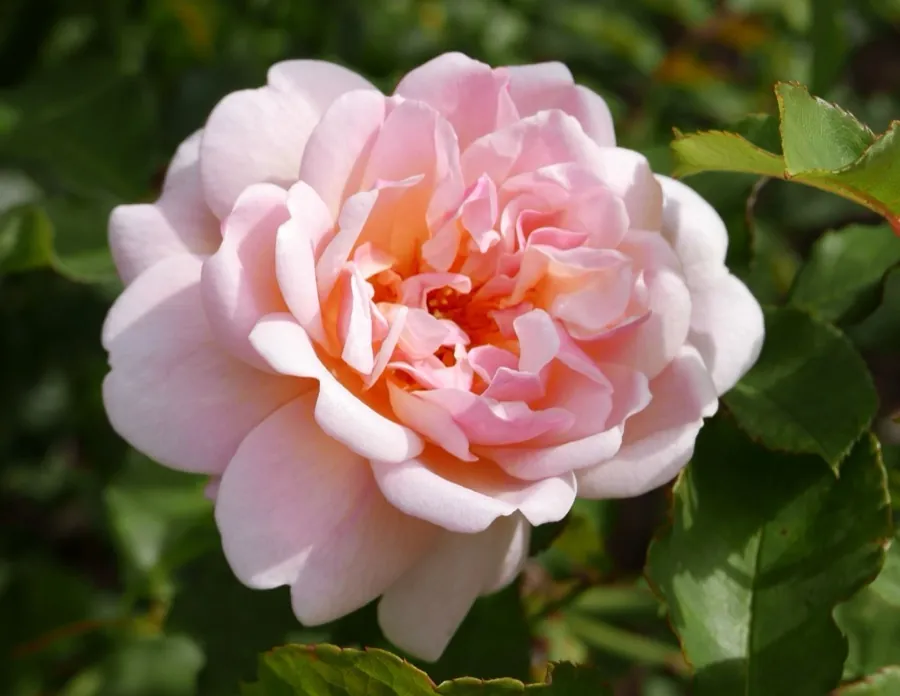
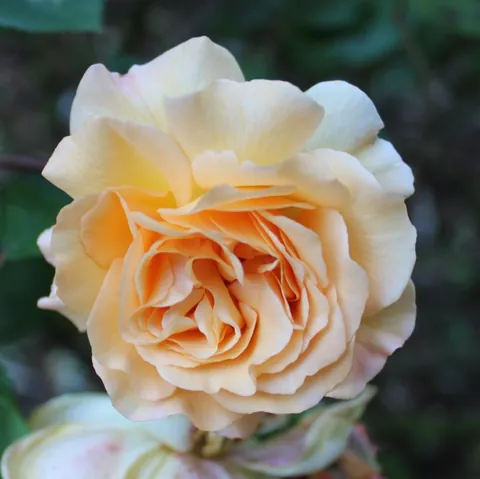
Round-oval, delicate pink with a peach tint
Open flower
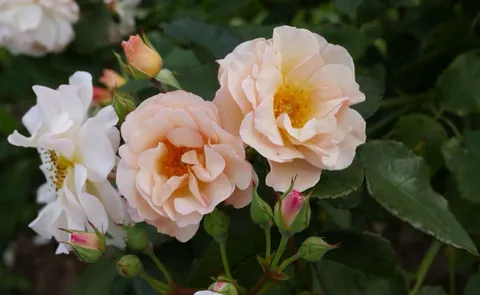
Semi-double rosette with a noticeable golden heart of stamens
Centre
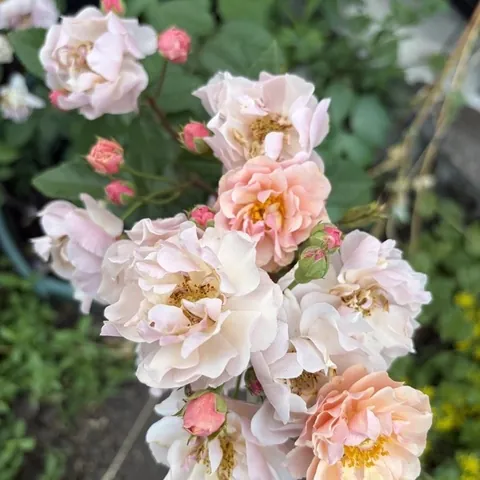
Peach-salmon centre, becoming creamy white with yellow stamens over time
Fullness
Semi-double, 9–16 petals
Flower carriage
In large clusters (the typical Hybrid Musk habit) — a true 'bouquet on a branch'

Fragrance

Strong

Strong, sweet musky, with notes of fresh orchard fruit.

Disease resistance

5 out of 5

Outstanding — Hybrid Musks Pemberton are known for being undemanding; it tolerates partial shade, which is rare for roses.

Sun

Sun or partial shade

Tolerates some shade — unusual for roses.

Thorns

Few
thornlessfewmoderatemanyvery many

Few thorns — typical of Hybrid Musks.

Foliage

Medium green, matt, healthy.

All characteristics in a table
Group
Hybrid Musk
Breeder
Rev. Joseph H. Pemberton, United Kingdom, 1928
Bud shape
Round-oval, delicate pink with a peach tint
Open flower
Semi-double rosette with a noticeable golden heart of stamens
Centre
Peach-salmon centre, becoming creamy white with yellow stamens over time
Colour
Light pink with silvery tones; the yellowish base of the petals makes the flower look 'light from within'
Fullness
Semi-double, 9–16 petals
Flower carriage
In large clusters (the typical Hybrid Musk habit) — a true 'bouquet on a branch'
Flowering
Repeat-flowering in flushes through the season — from June to the frosts
Fragrance
Strong, sweet musky, with notes of fresh orchard fruit
Hips
Decorative red-orange hips in autumn
Habit
A wide, spreading shrub; the branches are flexible, and in a humid climate it can be used as a small climber
Branching
Very good — a bush with 100+ flowers at once at the peak of the season
Shoots
Flexible and slender — they sway attractively in the wind
Thorns
Few thorns — typical of Hybrid Musks.
Dimensions
90–245 cm tall × 120–275 cm wide (in warm regions — at the upper end)
Support
Not necessary, but it looks lovely on a low trellis or along a fence
Foliage
Medium green, matt, healthy
Resistance
Outstanding — Hybrid Musks Pemberton are known for being undemanding; it tolerates partial shade, which is rare for roses
Variations of the variety
Triploid (one of the 4 classic Hybrid Musks Pemberton, alongside Cornelia, Penelope and 'Buff Beauty'); no patent code (1928, predating most code systems)

Colour scheme

Light pink with silvery tones; the yellowish base of the petals makes the flower look 'light from within'

Rose neighbours

Perennials to plant nearby

Rose neighbours

The classic Hybrid Musk family — a pastel 'bouquet on a branch':

Perennial companions

A soft pastel palette with silver accents:

lavender 'Munstead'geranium 'Wargrave Pink'lamb's ear (Stachys byzantina)gaillardia 'Aurum'

Availability worldwide

A classic British rose, especially popular in traditional English gardens:

  • 🇪🇺 Europe: HIGH · David Austin · Beales · UK classic
  • 🇺🇸 USA: moderate · specialist nurseries
  • 🇯🇵 Asia: moderate · popular in Japan
  • 🇺🇦 Ukraine: low · rare, you need to look in collections

More about the variety

Hips
Decorative red-orange hips in autumn
Variations of the variety
Triploid (one of the 4 classic Hybrid Musks Pemberton, alongside Cornelia, Penelope and 'Buff Beauty'); no patent code (1928, predating most code systems)

How to grow

Where to plant. Wide shrub plantings, along low fences, as a single shrub in a lawn; it looks lovely in partial shade (an unusual quality for roses), so it suits yards between tall trees; works well as a 'soft wall' 2×3 m.

Climate. To −23 °C — in Ukraine with winter protection in central and northern regions; in the south no cover is needed.

Care. It needs almost nothing — Hybrid Musks Pemberton have grown in gardens for 100 years with little intervention. Sanitary pruning and light shaping in spring are enough; do not prune hard (it will lose its 'bouquet' shape).

About the name

Name. 'Felicia' — from Latin felix ('happy, lucky'); an allusion to the Roman goddess Felicitas (goddess of happiness and good luck). NOT a Greek heroine — this is a common mistake. The Reverend Pemberton named his Hybrid Musks after heroines of literature and classical mythology — a family of 'maiden' names: Felicia, Cornelia, Penelope, Daphne, Pax, Vanity, Thisbe.

Breeding. Bred by the Reverend Joseph Hardwick Pemberton in Havering-atte-Bower (UK) before 1926; commercial introduction 1928. Parentage: 'Trier' (Hybrid Multiflora, Lambert 1904) × 'Ophelia' (Hybrid Tea, Paul 1912). Triploid (3n).

Significance. Pemberton was an amateur clergyman who created the new class of 'Hybrid Musks' in the early XX century: flexible, fragrant, repeat-flowering and tolerant of partial shade. Felicia is one of the 4 classic Hybrid Musks Pemberton still in commerce after 100+ years (alongside Cornelia, Penelope and 'Buff Beauty'). RHS Award of Garden Merit (1993) — confirmation of outstanding garden quality. After Pemberton's death (1926) his pupil Ann Bentall carried on the work; she had a hand in 'Ballerina' (1937) and 'Buff Beauty' (1939), which were the last representatives of the classic Hybrid Musks.

Frequently asked questions about Felicia

Does Felicia need winter protection?

The cultivar’s reference temperature is −23 °C (USDA zone 6b–10b). Overwintering depends on the conditions. In Ukraine, with winter protection.

How many times a season does Felicia flower?

Repeat-flowering in flushes through the season — from June to the frosts.

How big does Felicia grow?

90–245 cm tall, 120–275 cm wide.

Which diseases affect Felicia?

Overall resistance: 5 out of 5. 'very disease resistant' — a typical trait of the Pemberton Hybrid Musks.

How much sun does Felicia need?

Sun or partial shade; tolerates some shade — unusual for roses.

What does Felicia smell like?

Strong, sweet musky, with notes of fresh orchard fruit.

Gardeners' photos and reviews

My climate

Choose a reference temperature to compare with the cultivar’s data. This is not an overwintering forecast or advice on winter protection; consider wind, moisture and the duration of frost.

Regional data are generalised. USDA describes average annual extreme minima, not a forecast; the values in the list are rounded. Check the conditions at your site. More information: Roses in Ukraine's climate.