



Back to catalogue
Floribunda / PatioKordes, 2001Pink

Abracadabra

A famous 'magical' striped rose with changing colours.

Bud sport of Hocus Pocus

Variety profile

Flowering

Repeat, in flushes

Repeat flowering in flushes: late spring – autumn. Months are approximate, for the climate of Ukraine.

Feature

Stripes

Each flower is unique · can revert to Hocus Pocus

Winter hardiness

−23 °C

USDA zone 6b–9b. Forest-Steppe; Steppe; north of Ukraine — with light protection. Forest-Steppe · Steppe · northern Ukraine — with light winter protection.

Compare reference temperatures

Plant size

70–90 × 50–60 cm
person 170 cm70–90 cm
Habit
Compact, upright; a neat small bush for the front of a border
Dimensions
70–90 cm tall × 50–60 cm wide
Support
Does not need support — a compact, low rose
Shoots
Thin, flexible; do not need tying in
Branching
Medium; holds its shape well without formative pruning

Flower

≈ 7 cm

17–25 petals.

Bud shape
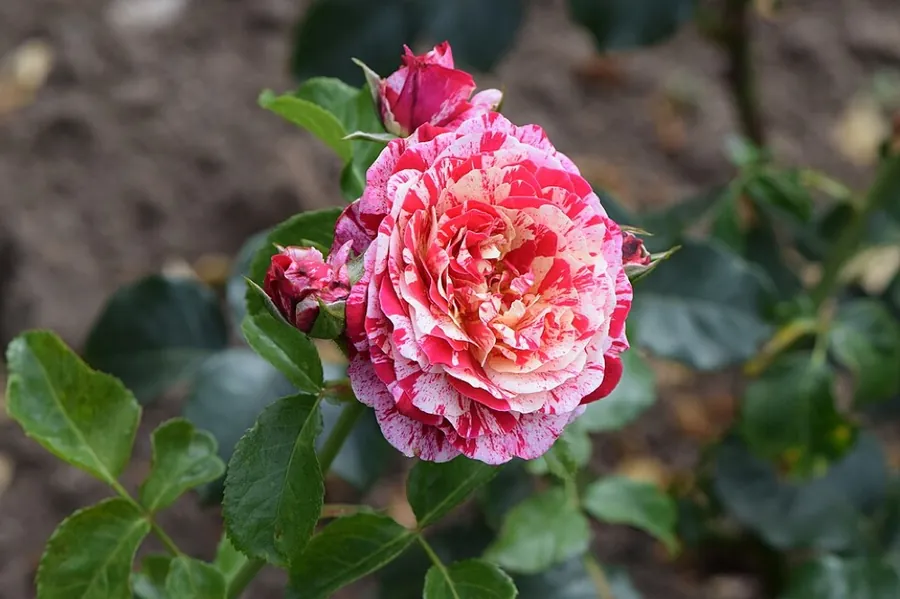
Small, goblet-shaped; striped — from pinkish red to dark burgundy with yellow streaks
Open flower
Double, goblet- to cup-shaped; diameter about 7 cm
Centre
Moderately dense; stamens are visible when fully open
Fullness
Double, 17–25 petals
Flower carriage
In clusters of 3–7 flowers per stem

Fragrance

Light

Light, weak.

Disease resistance

3.5 out of 5
Black spotmoderatePowdery mildewmoderateRustmoderate

Moderate — needs preventive treatment against black spot, powdery mildew and rust; vulnerable in rainy periods.

Sun

5–6 hours

Full sun; at least 5–6 hours of direct light; a spot sheltered from the north wind.

Thorns

Few
thornlessfewmoderatemanyvery many

A small number of thorns; the bush is comfortable to care for.

Foliage

Dark green, semi-glossy, dense; leaves with 5 leaflets.

Other names

Breeder's code KORhocsel.

All characteristics in a table
Group
Floribunda / Patio
Breeder
Kordes, 2001
Bud shape
Small, goblet-shaped; striped — from pinkish red to dark burgundy with yellow streaks
Open flower
Double, goblet- to cup-shaped; diameter about 7 cm
Centre
Moderately dense; stamens are visible when fully open
Colour
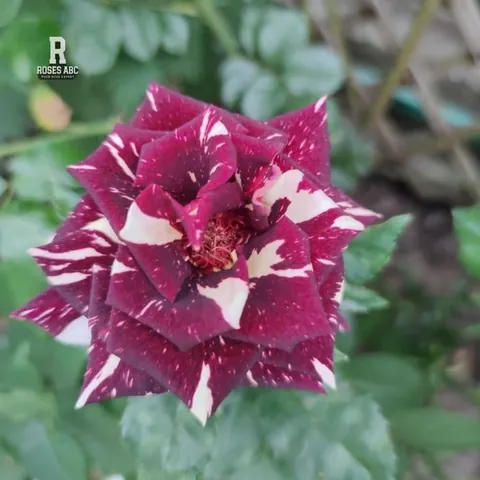
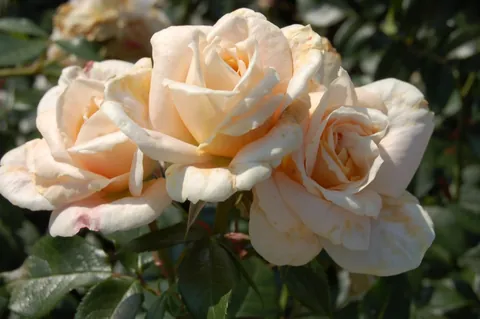
Highly variable: sometimes pinkish-red stripes on a cream-white background (as in the photo), sometimes a dark red/burgundy-brown background with lemon-yellow stripes; no two flowers are alike
Fullness
Double, 17–25 petals
Flower carriage
In clusters of 3–7 flowers per stem
Flowering
Repeat flowering in flushes: late spring – autumn
Fragrance
Light, weak
Colour variability
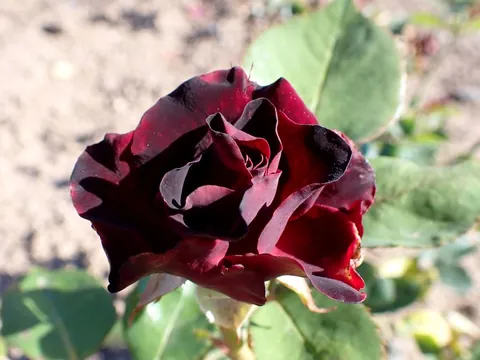
The variety can 'revert' to its parent Hocus Pocus (without yellow stripes) or produce almost black-red flowers — this is a normal trait of sports
Habit
Compact, upright; a neat small bush for the front of a border
Branching
Medium; holds its shape well without formative pruning
Shoots
Thin, flexible; do not need tying in
Thorns
A small number of thorns; the bush is comfortable to care for.
Dimensions
70–90 cm tall × 50–60 cm wide
Support
Does not need support — a compact, low rose
Foliage
Dark green, semi-glossy, dense; leaves with 5 leaflets
Resistance
Moderate — needs preventive treatment against black spot, powdery mildew and rust; vulnerable in rainy periods
Variety family
Sport of 'Hocus Pocus' (KORpriwa, Kordes 2000), which is itself a sport of 'Black Beauty' (1996)

Colour scheme

Highly variable: sometimes pinkish-red stripes on a cream-white background (as in the photo), sometimes a dark red/burgundy-brown background with lemon-yellow stripes; no two flowers are alike

Rose neighbours

Perennials to plant nearby

Neighbouring roses

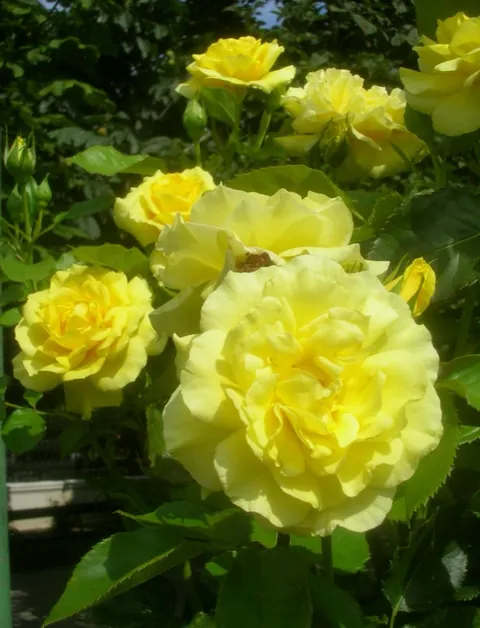
For the Abracadabra stripes to stand out, plant nearby either solid dark-red roses (they deepen the burgundy base) or creamy-yellow ones (they pick out the yellow stripes):

Perennial companions

A cool lavender-purple carpet at the base makes a dramatic contrast to the warm, exotic look:

catmint (Nepeta)lavendersalvia Caradonnalady's mantle (Alchemilla)Stipa tenuissima (grass)

Contrasting accents

Dark, 'magical' companions to enhance its mystical character:

Dark purple monkshoodCow parsley 'Raven Wing'Lamb's ear (silver foliage)

More about the variety

Colour variability
The variety can 'revert' to its parent Hocus Pocus (without yellow stripes) or produce almost black-red flowers — this is a normal trait of sports
Variety family
Sport of 'Hocus Pocus' (KORpriwa, Kordes 2000), which is itself a sport of 'Black Beauty' (1996)

How to grow

Where to plant. The front of a mixed border, edging, groups of 3–5 bushes, containers on a terrace or balcony. As a striking 'focal' rose, a specimen in a compact garden.

Climate. Hardy to −23 °C; in the northern and eastern regions of Ukraine (Chernihiv, Sumy and Kharkiv regions) light winter protection is advisable.

Care. Needs regular preventive treatment against fungal diseases (1–2 treatments per season), especially in a wet summer. In a hot, dry spell the pattern on the petals shows up better.

About the name

Name. 'Abracadabra' is an old magical incantation that was used as an amulet against illness in ancient Rome. For this variety the name hints at its magically changing colour: each flower is unique, and the pattern never repeats, like a spell. The variety continues Kordes' 'magical' line: its parent is Hocus Pocus, its grandparent is Black Beauty.

Breeding. Bred by the German nursery W. Kordes' Söhne and introduced in 2001. Breeder's code: KORhocsel. A sport of 'Hocus Pocus' (KORpriwa, 2000), which is itself a sport of 'Black Beauty' (1996).

Significance. One of the best-known striped roses in the world. Each flower is unique in its pattern, which makes the variety a collector's and photogenic rose. It often appears on social media and in garden-design catalogues as an example of a 'surprising' variety.

Frequently asked questions about Abracadabra

Does Abracadabra need winter protection?

The cultivar’s reference temperature is −23 °C (USDA zone 6b–9b). Overwintering depends on the conditions. Forest-Steppe; Steppe; north of Ukraine — with light protection.

How many times a season does Abracadabra flower?

Repeat flowering in flushes: late spring – autumn.

How big does Abracadabra grow?

70–90 cm tall, 50–60 cm wide.

Which diseases affect Abracadabra?

Overall resistance: 3.5 out of 5. 3.5 / 5; moderate; needs preventive treatment against black spot and rust.

How much sun does Abracadabra need?

Full sun; at least 5–6 hours of direct light; a spot sheltered from the north wind.

What does Abracadabra smell like?

Light, weak.

Gardeners' photos and reviews

My climate

Choose a reference temperature to compare with the cultivar’s data. This is not an overwintering forecast or advice on winter protection; consider wind, moisture and the duration of frost.

Regional data are generalised. USDA describes average annual extreme minima, not a forecast; the values in the list are rounded. Check the conditions at your site. More information: Roses in Ukraine's climate.