


Back to catalogue
Hybrid TeaMeilland, 2000Red

Black Baccara

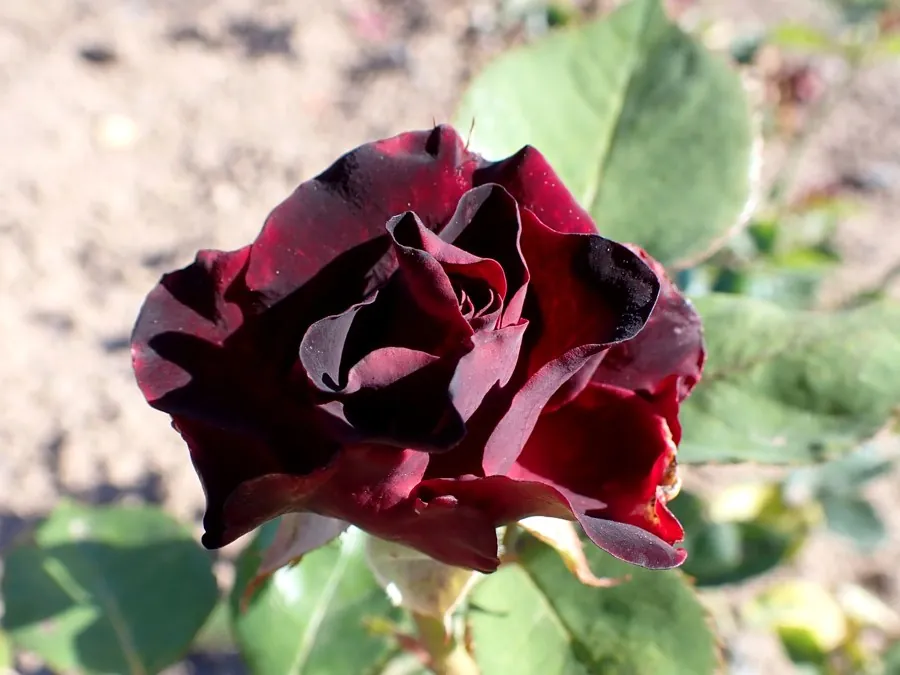
The darkest of the commercial roses – dense black-burgundy velvet that looks almost black in cool weather.

Bred as a cut rose · also grows in the garden

Variety profile

Flowering

Repeat, in flushes

Repeat-flowering in flushes, from June to autumn. Months are approximate, for the climate of Ukraine.

Feature

As cut flowers: up to 2 weeks

The iconic 'black' rose of florists worldwide

Winter hardiness

−23 °C

USDA zone 5b–9b. Light winter protection in the north.

Compare reference temperatures

Plant size

120–185 × 80 cm
person 170 cm120–185 cm
Habit
Upright, narrow, elegant
Dimensions
120–185 cm tall × up to 80 cm wide
Support
No support needed – the bush is self-supporting (support is only needed for climbing varieties)
Shoots
Strong, long, suitable for cutting
Branching
Moderate, upright

Flower

8–13 cm
Bud shape
Elongated, classic, almost black – darker than the open flower
Open flower
High-centred Hybrid Tea form; diameter 8–13 cm
Centre
Tightly rolled, elegant
Fullness
Full, 41+ petals
Flower carriage
Solitary blooms on a long, sturdy stem

Fragrance

Almost none

Almost none – the variety is valued for its colour and shape, not its scent.

Disease resistance

4 out of 5

Good; strong, healthy growth.

Sun

Partial shade

Morning sun and shade at midday – so the colour does not fade.

Thorns

Moderate
thornlessfewmoderatemanyvery many

Standard for a Hybrid Tea.

Foliage

Dark green, semi-glossy.

Other names

Breeder's code MEIdebenne.

All characteristics in a table
Group
Hybrid Tea
Breeder
Meilland, 2000
Bud shape
Elongated, classic, almost black – darker than the open flower
Open flower
High-centred Hybrid Tea form; diameter 8–13 cm
Centre
Tightly rolled, elegant
Colour
Deep black-burgundy velvet; darkens in cool weather, fades to dark red in heat
Fullness
Full, 41+ petals
Flower carriage
Solitary blooms on a long, sturdy stem
Flowering
Repeat-flowering in flushes, from June to autumn
Fragrance
Almost none – the variety is valued for its colour and shape, not its scent
Special features
Lasts up to two weeks in a vase – one of florists' most popular 'black' roses
Habit
Upright, narrow, elegant
Branching
Moderate, upright
Shoots
Strong, long, suitable for cutting
Thorns
Standard for a Hybrid Tea.
Dimensions
120–185 cm tall × up to 80 cm wide
Support
No support needed – the bush is self-supporting (support is only needed for climbing varieties)
Foliage
Dark green, semi-glossy
Resistance
Good; strong, healthy growth
Variations of the variety
Striking for cutting and in dark 'Gothic' garden schemes

Colour scheme

Deep black-burgundy velvet; darkens in cool weather, fades to dark red in heat

Rose neighbours

Perennials to plant nearby

Neighbouring roses

A dark velvet palette with a light accent so that the blackness reads clearly:

Perennial companions

Silver and cool blue bring out the depth of the black-burgundy:

lamb's earperovskiagypsophilaheuchera 'Palace Purple'

Contrasting accents

A light background is the key device for dark roses: the blackness shows only beside something pale:

silver wormwood (Artemisia)catmint (Nepeta)white daylilies

More about the variety

Special features
Lasts up to two weeks in a vase – one of florists' most popular 'black' roses
Variations of the variety
Striking for cutting and in dark 'Gothic' garden schemes

How to grow

Where to plant. A dark accent in a mixed border, a corner for cut flowers, or a 'Gothic'-style planting against a pale wall or silver foliage, where the deep colour shows best. Light: best with morning sun and shade from the midday heat, or dappled shade. In open, scorching sun the petal edges burn and the colour fades to ordinary dark red.

Care. Regular watering at the base, feeding to keep the bush strong, spring pruning; disease prevention as needed.

About the name

Name. Baccara was a famous red cut rose from Meilland in the 1950s; Black Baccara is its 'black' successor, bred as the darkest cut flower for florists.

Breeding. Jacques Mouchotte, Meilland International (France), 2000; patent code MEIdebenne. Do not confuse it with the older Baccará of 1954, which is a bright red variety. Special feature: the colour depends strongly on temperature – in cool spring and autumn the flower is almost black, while in summer heat it fades. That is why it looks most dramatic in shade and in cool weather.

Frequently asked questions about Black Baccara

Does Black Baccara need winter protection?

The cultivar’s reference temperature is −23 °C (USDA zone 5b–9b). Overwintering depends on the conditions.

How many times a season does Black Baccara flower?

Repeat-flowering in flushes, from June to autumn.

How big does Black Baccara grow?

120–185 cm tall, about 80 cm wide.

Which diseases affect Black Baccara?

Overall resistance: 4 out of 5. Good; vigorous growth.

How much sun does Black Baccara need?

Partial shade; morning sun and shade at midday – so the colour does not fade.

What does Black Baccara smell like?

Almost none – the variety is valued for its colour and shape, not its scent.

Gardeners' photos and reviews

My climate

Choose a reference temperature to compare with the cultivar’s data. This is not an overwintering forecast or advice on winter protection; consider wind, moisture and the duration of frost.

Regional data are generalised. USDA describes average annual extreme minima, not a forecast; the values in the list are rounded. Check the conditions at your site. More information: Roses in Ukraine's climate.