


Back to catalogue
FloribundaReimer Kordes, 1973Yellow

Friesia

The only floribunda in history with the Gamble Fragrance Medal (1979); ADR 1973; Baden-Baden Gold 1972; RNRS Gold 1989; James Mason Memorial Medal 1989.

Sunsprite in the USA · a legend among yellow roses

Variety profile

Flowering

Repeat-flowering, in flushes through the season

Awards

Gamble Medal 1979

Only FL · ADR 1973 · Baden-Baden Gold 1972 · RNRS Gold 1989

Winter hardiness

−26 °C

USDA zone 5b–9b. All of Ukraine with moderate winter protection.

Compare reference temperatures

Plant size

50–75 × 60 cm
person 170 cm50–75 cm
Habit
Upright, compact — a typical classic floribunda
Dimensions
50–75 cm tall × up to 60 cm wide
Support
Needs no support
Shoots
Strong, straight, hold clusters well
Branching
Good, even

Flower

≈ 8 cm

26–40 petals.

Bud shape
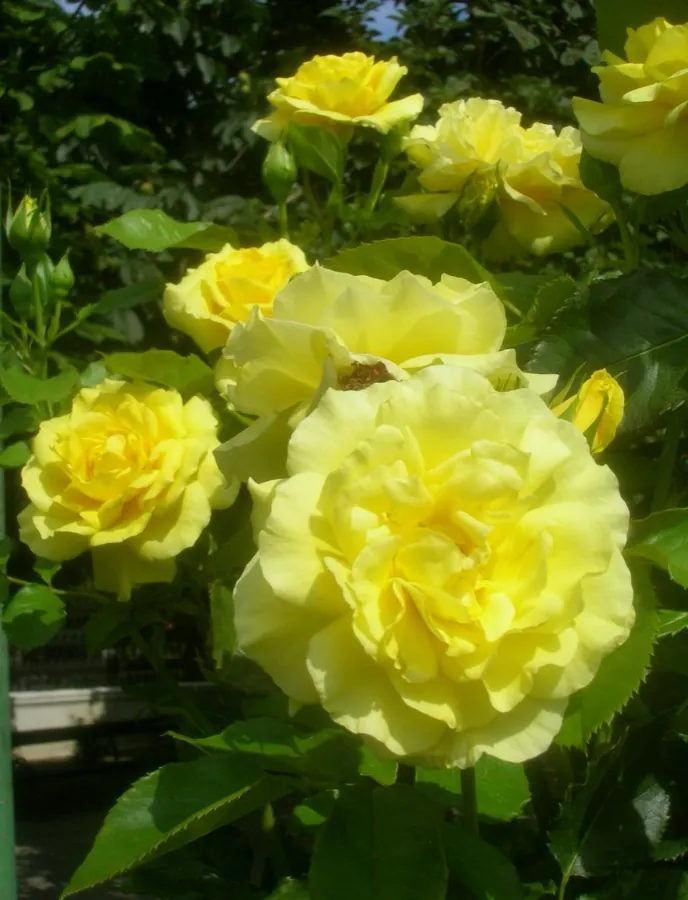
Round-conical, golden yellow
Open flower
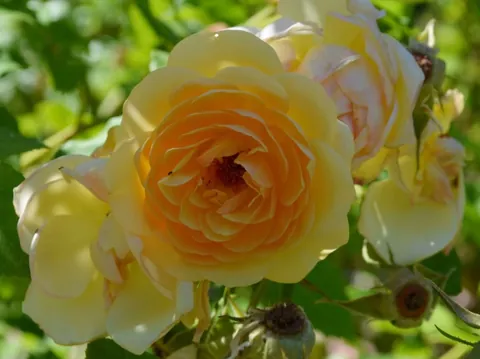
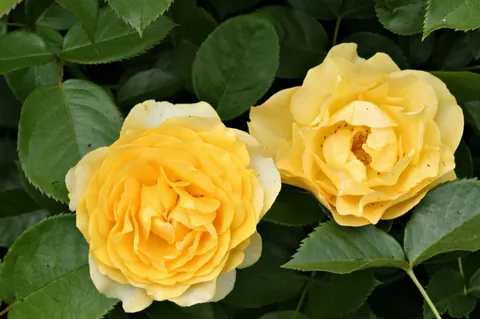
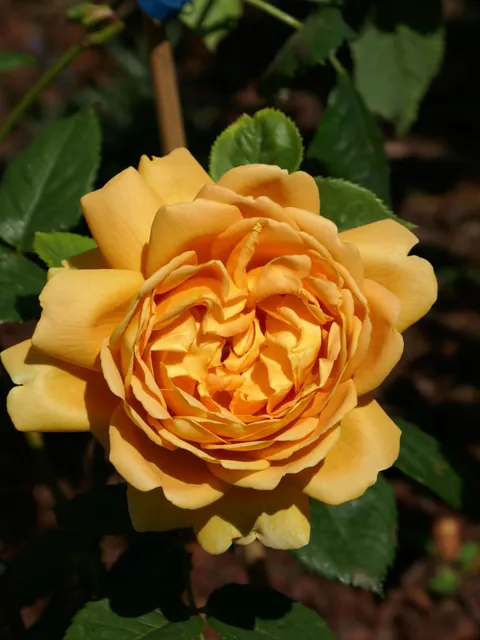
Flat rosette with wavy petal edges; ~8 cm across
Centre
Dense sunny-yellow centre
Fullness
Full, 26–40 petals
Flower carriage
In clusters of 3–7 per shoot (typical floribunda)

Fragrance

Strong

Very strong, sweet — remarkable for a yellow rose; it won the Gamble Fragrance Medal in 1979 for its scent — the only floribunda ever to do so.

Disease resistance

5 out of 5

Outstanding — 'very disease resistant' (ADR 1973 confirmed this after 4 years of continuous testing).

Sun

Full sun for profuse flowering

Thorns

Few
thornlessfewmoderatemanyvery many

Few prickles — pleasant for a garden next to paths.

Foliage

Light green, glossy, healthy.

Other names

Sunsprite, Korresia
All characteristics in a table
Group
Floribunda
Breeder
Reimer Kordes, Germany, 1973
Bud shape
Round-conical, golden yellow
Open flower
Flat rosette with wavy petal edges; ~8 cm across
Centre
Dense sunny-yellow centre
Colour
Rich 'sunny yellow' / 'golden yellow' — NOT light yellow; stable, with no fading in sun (rare for yellows)
Fullness
Full, 26–40 petals
Flower carriage
In clusters of 3–7 per shoot (typical floribunda)
Flowering
Repeat-flowering, in flushes through the season
Fragrance
Very strong, sweet — remarkable for a yellow rose; it won the Gamble Fragrance Medal in 1979 for its scent — the only floribunda ever to do so
Hips
Not documented as decorative
Habit
Upright, compact — a typical classic floribunda
Branching
Good, even
Shoots
Strong, straight, hold clusters well
Thorns
Few prickles — pleasant for a garden next to paths.
Dimensions
50–75 cm tall × up to 60 cm wide
Support
Needs no support
Foliage
Light green, glossy, healthy
Resistance
Outstanding — 'very disease resistant' (ADR 1973 confirmed this after 4 years of continuous testing)
Variations of the variety
Synonyms Sunsprite (USA); Korresia; KORresia (code); parentage Friedrich Wörlein × Spanish Sun

Colour scheme

Rich 'sunny yellow' / 'golden yellow' — NOT light yellow; stable, with no fading in sun (rare for yellows)

Rose neighbours

Perennials to plant nearby

Rose neighbours

A palette of yellow roses in different shades for a rich range of tones:

Perennial companions

Purple-blue accents — the classic contrast to yellow:

lavender 'Munstead'delphinium 'Pacific Giant'catmint 'Walker's Low'salvia 'Caradonna'

Availability worldwide

One of the most famous yellow varieties of all time, available almost everywhere:

🇪🇺 Europe: VERY HIGH · Kordes classic🇺🇸 USA: VERY HIGH · bestseller as 'Sunsprite'🇯🇵 Asia: high · popular in Japan🇺🇦 Ukraine: moderate · sold as 'Frezia'

More about the variety

Hips
Not documented as decorative
Variations of the variety
Synonyms Sunsprite (USA); Korresia; KORresia (code); parentage Friedrich Wörlein × Spanish Sun

How to grow

Where to plant. Sunny borders, showy groups of 3–5 bushes, containers on a terrace by places to sit (for the fragrance), borders of fragrant roses; as a 'sunny spot' in cool plantings with blue perennials.

Climate. To −26 °C — all of Ukraine with moderate winter protection; in southern Ukraine often no cover is needed.

Care. A classic floribunda — prune in spring by ⅓; profuse flowering is encouraged by removing spent flower trusses; standard disease prevention is almost unnecessary thanks to its outstanding resistance.

About the name

Name. 'Friesia' — after Friesland, a region in northern Germany and the historic home of the Kordes family. In the USA the variety is sold as 'Sunsprite' ('sun spirit'). Code KORresia — one of the first in the Kordes patent-code system (the prefix KOR = Kordes).

Breeding. Bred by Reimer Kordes (son of Wilhelm Kordes II) at Sparrieshoop, Germany. Parentage: 'Friedrich Wörlein' (Kordes 1963) × 'Spanish Sun' (Boerner 1966). Commercial introduction 1973, code registered 1977.

Significance. 'the fragrant queen of yellows'. In 1979 it received the James Alexander Gamble Fragrance Medal (ARS) — the highest ARS award for fragrance, given once every few years. Friesia is the only floribunda in the history of this award (it is usually given to large HTs — Crimson Glory, Tiffany, Fragrant Cloud, Sutter's Gold, Double Delight, Papa Meilland). In addition: ADR 1973, Baden-Baden Gold 1972, James Mason Memorial Medal 1989, RNRS Gold Medal 1989 — a full collection of international awards. NOT in the WFRS Hall of Fame (a common myth in secondary catalogues): the WFRS HoF has only 18 modern varieties (Peace, Queen Elizabeth, Fragrant Cloud, Iceberg, Double Delight, Papa Meilland, Pascali, Just Joey, New Dawn, Ingrid Bergman, Bonica, Pierre de Ronsard, Elina, Graham Thomas, Sally Holmes, Cocktail, Knock Out, Pink Flower Carpet). Friesia is the fragrant queen of yellows, but formally it is not in the Hall of Fame.

Frequently asked questions about Friesia

Does Friesia need winter protection?

The cultivar’s reference temperature is −26 °C (USDA zone 5b–9b). Overwintering depends on the conditions. All of Ukraine with moderate winter protection.

How many times a season does Friesia flower?

Repeat-flowering, in flushes through the season.

How big does Friesia grow?

50–75 cm tall, about 60 cm wide.

Which diseases affect Friesia?

Overall resistance: 5 out of 5. Very disease resistant; confirmed by ADR-testing.

How much sun does Friesia need?

Sun; full sun for profuse flowering.

What does Friesia smell like?

Very strong, sweet — remarkable for a yellow rose; it won the Gamble Fragrance Medal in 1979 for its scent — the only floribunda ever to do so.

Gardeners' photos and reviews

My climate

Choose a reference temperature to compare with the cultivar’s data. This is not an overwintering forecast or advice on winter protection; consider wind, moisture and the duration of frost.

Regional data are generalised. USDA describes average annual extreme minima, not a forecast; the values in the list are rounded. Check the conditions at your site. More information: Roses in Ukraine's climate.