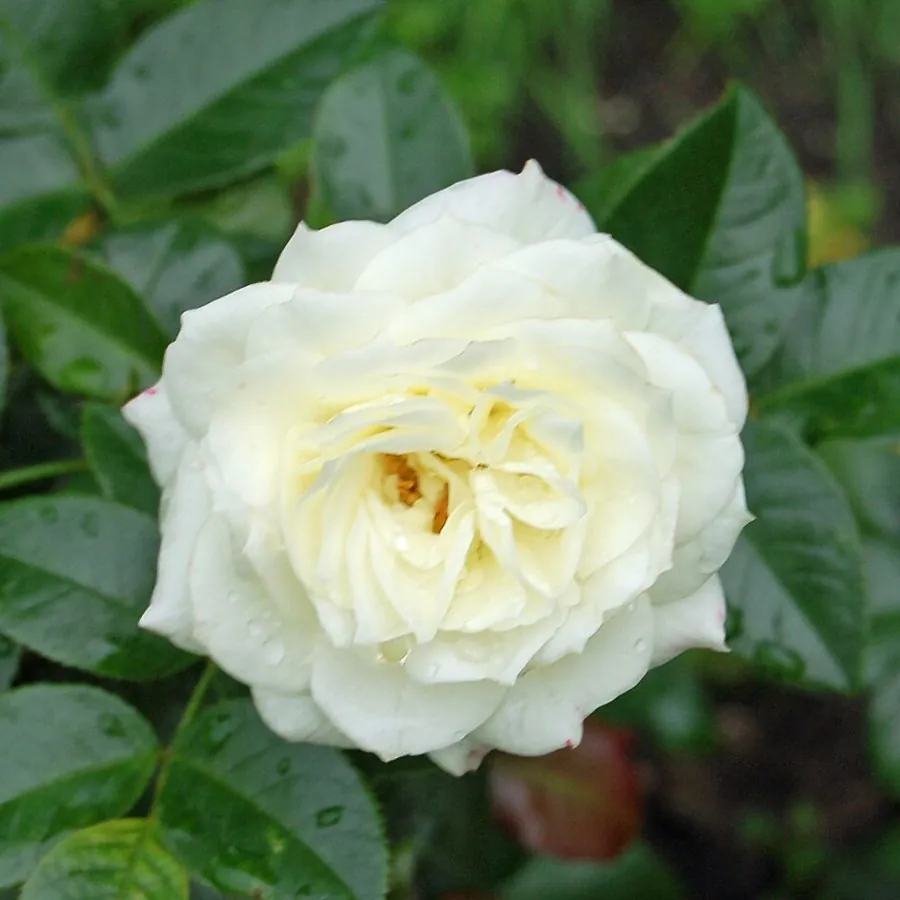
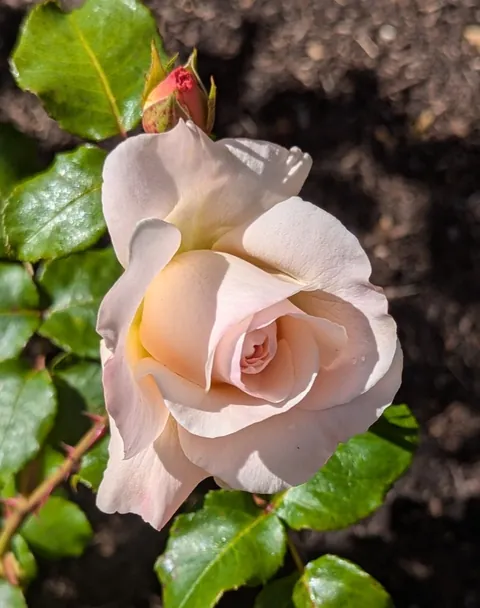
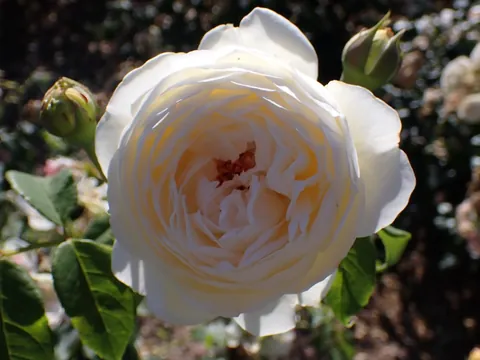
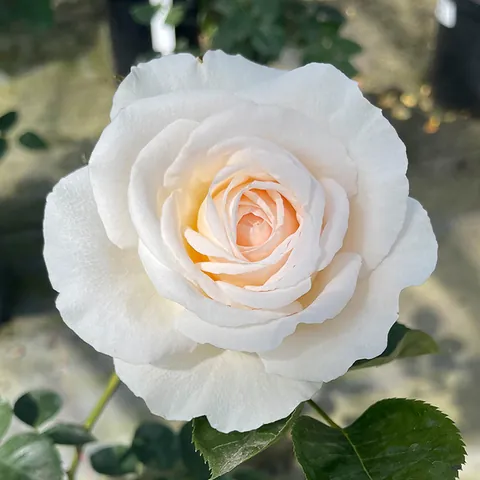
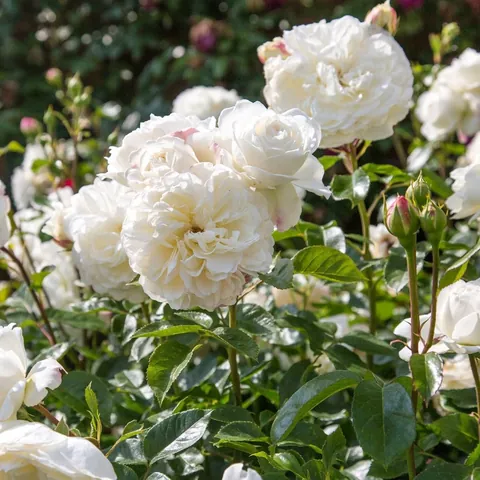
Alabaster, close-up of the flower
Photo: Huhu Uet, CC BY-SA 3.0
Back to catalogue
Floribunda / bedding roseTantau, 2007White and cream

Alabaster

Creamy white (ivory) with a yellowish centre; very double; long-lasting.

Variety profile

Flowering

Repeat flowering

Repeat-flowering, abundant from May to frosts; flowers last very long. Months are approximate, for the climate of Ukraine.

Winter hardiness

−20 °C

USDA zone 6b+. South — light protection; centre/north — with protection.

Compare reference temperatures

Plant size

50–90 × 40–50 cm
person 170 cm50–90 cm
Habit
Rounded, bushy
Dimensions
50–90 cm tall × 40–50 cm wide
Support
Does not need support
Shoots
Sturdy
Branching
Good

Flower

8–10 cm
Bud shape
Creamy white
Open flower
Dense rosette/cupped, opens flat, outer petals fold back in a 'star'; diameter 8–10 cm
Fullness
Very dense, ~70–75 petals
Flower carriage
In clusters of 3–5

Fragrance

Light, with a note of lilac

Light — delicate, with notes of lilac and a touch of spice.

Disease resistance

3.5 out of 5

Good (≈3.5/5; black spot and powdery mildew — both 3/5 according to Tantau).

Sun

Sun / partial shade

Full sun and light partial shade; the cream centre fades to white; in wet weather it may ball.

Thorns

Moderate
thornlessfewmoderatemanyvery many

Moderate number (little precise data).

Foliage

Glossy, dark green.

Other names

Champollion, Diamond Jubilee
All characteristics in a table
Group
Floribunda / bedding rose
Breeder
Tantau, Germany, 2007
Bud shape
Creamy white
Open flower
Dense rosette/cupped, opens flat, outer petals fold back in a 'star'; diameter 8–10 cm
Colour
Creamy white (ivory); a young flower is cream-white with a pale yellow ('creamy') centre, fading to pure white with age
Fullness
Very dense, ~70–75 petals
Flower carriage
In clusters of 3–5
Flowering
Repeat-flowering, abundant from May to frosts; flowers last very long
Fragrance
Light — delicate, with notes of lilac and a touch of spice
Hips
No data
Habit
Rounded, bushy
Branching
Good
Shoots
Sturdy
Thorns
Moderate number (little precise data).
Dimensions
50–90 cm tall × 40–50 cm wide
Support
Does not need support
Foliage
Glossy, dark green
Resistance
Good (≈3.5/5; black spot and powdery mildew — both 3/5 according to Tantau)
Variations of the variety
Code TAN02226; synonyms: Champollion, Diamond Jubilee

Colour scheme

Creamy white (ivory); a young flower is cream-white with a pale yellow ('creamy') centre, fading to pure white with age

Rose neighbours

Perennials to plant nearby

Neighbouring roses

Other cream and creamy-white varieties — a warm white mood:

Perennial companions

Small white, green and silver flowers and foliage — a classic supporting palette for white bouquets and 'moon' gardens:

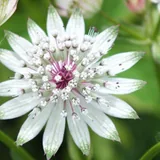
astrantia Romahosta Patriotveronicastrum Albumheuchera Silver Scrolls

Names and synonyms

One variety sold under several trade names:

ChampollionDiamond JubileeTAN02226

More about the variety

Hips
No data
Variations of the variety
Code TAN02226; synonyms: Champollion, Diamond Jubilee

How to grow

Where to plant. Beds and borders, containers and pots, cutting (lasts well in a vase), formal arrangements.

Climate. USDA 6b and warmer; in the south with light protection, in the centre and north with winter protection. Full sun and light partial shade; in wet weather the dense bloom may not open fully.

Care. A sunny, airy spot; spring pruning; feeding; watering at the root; moderate disease prevention.

About the name

Name. 'Alabaster' (alabaster stone) — for the creamy white, 'alabaster' colour of the petals; synonym Champollion — after Jean-François Champollion, the decipherer of Egyptian hieroglyphs.

Breeding. Bred by Rosen Tantau (breeder Hans Jürgen Evers) in Germany; on the market since 2007.

Significance. An elegant creamy white bedding rose with a very double 'alabaster' flower that lasts a long time — lovely both in the garden and as a cut flower.

Frequently asked questions about Alabaster

Does Alabaster need winter protection?

The cultivar’s reference temperature is −20 °C (USDA zone 6b+). Overwintering depends on the conditions. South — light protection; centre/north — with protection.

How many times a season does Alabaster flower?

Repeat-flowering, abundant from May to frosts; flowers last very long.

How big does Alabaster grow?

50–90 cm tall, 40–50 cm wide.

Which diseases affect Alabaster?

Overall resistance: 3.5 out of 5. 3.5 / 5; good (Tantau: black spot and mildew both 3/5).

How much sun does Alabaster need?

Sun / partial shade; full sun and light partial shade; the cream centre fades to white; in wet weather it may ball.

What does Alabaster smell like?

Light — delicate, with notes of lilac and a touch of spice.

Gardeners' photos and reviews

My climate

Choose a reference temperature to compare with the cultivar’s data. This is not an overwintering forecast or advice on winter protection; consider wind, moisture and the duration of frost.

Regional data are generalised. USDA describes average annual extreme minima, not a forecast; the values in the list are rounded. Check the conditions at your site. More information: Roses in Ukraine's climate.