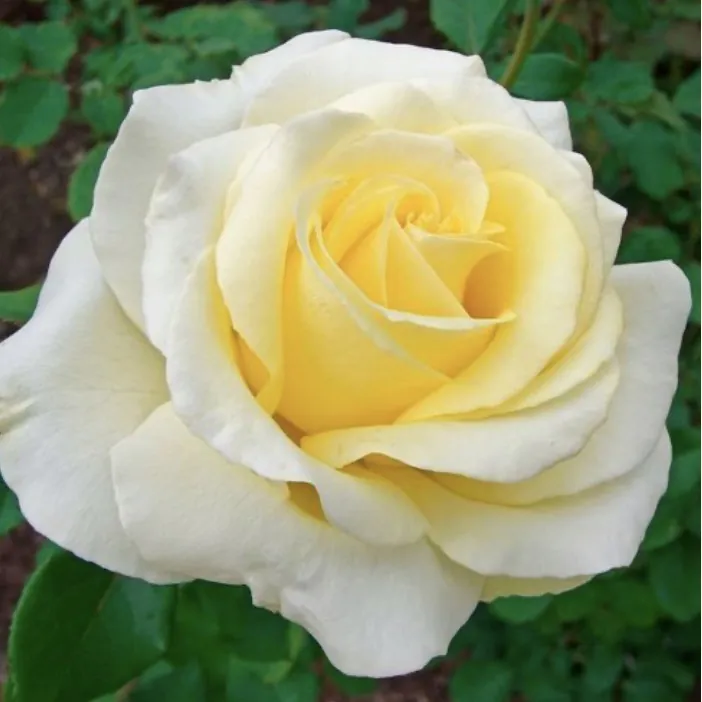
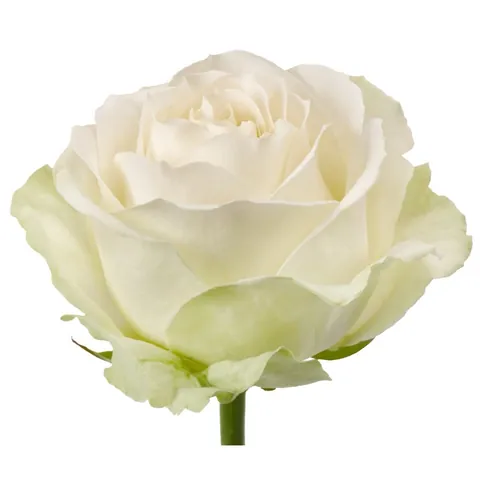
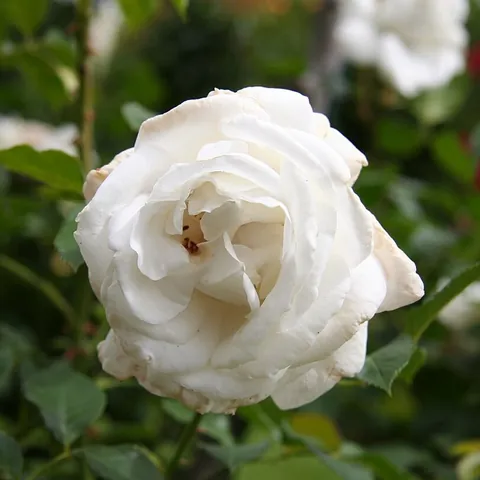



Advance+, close-up of the flower
Back to catalogue
Hybrid Tea; Florists RoseLex Voorn, 2011White and cream

Advance+

A modern Dutch cut-flower rose with a greenish petal edge.

Bud sport of Avalanche+

Variety profile

Flowering

Repeat-flowering; in a greenhouse — almost continuous all year round

Purpose

Cut flower

Florist rose for bouquets and commercial cutting; bred for cutting, but also grows well in the garden

Winter hardiness

−23 °C

USDA zone 6. Outdoors — Forest-Steppe, Steppe; northern Ukraine — protection essential.

Compare reference temperatures

Plant size

70–100 cm
person 170 cm70–100 cm
Habit
Upright, with long straight stems; the typical form of a cut-flower rose
Dimensions
70–100 cm tall (greenhouse growing); outdoors in our climate it may be shorter
Support
Yes — needs support in commercial growing (wire trellis); outdoors — tying to stakes for straight stems
Shoots
Long, straight, stiff; in a greenhouse they are grown on a wire support
Branching
Moderate; breeding is aimed at long single stems with one flower each

Flower

8–10 cm
Bud shape
Elongated goblet-shaped; classic cut-flower form with a long 'stem'
Open flower
Goblet-shaped, high-centred; diameter 8–10 cm; one flower per stem
Centre
A tall cone-shaped centre; petals layer into a dense spiral
Fullness
Double, 17–25 petals
Flower carriage
One flower on a long, sturdy stem — the standard for cutting

Fragrance

Barely noticeable

Very weak, almost absent — the variety was bred for appearance and vase life, not for scent.

Disease resistance

5 out of 5
Black spotresistantPowdery mildewresistant

High — against powdery mildew and black spot; against rain — moderate (white petals tend to ball up).

Sun

6 hours

Full sun; outdoors — at least 6 hours of direct light; in a greenhouse — controlled light.

Thorns

Few
thornlessfewmoderatemanyvery many

A small number of thorns — typical of cut-flower varieties, which should be easy for florists to work with.

Foliage

Medium green, matt.

Other names

Breeder's code LEXjori.

All characteristics in a table
Group
Hybrid Tea; Florists Rose
Breeder
Lex Voorn, 2011
Bud shape
Elongated goblet-shaped; classic cut-flower form with a long 'stem'
Open flower
Goblet-shaped, high-centred; diameter 8–10 cm; one flower per stem
Centre
A tall cone-shaped centre; petals layer into a dense spiral
Colour
White with a greenish petal edge; the green tint is stronger than in the parent Avalanche+ (this is what distinguishes the 'plus' varieties of Lex+)
Fullness
Double, 17–25 petals
Flower carriage
One flower on a long, sturdy stem — the standard for cutting
Flowering
Repeat-flowering; in a greenhouse — almost continuous all year round
Fragrance
Very weak, almost absent — the variety was bred for appearance and vase life, not for scent
Vase life
10–14 days — one of the key advantages of the variety for florists
Habit
Upright, with long straight stems; the typical form of a cut-flower rose
Branching
Moderate; breeding is aimed at long single stems with one flower each
Shoots
Long, straight, stiff; in a greenhouse they are grown on a wire support
Thorns
A small number of thorns — typical of cut-flower varieties, which should be easy for florists to work with.
Dimensions
70–100 cm tall (greenhouse growing); outdoors in our climate it may be shorter
Support
Yes — needs support in commercial growing (wire trellis); outdoors — tying to stakes for straight stems
Foliage
Medium green, matt
Resistance
High — against powdery mildew and black spot; against rain — moderate (white petals tend to ball up)
Variety family
Sport of Avalanche+ (LEXani, Lex Voorn, 2004); the Lex+ series also includes Sweet Avalanche+, Pearl Avalanche+, Snowflake+ and other 'plus' varieties

Colour scheme

White with a greenish petal edge; the green tint is stronger than in the parent Avalanche+ (this is what distinguishes the 'plus' varieties of Lex+)

Rose neighbours

Perennials to plant nearby

Neighbouring roses

Related 'Plus' varieties, such as Lex Voorn, and classic white roses for monochrome arrangements:

Florist companions

A silver-green frame brings out the greenish edge of the petal in a bouquet:

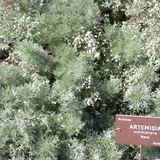
cinerariagypsophilaruscusartemisia Powis Castlelimonium

Contrasting accents

Dark burgundy and black-leaved plants add dramatic depth to the white-green:

Astrantia 'Hadspen Blood'Heuchera 'Obsidian'Blue delphiniumsVeronicastrum

More about the variety

Vase life
10–14 days — one of the key advantages of the variety for florists
Variety family
Sport of Avalanche+ (LEXani, Lex Voorn, 2004); the Lex+ series also includes Sweet Avalanche+, Pearl Avalanche+, Snowflake+ and other 'plus' varieties

How to grow

Where to plant. First and foremost a cut-flower florists' rose, bred for greenhouses and wedding flowers. But it also grows well outdoors: a sunny spot, fertile soil, ideally sheltered from heavy rain (the white petals tend to ball up). Lovely in wedding and small-scale arrangements by a path.

Climate. Hardy to −23 °C, USDA 6. Outdoors in Ukraine — in the Forest-Steppe and Steppe it overwinters with protection; in northern regions heavy protection is essential, or it should be grown only in a greenhouse.

Care. Standard HT care: hard pruning each spring, prevention of fungal diseases (although the variety is resistant), and regular watering. White petals tend to ball up when soaked — in rainy periods it is worth covering the flowers.

About the name

Name. 'Advance+' is a marketing name in the Lex+ line of 'plus' varieties. The '+' sign emphasises the 'advanced' version compared with the base Avalanche+ — a more pronounced greenish petal edge and improved vase life. No direct explanation from the breeder was found in open sources.

Breeding. Bred by the Dutch breeder Lex Voorn (company Lex+ / Voorn Roses) and registered around 2011–2012. Breeder's code: LEXjori. Sport of 'Avalanche+' (LEXani, Lex Voorn, 2004). Protected by plant variety rights (PVP).

Significance. A modern Dutch cut-flower rose of commercial grade. The Lex+ series includes dozens of 'plus' varieties (Avalanche+, Sweet Avalanche+, Pearl Avalanche+, Sweetness+ and others) — the standard in commercial florist work. Advance+ is valued for its distinct greenish petal edge, which gives a fresh look in wedding and romantic arrangements. Important not to confuse: there is an earlier variety 'Advance' (E. B. LeGrice, Great Britain, 1940) — a red garden Hybrid Tea, not a white cut-flower rose. These are completely different varieties. Russian-language sources often mix them up, attributing the characteristics of the white cut-flower Advance+ to the 1940 rose.

Frequently asked questions about Advance+

Does Advance+ need winter protection?

The cultivar’s reference temperature is −23 °C (USDA zone 6). Overwintering depends on the conditions. Outdoors — Forest-Steppe, Steppe; northern Ukraine — protection essential.

How many times a season does Advance+ flower?

Repeat-flowering; in a greenhouse — almost continuous all year round.

How big does Advance+ grow?

70–100 cm tall.

Which diseases affect Advance+?

Overall resistance: 5 out of 5. High; against powdery mildew and black spot; in heavy rain the white petals ball up.

How much sun does Advance+ need?

Full sun; outdoors — at least 6 hours of direct light; in a greenhouse — controlled light.

What does Advance+ smell like?

Very weak, almost absent — the variety was bred for appearance and vase life, not for scent.

Gardeners' photos and reviews

My climate

Choose a reference temperature to compare with the cultivar’s data. This is not an overwintering forecast or advice on winter protection; consider wind, moisture and the duration of frost.

Regional data are generalised. USDA describes average annual extreme minima, not a forecast; the values in the list are rounded. Check the conditions at your site. More information: Roses in Ukraine's climate.