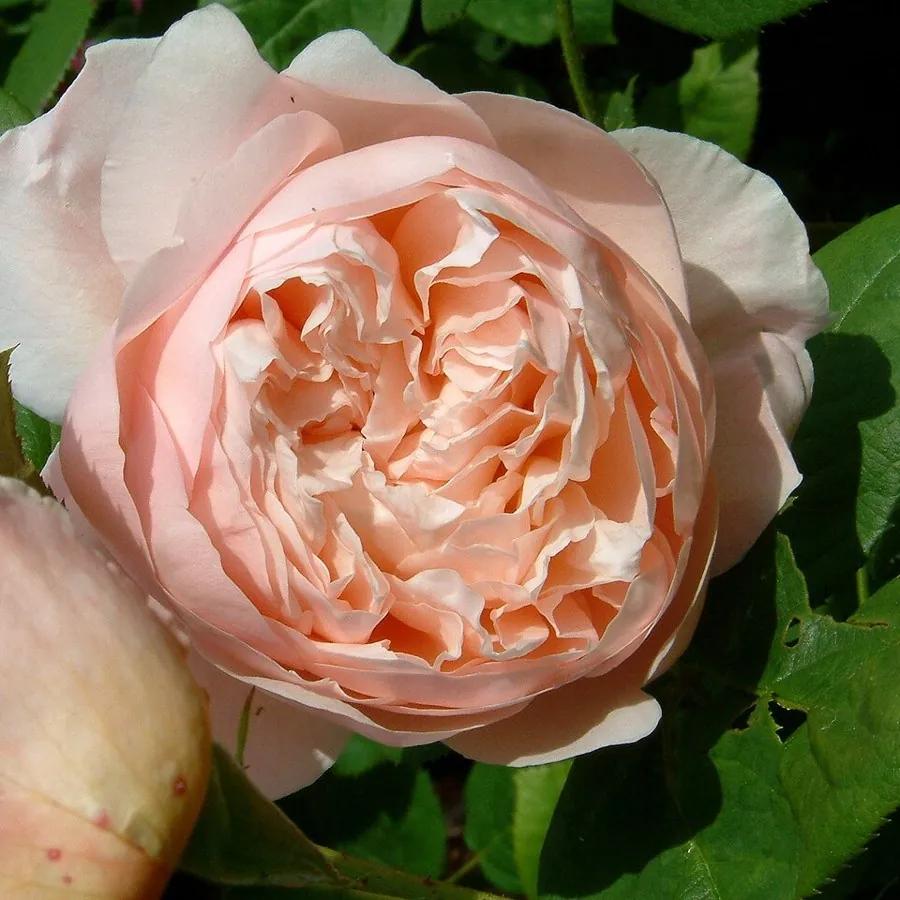
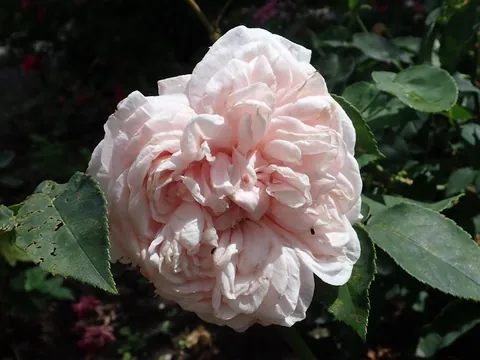
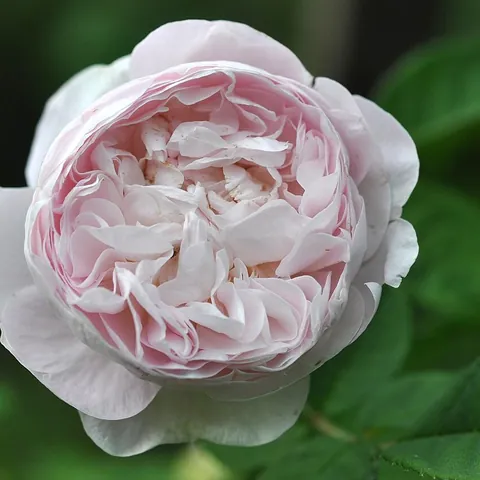
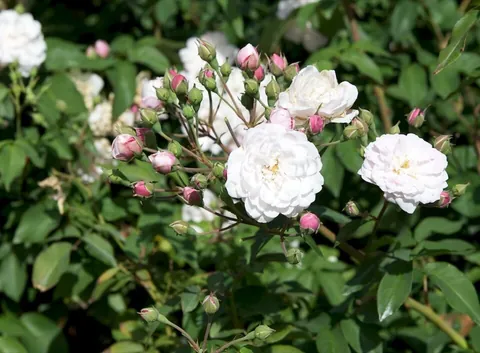
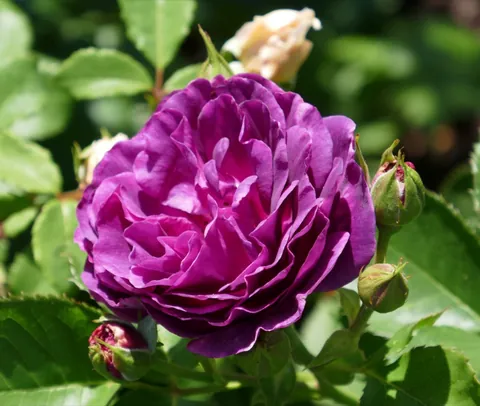
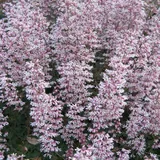
Emily, close-up of the flower
Photo: Rosa Staropramen, CC BY-SA 3.0
Back to catalogue
English rose (shrub)David Austin, 1992Pink

Emily

A delicate blush-pink quartered rosette; strong scent of an old garden rose; low-growing and fussy.

English Rose Collection

Variety profile

Flowering

Repeat, in waves

Winter hardiness

−20 °C

USDA zone 6b+. South and centre; north and east — with protection.

Compare reference temperatures

Plant size

76–120 × 60 cm
person 170 cm76–120 cm
Habit
Low, bushy and spreading
Dimensions
76–120 cm high × 60 cm wide
Support
Does not need support
Shoots
Arching
Branching
Moderate

Flower

7–8 cm
Bud shape
Greyish pink-lilac
Open flower
Deep cup, opening into a quartered, reflexed rosette; diameter ~7–8 cm
Fullness
Very dense, ~130–150 petals
Flower carriage
In small clusters

Fragrance

Moderately strong, sweet

Moderately strong — the sweet scent of an old garden rose.

Disease resistance

3 out of 5

Moderate (≈3/5) — honestly: the variety is considered not very hardy and fussy to grow well; withdrawn from the David Austin range.

Sun

Sun / partial shade

Full sun is better; in sun it quickly fades almost to white.

Thorns

Moderate
thornlessfewmoderatemanyvery many

Moderate number (few exact data).

Foliage

Matt, medium green.

All characteristics in a table
Group
English rose (shrub)
Breeder
David Austin, United Kingdom, 1992
Bud shape
Greyish pink-lilac
Open flower
Deep cup, opening into a quartered, reflexed rosette; diameter ~7–8 cm
Colour
Delicate blush pink — slightly richer in the centre (warm peach), fading almost to white toward the edges and with age
Fullness
Very dense, ~130–150 petals
Flower carriage
In small clusters
Flowering
Repeat, in waves
Fragrance
Moderately strong — the sweet scent of an old garden rose
Hips
No data
Habit
Low, bushy and spreading
Branching
Moderate
Shoots
Arching
Thorns
Moderate number (few exact data).
Dimensions
76–120 cm high × 60 cm wide
Support
Does not need support
Foliage
Matt, medium green
Resistance
Moderate (≈3/5) — honestly: the variety is considered not very hardy and fussy to grow well; withdrawn from the David Austin range
Variations of the variety
Code AUSburton; parents — The Prioress × Mary Rose; do NOT confuse with 'Emily Brontë' (2018)

Colour scheme

Delicate blush pink — slightly richer in the centre (warm peach), fading almost to white toward the edges and with age

Rose neighbours

Perennials to plant nearby

Rose neighbours

Other white and cream varieties with a soft pink blush:

Companion perennials

Small white, green and silver flowers and foliage — a classic companion palette for white bouquets and 'moonlight' gardens:

astrantia 'Roma'hosta 'Patriot'Veronicastrum 'Album'heuchera 'Silver Scrolls'

Honest notes on the variety

Worth knowing before planting:

Tender blush-pinkStrong fragranceDemanding — needs attentive care

More about the variety

Hips
No data
Variations of the variety
Code AUSburton; parents — The Prioress × Mary Rose; do NOT confuse with 'Emily Brontë' (2018)

How to grow

Where to plant. The front of a border, containers, small romantic flower gardens — a spot that gets good care.

Climate. USDA 6b and warmer; south and centre of Ukraine — good; north and east — with winter protection. In sun it quickly fades almost to white.

Care. Needs more careful attention than most Austin roses: fertile soil, regular feeding and watering, disease prevention; spring pruning.

About the name

Name. 'Emily' — an English rose by David Austin with the female name Emily; there is no separately documented history of the name.

Breeding. Bred by David Austin (UK) in 1992; parents — The Prioress × Mary Rose. Do NOT confuse it with the later 'Emily Brontë' (2018).

Significance. A delicate, very fragrant Austin rose of old-fashioned form; it has beauty to spare, but because of its fussiness and weaker hardiness it was withdrawn from production — which makes it more valuable in a collection.

Frequently asked questions about Emily

Does Emily need winter protection?

The cultivar’s reference temperature is −20 °C (USDA zone 6b+). Overwintering depends on the conditions. South and centre; north and east — with protection.

How many times a season does Emily flower?

Repeat, in waves.

How big does Emily grow?

76–120 cm tall, about 60 cm wide.

Which diseases affect Emily?

Overall resistance: 3 out of 5. Moderate; honestly — the variety is fussy, and David Austin has discontinued it.

How much sun does Emily need?

Sun / partial shade; full sun is better; in sun it quickly fades almost to white.

What does Emily smell like?

Moderately strong — the sweet scent of an old garden rose.

Gardeners' photos and reviews

My climate

Choose a reference temperature to compare with the cultivar’s data. This is not an overwintering forecast or advice on winter protection; consider wind, moisture and the duration of frost.

Regional data are generalised. USDA describes average annual extreme minima, not a forecast; the values in the list are rounded. Check the conditions at your site. More information: Roses in Ukraine's climate.