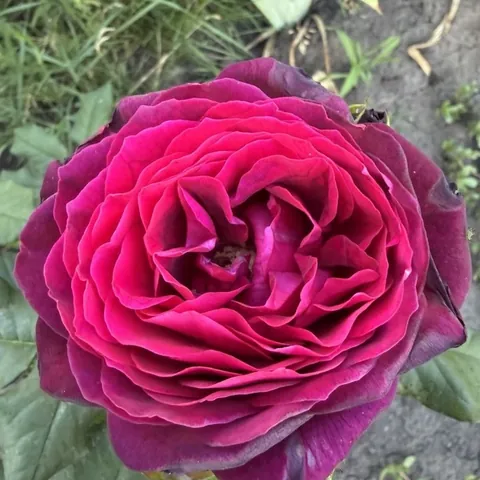
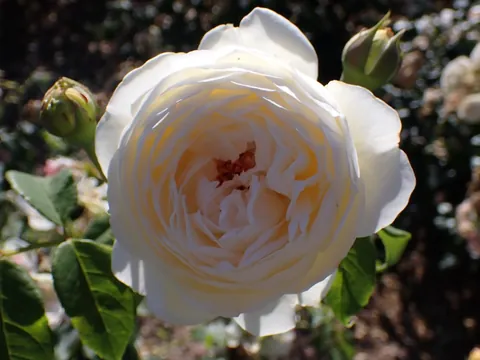
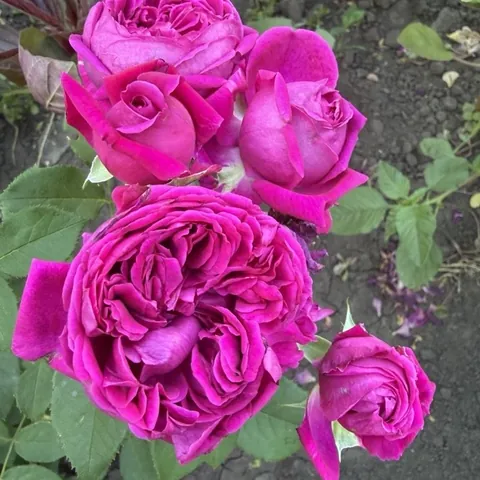
Falstaff, close-up of the flower
Photo: Nataliia
Back to catalogue
English Shrub RoseDavid Austin, 1999Lilac and purple

Falstaff

Named after Shakespeare's Falstaff; one of the darkest English roses by David Austin.

English Roses · shrub or low climber

Variety profile

Flowering

Repeat, in flushes

Repeat-flowering in flushes from early summer to late autumn / first frosts. Months are approximate, for the climate of Ukraine.

Feature

Dark

One of the darkest of David Austin's English Roses · powerful fragrance

Winter hardiness

−20 °C

USDA zone 5b–9b. All of Ukraine; in the north — with winter protection. All of Ukraine · north: with winter protection.

Compare reference temperatures

Plant size

120–150 × 90–120 cm
person 170 cm120–150 cm
Habit
Vigorous, upright, bushy
Dimensions
120–150 cm tall × 90–120 cm wide
Support
As a shrub, or as a short climber on a wall or support in a warmer climate
Shoots
Strong
Branching
Good

Flower

≈ 8 cm

Very double (sources give from 41 to about 110 petals) petals.

Bud shape
Round, dark raspberry
Open flower
Large, shallow cup-shaped and quartered; numerous petals fold inwards into a 'saucer' of outer petals; ~8 cm
Centre
Quartered, old-fashioned type
Fullness
Very double (sources give from 41 to about 110 petals)
Flower carriage
Singly or in small clusters of 4–5

Fragrance

Strong; a classic old garden rose

Strong — the classic Old Rose fragrance, deep and rich.

Disease resistance

4 out of 5
Black spotresistantPowdery mildewresistantRustresistant

Good — resistant to mildew, botrytis, black spot and rust.

Sun

5–6 hours

Full sun; at least 5–6 hours of direct light.

Thorns

Moderate
thornlessfewmoderatemanyvery many

A normal number of thorns, medium-sized, dark brown.

Foliage

Large, dark green, semi-glossy, leathery; 5 leaflets.

Other names

Breeder's code AUSverse.

All characteristics in a table
Group
English Shrub Rose
Breeder
David Austin, 1999
Bud shape
Round, dark raspberry
Open flower
Large, shallow cup-shaped and quartered; numerous petals fold inwards into a 'saucer' of outer petals; ~8 cm
Centre
Quartered, old-fashioned type
Colour
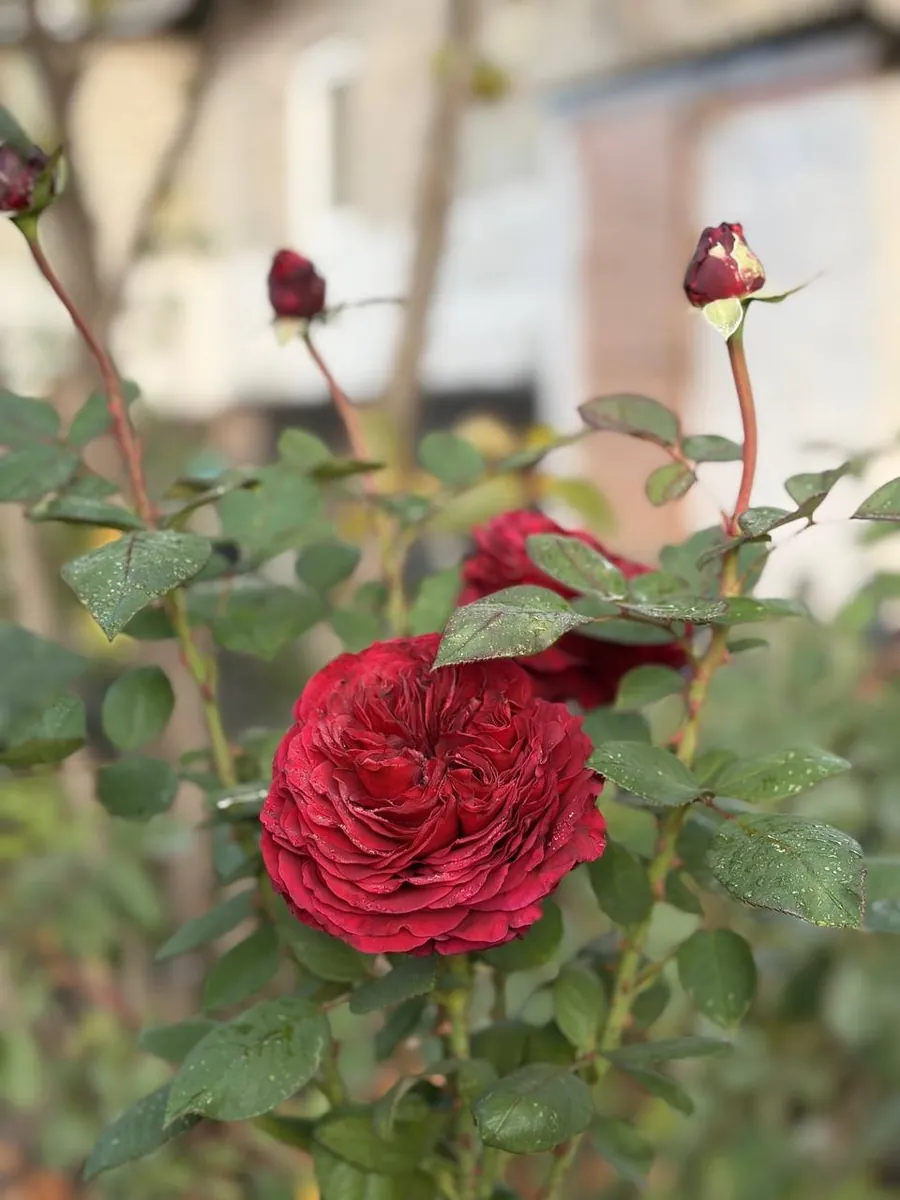
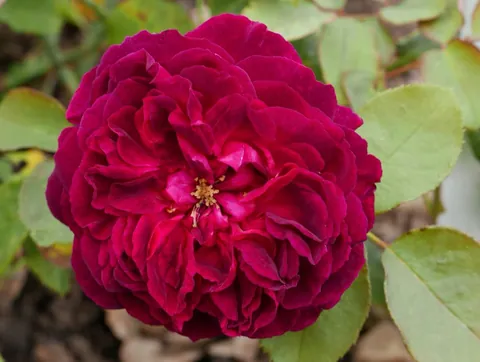
Opens deep dark raspberry, turning to rich purple as it matures; the outer petals lighten
Fullness
Very double (sources give from 41 to about 110 petals)
Flower carriage
Singly or in small clusters of 4–5
Flowering
Repeat-flowering in flushes from early summer to late autumn / first frosts
Fragrance
Strong — the classic Old Rose fragrance, deep and rich
Hips
Usually cut off, to encourage repeat flowering
Habit
Vigorous, upright, bushy
Branching
Good
Shoots
Strong
Thorns
A normal number of thorns, medium-sized, dark brown.
Dimensions
120–150 cm tall × 90–120 cm wide
Support
As a shrub, or as a short climber on a wall or support in a warmer climate
Foliage
Large, dark green, semi-glossy, leathery; 5 leaflets
Resistance
Good — resistant to mildew, botrytis, black spot and rust
Variations of the variety
In a warmer climate it works well as a short climber; the colour change from raspberry – purple is the eye-catching feature
Colour scheme

Opens deep dark raspberry, turning to rich purple as it matures; the outer petals lighten

Rose neighbours

Perennials to plant nearby

Rose neighbours

Dark crimson-purple English roses hold a deep, noble tone around Falstaff.

Perennial companions

Lavender-blue flowers and lime-green lady's mantle lighten the dark purple:

lavender 'Munstead'catmint (Nepeta)sage 'Caradonna'lady's mantle (Alchemilla)

Contrasting accents

Silver and lime add lightness to the deep colour:

Stachys byzantinaAlchemilla mollisNepeta

More about the variety

Hips
Usually cut off, to encourage repeat flowering
Variations of the variety
In a warmer climate it works well as a short climber; the colour change from raspberry – purple is the eye-catching feature
How to grow

Where to plant. A striking dark accent in a mixed border, as a specimen shrub or as a short climber on a wall or support. Light-coloured neighbours (silver, lime, lavender) show off the deep colour.

Climate. All of Ukraine; in the north, with light winter protection (USDA zone 5b).

Care. Prune in spring to shape it, remove spent flowers, feed twice a season. Resistant to the main diseases — minimal spraying needed.

About the name

Name. After Sir John Falstaff, the colourful Shakespearean character and loyal companion of Prince Hal (the future Henry V) in 'Henry IV'.

Breeding. Bred by David C. H. Austin (David Austin Roses); bred 1990, introduced 1999. Patent code: AUSverse. Parentage: unnamed seedling × unnamed seedling.

Significance. One of David Austin's recognised dark English roses of the late 1990s; valued for its powerful old rose fragrance and striking colour change from raspberry to purple.

Frequently asked questions about Falstaff

Does Falstaff need winter protection?

The cultivar’s reference temperature is −20 °C (USDA zone 5b–9b). Overwintering depends on the conditions. All of Ukraine; in the north — with winter protection.

How many times a season does Falstaff flower?

Repeat-flowering in flushes from early summer to late autumn / first frosts.

How big does Falstaff grow?

120–150 cm tall, 90–120 cm wide.

Which diseases affect Falstaff?

Overall resistance: 4 out of 5. Good — resistant to mildew, botrytis, black spot and rust.

How much sun does Falstaff need?

Full sun; at least 5–6 hours of direct light.

What does Falstaff smell like?

Strong — the classic Old Rose fragrance, deep and rich.

Gardeners' photos and reviews

My climate

Choose a reference temperature to compare with the cultivar’s data. This is not an overwintering forecast or advice on winter protection; consider wind, moisture and the duration of frost.

Regional data are generalised. USDA describes average annual extreme minima, not a forecast; the values in the list are rounded. Check the conditions at your site. More information: Roses in Ukraine's climate.