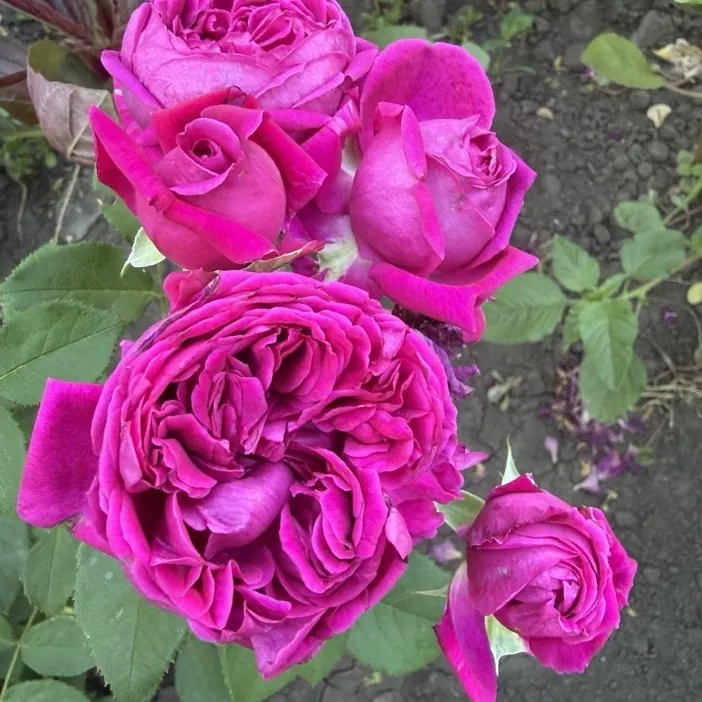
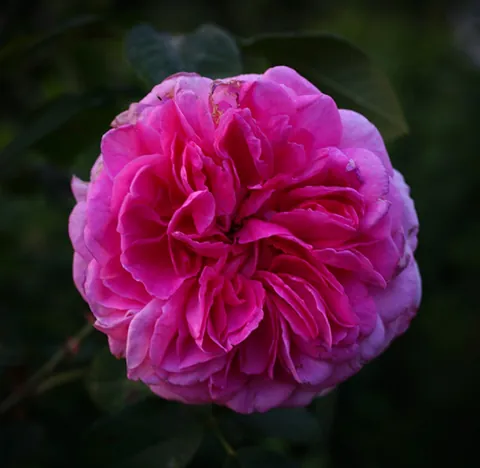
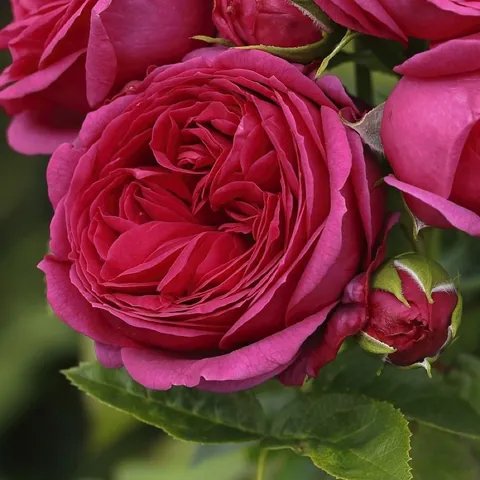
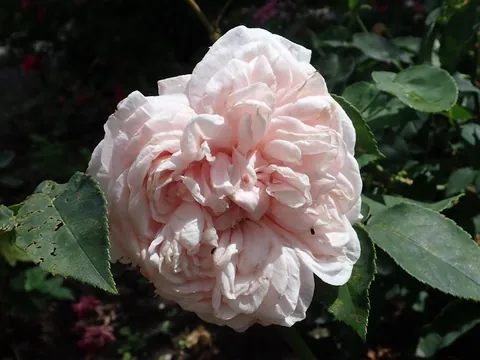




William Shakespeare 2000, close-up of the flower
Back to catalogue
English Shrub Rose (Old Rose Hybrid); velvety crimson-purpleDavid Austin; David Austin Roses, 2000Lilac and purple

William Shakespeare 2000

Deep velvety crimson – purple – violet-lilac: a multi-stage transition in a deep cup – quartered rosette; VERY STRONG Old Rose fragrance (rosesabc 6-8 out of 8); OFFICIAL REPLACEMENT of the original William Shakespeare of 1987 — Austin publicly 'withdrew' its variety because of poor health and released a full replacement, genetically different; ~120 petals.

OFFICIAL REPLACEMENT for the original William Shakespeare 1987 due to disease

Variety profile

Flowering

Repeat flowering

Generous repeat from June to October. Months are approximate, for the climate of Ukraine.

Legacy

Hamilton Fragrant 2011

AUS Bronze 2003

Winter hardiness

−34 °C

USDA zone 4-9. All of Ukraine without protection.

Compare reference temperatures

Plant size

100–120 × 80–120 cm
person 170 cm100–120 cm
Habit
Compact, upright — a typical English Old Rose Hybrid
Dimensions
100–120 cm tall × 80–120 cm wide — a compact English shrub for a mixed border
Support
Not needed — self-supporting
Shoots
Medium stiffness
Branching
Well-branched

Flower

≈ 9 cm

120 petals.

Bud shape
Round, deep crimson, almost black in bud
Open flower
Deep cup – quartered rosette: ~9 cm (3.5"), ~120 petals
Centre
Quartered — petals folded into 4 'quarters'
Fullness
~120 petals (very full)
Flower carriage
Singly or in small clusters

Fragrance

Very strong; Old Rose

VERY STRONG Old Rose (rosesabc rating 6-8 out of 8). Hamilton Most Fragrant Rose 2011. One of the most fragrant dark red Austins.

Disease resistance

4 out of 5

Good 4/5 — significantly more resistant than the original of 1987, but not at the level of Westerland. Needs good air circulation. USDA 4-9, RHS H6 — all of Ukraine without protection.

Sun

Full sun

Air circulation.

Thorns

Moderate
thornlessfewmoderatemanyvery many

Medium number of thorns — typical for Austin.

Foliage

Dark green, semi-glossy.

All characteristics in a table
Group
English Shrub Rose (Old Rose Hybrid); velvety crimson-purple
Breeder
David Austin; David Austin Roses, United Kingdom, 2000
Bud shape
Round, deep crimson, almost black in bud
Open flower
Deep cup – quartered rosette: ~9 cm (3.5"), ~120 petals
Centre
Quartered — petals folded into 4 'quarters'
Colour
Multi-stage transition: a young flower is velvety crimson, darkening with age to purple and finally violet-lilac. All the stages are on the bush at once — a rarity for roses
Fullness
~120 petals (very full)
Flower carriage
Singly or in small clusters
Flowering
Generous repeat from June to October
Fragrance
VERY STRONG Old Rose (rosesabc rating 6-8 out of 8). Hamilton Most Fragrant Rose 2011. One of the most fragrant dark red Austins
Hips
Not documented — usually removed
Habit
Compact, upright — a typical English Old Rose Hybrid
Branching
Well-branched
Shoots
Medium stiffness
Thorns
Medium number of thorns — typical for Austin.
Dimensions
100–120 cm tall × 80–120 cm wide — a compact English shrub for a mixed border
Support
Not needed — self-supporting
Foliage
Dark green, semi-glossy
Resistance
Good 4/5 — significantly more resistant than the original of 1987, but not at the level of Westerland. Needs good air circulation. USDA 4-9, RHS H6 — all of Ukraine without protection
Variations of the variety
Code AUSromeo. Introduced 2000 through David Austin Roses. Parentage: unnamed seedling × 'Ausbloom' ('The Dark Lady') — a rare case where Austin disclosed the parents in a US Patent. The 2000 in the name is the year of release of the REPLACEMENT for the original 'William Shakespeare' (AUSroyal, 1987), which had serious problems with black spot and was withdrawn from sale

Colour scheme

Multi-stage transition: a young flower is velvety crimson, darkening with age to purple and finally violet-lilac. All the stages are on the bush at once — a rarity for roses

Rose neighbours

Perennials to plant nearby

Neighbouring roses

Dark red Austin and Old Roses for a fragrance corner:

Companion perennials

Silvery perennials contrast with the 'wine' colour:

lavenderbetonylady's mantle (Alchemilla)sage

Availability worldwide

⭐ A top Austin for dark red fragrant gardens:

🇬🇧 UK: high · Austin's home country🇪🇺 Europe: high🇺🇸 USA: high🇺🇦 Ukraine: moderate · via collector nurseries

More about the variety

Hips
Not documented — usually removed
Variations of the variety
Code AUSromeo. Introduced 2000 through David Austin Roses. Parentage: unnamed seedling × 'Ausbloom' ('The Dark Lady') — a rare case where Austin disclosed the parents in a US Patent. The 2000 in the name is the year of release of the REPLACEMENT for the original 'William Shakespeare' (AUSroyal, 1987), which had serious problems with black spot and was withdrawn from sale

How to grow

Where to plant. Next to rest areas, because of its VERY STRONG Old Rose fragrance; in a fragrance corner alongside Bourbon and Damask roses; as a 'dramatic' accent in a mixed border; in a 'literary' corner with Shakespearean allusions; do not crowd it; in humid regions, watch for leaf spot.

Climate. All of Ukraine without protection (USDA 4-9, RHS H6); copes well with summer heat.

Care. Full sun; moderate prevention against black spot; feed 3× per season; prune ⅓ in spring; water at the root, not on the leaves.

About the name

Name. 'William Shakespeare' — after William Shakespeare (1564–1616), the greatest English playwright. The '2000' in the name is the year of release of the replacement for the original 'William Shakespeare' (AUSroyal, 1987). David Austin traditionally named his varieties after British literary classics (Scepter'd Isle — Shakespeare, The Pilgrim — Chaucer).

Breeding. Bred by David Austin at David Austin Roses (Albrighton, Shropshire, UK). Code AUSromeo. Introduced 2000. Parentage: unnamed seedling × 'Ausbloom' ('The Dark Lady') — a rare case where Austin disclosed the parents in a US Patent.

Significance. An OFFICIAL REPLACEMENT for the original 'William Shakespeare' (1987) — one of the best-known cases where Austin publicly 'withdrew' its own variety because of serious problems with black spot and released a full replacement. The original of 1987 and the 2000 variety are genetically DIFFERENT varieties (not a sport, not a clone) — only the name is shared. Hamilton Most Fragrant Rose 2011 (NZ Rose Trials) — an award for fragrance. Australia Bronze Medal 2003 (Australian National Rose Trials). Multi-stage colour — velvety crimson – purple – violet-lilac, a rarity for roses. 120 petals in a deep cup – quartered form. No RHS AGM (despite its popularity) — a common myth. If someone advertises the 'original 1987', it is a genuine variety, but of poor health; for a garden, only the '2000' version is suitable.

Frequently asked questions about William Shakespeare 2000

Does William Shakespeare 2000 need winter protection?

The cultivar’s reference temperature is −34 °C (USDA zone 4−9). Overwintering depends on the conditions. All of Ukraine without protection.

How many times a season does William Shakespeare 2000 flower?

Generous repeat from June to October.

How big does William Shakespeare 2000 grow?

100–120 cm tall, 80–120 cm wide.

Which diseases affect William Shakespeare 2000?

Overall resistance: 4 out of 5. Significantly more resistant than the original of 1987.

How much sun does William Shakespeare 2000 need?

Sun; full sun; air circulation.

What does William Shakespeare 2000 smell like?

VERY STRONG Old Rose (rosesabc rating 6−8 out of 8). Hamilton Most Fragrant Rose 2011. One of the most fragrant dark red Austins.

Gardeners' photos and reviews

My climate

Choose a reference temperature to compare with the cultivar’s data. This is not an overwintering forecast or advice on winter protection; consider wind, moisture and the duration of frost.

Regional data are generalised. USDA describes average annual extreme minima, not a forecast; the values in the list are rounded. Check the conditions at your site. More information: Roses in Ukraine's climate.