

Back to catalogue
Damask; WFRS Old Rose Hall of Fame 2006Julien-Alexandre Hardy; Jardin du Luxembourg; Paris, 1832White and cream

Madame Hardy

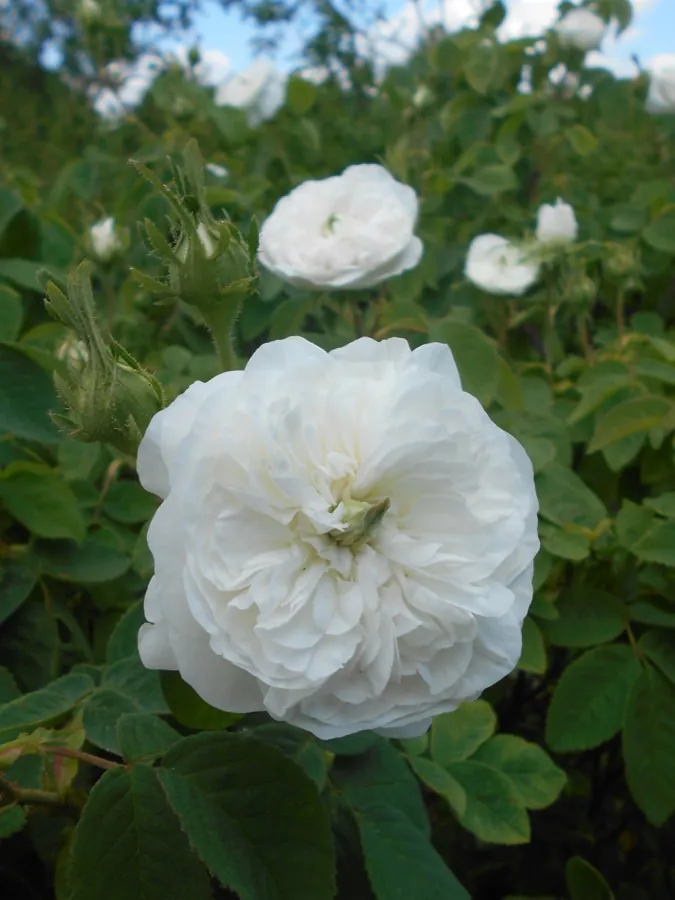
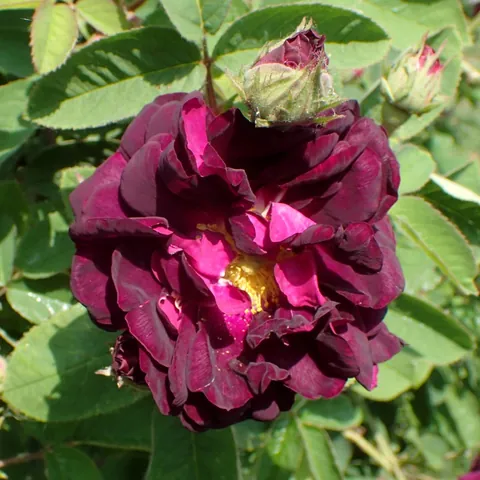
Pure white double flowers with a UNIQUE GREEN «EYE» in the centre; WFRS Old Rose Hall of Fame 2006; raised by Alexandre Hardy (1817–1859, head gardener of the Jardin du Luxembourg in Paris — created 200+ varieties!) in honour of his wife Marie-Thérèse Pezard; USDA 4b — throughout Ukraine without protection; 194 years in cultivation.

WFRS Old Rose HoF 2006 · iconic GREEN 'EYE' (button-eye) at the centre — its trademark

Variety profile

Flowering

Once a season (once-blooming), a lush spring flush — typical of Damask XIX-century roses

Legacy

WFRS Old Rose HoF

2006 · GREEN EYE

Winter hardiness

−32 °C

USDA zone 4b. Throughout Ukraine without protection.

Compare reference temperatures

Plant size

120–200 × 120–150 cm
person 170 cm120–200 cm
Habit
Vigorous, upright
Dimensions
120–200 cm tall × 120–150 cm wide — a vigorous, upright bush
Support
Not required — self-supporting
Shoots
Sturdy, holding the large double flowers
Branching
Well branched

Flower

5-8 cm
Bud shape
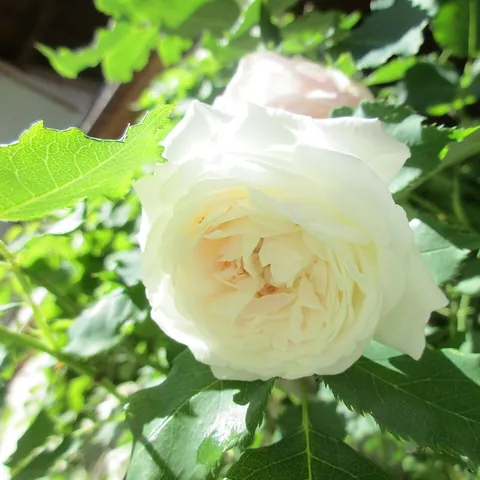
Round white, sometimes with a faint pink tint
Open flower
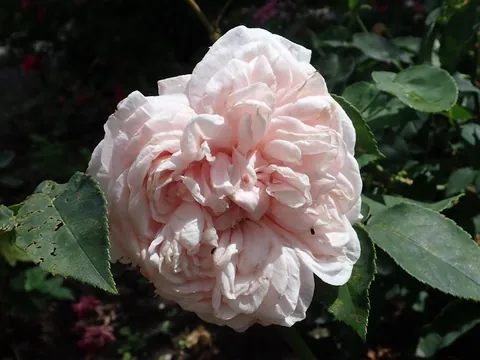
Very double, cupped, with a QUARTERED centre: 5–8 cm, 17–25 petals (HelpMeFind), in some sources up to 200
Centre
UNIQUE GREEN «EYE» (button-eye) — a folded inner petal of green colour. This is the variety's calling card
Fullness
17–200 petals (very full)
Flower carriage
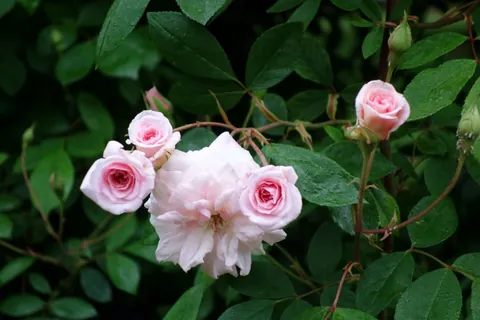
In small clusters

Fragrance

Strong; a classic damask with lemon — the benchmark for Old Rose

STRONG CLASSIC DAMASK with lemon notes — the benchmark Old Rose fragrance.

Disease resistance

5 out of 5

Outstanding 5/5: 0–5% infection in Montreal Botanical Garden trials. USDA 4b–9b — exceptionally hardy, throughout Ukraine without protection. Shade-tolerant — a rarity among roses.

Sun

Sun + shade

Tolerates partial shade.

Thorns

Few
thornlessfewmoderatemanyvery many

Few prickles — typical of Damasks.

Foliage

Matt green, with the characteristic Damask tint.

All characteristics in a table
Group
Damask; WFRS Old Rose Hall of Fame 2006
Breeder
Julien-Alexandre Hardy; Jardin du Luxembourg; Paris, 1832
Bud shape
Round white, sometimes with a faint pink tint
Open flower
Very double, cupped, with a QUARTERED centre: 5–8 cm, 17–25 petals (HelpMeFind), in some sources up to 200
Centre
UNIQUE GREEN «EYE» (button-eye) — a folded inner petal of green colour. This is the variety's calling card
Colour
Pure white, occasionally with a faintly pink bud
Fullness
17–200 petals (very full)
Flower carriage
In small clusters
Flowering
Once a season (once-blooming), a lush spring flush — typical of Damask XIX-century roses
Fragrance
STRONG CLASSIC DAMASK with lemon notes — the benchmark Old Rose fragrance
Hips
Small hips in autumn
Habit
Vigorous, upright
Branching
Well branched
Shoots
Sturdy, holding the large double flowers
Thorns
Few prickles — typical of Damasks.
Dimensions
120–200 cm tall × 120–150 cm wide — a vigorous, upright bush
Support
Not required — self-supporting
Foliage
Matt green, with the characteristic Damask tint
Resistance
Outstanding 5/5: 0–5% infection in Montreal Botanical Garden trials. USDA 4b–9b — exceptionally hardy, throughout Ukraine without protection. Shade-tolerant — a rarity among roses
Variations of the variety
No official code (1832). Raised by Julien-Alexandre Hardy (1787–1876), head gardener of the Jardin du Luxembourg in Paris from 1817 to 1859, who created 200+ varieties. Introduced 1832 (HelpMeFind gives 1831 — the sources disagree). Parentage unknown; DNA analysis showed the closest relatives to be 'Bullata' and 'Petite de Hollande' (a hint of Centifolia-blood). The original name was «Félicité Hardy»

Colour scheme

Pure white, occasionally with a faintly pink bud

Rose neighbours

Perennials to plant nearby

Neighbouring roses

WFRS Old Rose HoF + nineteenth-century classic:

Companion perennials

A classic nineteenth-century palette and the white 'moon' garden:

lavenderhostalady's mantlecolumbine

Availability worldwide

⭐⭐⭐ One of the most famous Damasks — a must in OGR collections:

🇫🇷 France: high · homeland🇬🇧 UK: high · a must at Sissinghurst🇺🇸 USA: high · Antique Rose Emporium🇺🇦 Ukraine: moderate · collector nurseries

More about the variety

Hips
Small hips in autumn
Variations of the variety
No official code (1832). Raised by Julien-Alexandre Hardy (1787–1876), head gardener of the Jardin du Luxembourg in Paris from 1817 to 1859, who created 200+ varieties. Introduced 1832 (HelpMeFind gives 1831 — the sources disagree). Parentage unknown; DNA analysis showed the closest relatives to be 'Bullata' and 'Petite de Hollande' (a hint of Centifolia-blood). The original name was «Félicité Hardy»

How to grow

Where to plant. In white or moon gardens in the Sissinghurst style; in collections of Old Garden Roses; beside a bench, for its strong damask scent; as a «French» accent with a historical theme; under trees and shrubs — it tolerates partial shade.

Climate. Throughout Ukraine without protection (USDA 4b–9b — exceptionally hardy); tolerates partial shade; copes well with summer heat.

Care. Minimal: sun or light shade; resistance 5/5 — no chemical treatments; feed 1× per season; do not prune to the base — it flowers once, on the old canes.

About the name

Name. «Madame Hardy» = «Madam Hardy». In honour of Marie-Thérèse Pezard, wife of the breeder Alexandre Hardy. A touching family dedication from a husband to his wife. The original name was «Félicité Hardy» («félicité» — «happiness»), but it quickly changed to plain Madame Hardy in the catalogues. One example of «wife roses» of the nineteenth century — the tradition of breeders naming their best varieties after their own wives (as Sally Holmes was later named, in 1976).

Breeding. Raised by Julien-Alexandre Hardy (1787–1876) at the Jardin du Luxembourg (Luxembourg Garden, Paris, France). Hardy was head gardener of the Jardin du Luxembourg from 1817 to 1859 — 42 years! During that time he created more than 200 rose varieties. Introduced 1832. Parentage unknown; DNA analysis in the 2010s showed that its closest relatives are 'Bullata' and 'Petite de Hollande' — a hint at Centifolia-blood in its ancestry.

Significance. WFRS OLD ROSE HALL OF FAME 2006 — confirmed by the official list at worldrose.org. A UNIQUE GREEN «EYE» (button-eye) in the centre of the flower — a folded inner petal of green colour. This is the variety's calling card, a rare decorative trait among all roses. One of the best white Old Garden Roses of all time. Outstanding resistance 5/5 — 0–5% infection in trials at the Montreal Botanical Garden (one of the toughest trials). USDA 4b — throughout Ukraine without protection. Tolerates partial shade — a rarity for roses. 194 years in cultivation without a break. The legacy of Alexandre Hardy — one of the most influential French breeders of the nineteenth century. Once-flowering — typical of Damasks.

Frequently asked questions about Madame Hardy

Does Madame Hardy need winter protection?

The cultivar’s reference temperature is −32 °C (USDA zone 4b). Overwintering depends on the conditions. Throughout Ukraine without protection.

How many times a season does Madame Hardy flower?

Once a season (once-blooming), a lush spring flush — typical of Damask XIX-century roses.

How big does Madame Hardy grow?

120–200 cm tall, 120–150 cm wide.

Which diseases affect Madame Hardy?

Overall resistance: 5 out of 5. 0–5% infection in Montreal trials.

How much sun does Madame Hardy need?

Sun + shade; tolerates partial shade.

What does Madame Hardy smell like?

STRONG CLASSIC DAMASK with lemon notes — the benchmark Old Rose fragrance.

Gardeners' photos and reviews

My climate

Choose a reference temperature to compare with the cultivar’s data. This is not an overwintering forecast or advice on winter protection; consider wind, moisture and the duration of frost.

Regional data are generalised. USDA describes average annual extreme minima, not a forecast; the values in the list are rounded. Check the conditions at your site. More information: Roses in Ukraine's climate.