



Back to catalogue
Gallica (Provins); one of the darkest historic varietiesThomas Rivers & Son LtdRed

Tuscany Superb

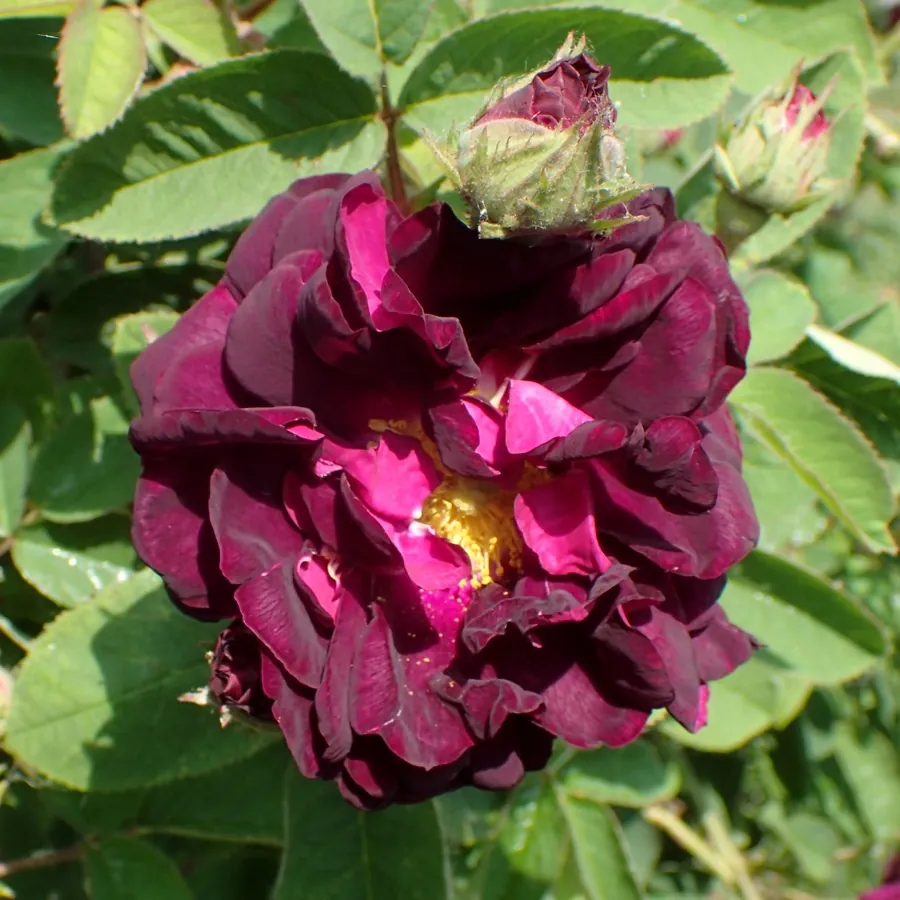
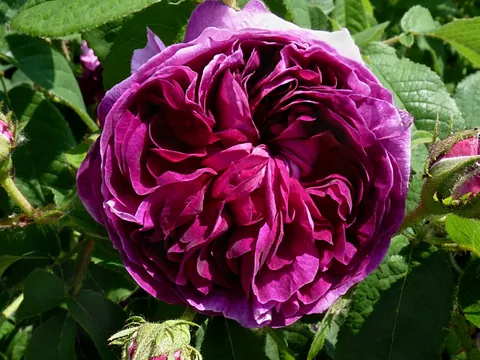
Dense dark crimson-purple, velvety black in shade, with golden stamens; one of the darkest historic varieties. RHS Award of Garden Merit. Shakespeare's 'velvet rose', recorded in William Lawson's garden in 1597 and probably the rose described in Henry IV; a 'living window' into an Elizabethan garden.

RHS Award of Garden Merit · a 'living window' into Shakespeare's Elizabethan garden

Variety profile

Flowering

Once-flowering in summer, typical of the Gallica-class (a reminder: repeat flowering appeared later in Bourbons, in the 1830-40s)

Legacy

RHS AGM

Shakespeare 1597

Winter hardiness

−32 °C

USDA zone 4b. All of Ukraine; no winter cover needed.

Compare reference temperatures

Plant size

100–150 × 60–90 cm
person 170 cm100–150 cm
Habit
Upright, compact Gallica-type bush
Dimensions
100-150 cm tall × 60-90 cm wide; compact for a Gallica
Support
Not needed; self-supporting
Shoots
Medium stiffness
Branching
Well branched

Flower

≈ 7.5 cm

35-70 petals.

Bud shape
Round, dark purple, almost black
Open flower
Semi-double, open: about 7.5 cm (3"), 35-70 petals
Centre
Visible golden stamens against the dark purple background; the main ornamental feature, a rare visual contrast
Fullness
35-70 petals (semi-double to full)
Flower carriage
Singly or in small clusters of 2-3

Fragrance

Strong; classic 'Old Rose' damask with honey

Strong classic 'Old Rose': damask with notes of honey. The same type from which rose oil is made.

Disease resistance

4 out of 5
Black spotsusceptiblePowdery mildewsusceptible

Good, 4/5: like all gallicas, resistant to black spot and moderately susceptible to powdery mildew. USDA 4b: overwinters well across all of Ukraine without cover, including the northern regions; a typical gallica has a 'genetic antifreeze'.

Sun

Full sun

Tolerates part shade.

Thorns

Few
thornlessfewmoderatemanyvery many

Almost thornless; a rarity for a Gallica.

Foliage

Dark green, matt; typical of Gallicas.

All characteristics in a table
Group
Gallica (Provins); one of the darkest historic varieties
Breeder
Thomas Rivers & Son Ltd, United Kingdom
Bud shape
Round, dark purple, almost black
Open flower
Semi-double, open: about 7.5 cm (3"), 35-70 petals
Centre
Visible golden stamens against the dark purple background; the main ornamental feature, a rare visual contrast
Colour
Dense dark crimson-purple, velvety black in shade; one of the darkest historic varieties. The colour recalls medieval silk or velvet
Fullness
35-70 petals (semi-double to full)
Flower carriage
Singly or in small clusters of 2-3
Flowering
Once-flowering in summer, typical of the Gallica-class (a reminder: repeat flowering appeared later in Bourbons, in the 1830-40s)
Fragrance
Strong classic 'Old Rose': damask with notes of honey. The same type from which rose oil is made
Hips
Small hips after flowering; ornamental
Habit
Upright, compact Gallica-type bush
Branching
Well branched
Shoots
Medium stiffness
Thorns
Almost thornless; a rarity for a Gallica.
Dimensions
100-150 cm tall × 60-90 cm wide; compact for a Gallica
Support
Not needed; self-supporting
Foliage
Dark green, matt; typical of Gallicas
Resistance
Good, 4/5: like all gallicas, resistant to black spot and moderately susceptible to powdery mildew. USDA 4b: overwinters well across all of Ukraine without cover, including the northern regions; a typical gallica has a 'genetic antifreeze'
Variations of the variety
No official code (historic variety). Introduced by 1837 through Thomas Rivers & Son Ltd (Sawbridgeworth, UK). Parentage: seedling or sport of 'Tuscany' (Old Velvet Rose, by 1812) × unknown father. Not to be confused with the earlier 'Tuscany' (Old Velvet Rose, by 1500); this is the improved 'Superb' version

Colour scheme

Dense dark crimson-purple, velvety black in shade; one of the darkest historic varieties. The colour recalls medieval silk or velvet

Rose neighbours

Perennials to plant nearby

Neighbouring roses

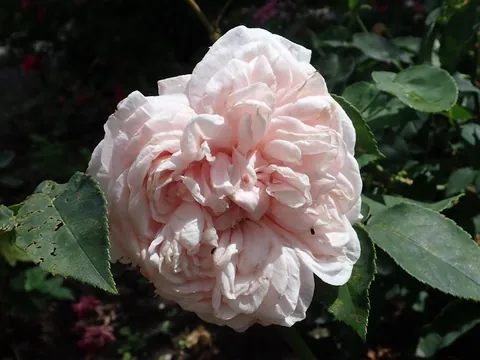
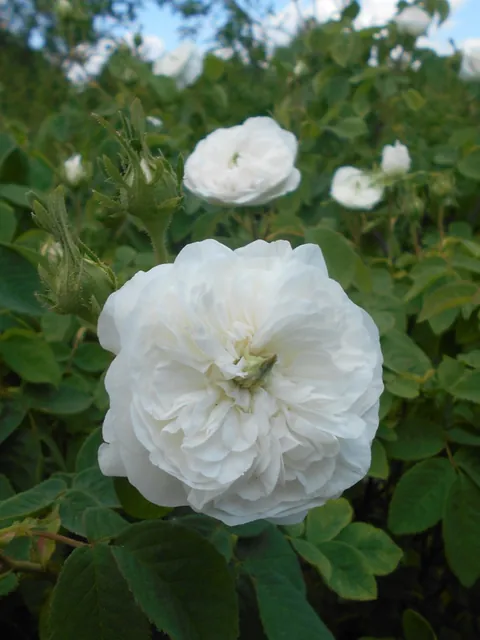
A classic collection of Old Garden Roses of the XVIII–XIX centuries:

Companion perennials

Silvery perennials set off the dark purple colour:

stachyslavenderlady's mantle (Alchemilla)aquilegia

Availability worldwide

⭐ A collectors' historic variety — essential in Old Garden Roses:

🇬🇧 UK: high · home of Rivers🇪🇺 Europe: moderate · 'old roses' segment🇺🇸 USA: moderate · Antique Rose Emporium🇺🇦 Ukraine: rare · collector nurseries

More about the variety

Hips
Small hips after flowering; ornamental
Variations of the variety
No official code (historic variety). Introduced by 1837 through Thomas Rivers & Son Ltd (Sawbridgeworth, UK). Parentage: seedling or sport of 'Tuscany' (Old Velvet Rose, by 1812) × unknown father. Not to be confused with the earlier 'Tuscany' (Old Velvet Rose, by 1500); this is the improved 'Superb' version

How to grow

Where to plant. In classic cottage gardens with a nineteenth-century feel; in Old Garden Roses collections; in 'dark' or Gothic corners, with white and silver neighbours for dramatic contrast; in a fragrance corner, for its strong 'Old Rose' scent.

Climate. All of Ukraine without cover (USDA 4b, a record winter hardiness for a Gallica); tolerates summer heat well.

Care. Minimal; full sun or light shade; do not prune after flowering (it flowers only once, so the shoots must be kept for next year); feed 1× per season; needs no chemical treatments.

About the name

Name. 'Tuscany', after the Italian region of Tuscany, because the dark purple colour recalled silk fabrics from Renaissance Tuscany. 'Superb' was added by Rivers' nursery to distinguish the 'improved' version from the older 'Old Velvet Rose'. A poetic name that links the rose with the Italian Renaissance.

Breeding. Bred by Thomas Rivers & Son Ltd (Sawbridgeworth, UK). Introduced by 1837. Parentage: seedling or sport of 'Tuscany' (Old Velvet Rose, by 1812) × unknown father. Not to be confused with the earlier 'Tuscany' (Old Velvet Rose, by 1500, possibly fifteenth-century).

Significance. Shakespeare's 'velvet rose': 'Tuscany' (the older version from which Superb descends) was already growing in William Lawson's garden in 1597 ('A New Orchard and Garden') and is considered a probable 'velvet rose' that Shakespeare describes in 'Henry IV'. Tuscany Superb is the improved version of this ancient rose, which makes it a 'living window' into the sixteenth-century Elizabethan garden. RHS Award of Garden Merit. One of the darkest historic varieties, velvety black in shade, with golden stamens. A strong classic 'Old Rose' scent, the same fragrance used to make rose oil. Almost thornless, a rarity for a Gallica. USDA 4b: Gallicas have a 'genetic antifreeze'. The WFRS Old Rose HoF claim is a MYTH common in secondary catalogues: the Old Rose HoF Tuscany Superb entry is not on the list, which includes Rosa gallica officinalis, Charles de Mills, Rosa Mundi, etc. A common misattribution is 'Mawson 1837'; the true breeder is Thomas Rivers, not Mawson.

Frequently asked questions about Tuscany Superb

Does Tuscany Superb need winter protection?

The cultivar’s reference temperature is −32 °C (USDA zone 4b). Overwintering depends on the conditions. All of Ukraine; no winter cover needed.

How many times a season does Tuscany Superb flower?

Once-flowering in summer, typical of the Gallica-class (a reminder: repeat flowering appeared later in Bourbons, in the 1830−40s).

How big does Tuscany Superb grow?

100–150 cm tall, 60–90 cm wide.

Which diseases affect Tuscany Superb?

Overall resistance: 4 out of 5. Good; the genetic 'antifreeze' of gallicas.

How much sun does Tuscany Superb need?

Sun; full sun; tolerates part shade.

What does Tuscany Superb smell like?

Strong classic 'Old Rose': damask with notes of honey. The same type from which rose oil is made.

Gardeners' photos and reviews

My climate

Choose a reference temperature to compare with the cultivar’s data. This is not an overwintering forecast or advice on winter protection; consider wind, moisture and the duration of frost.

Regional data are generalised. USDA describes average annual extreme minima, not a forecast; the values in the list are rounded. Check the conditions at your site. More information: Roses in Ukraine's climate.