


Back to catalogue
Shrub rose (Générosa®)Dominique Massad / Guillot, 1995White and cream

Manuel Canovas

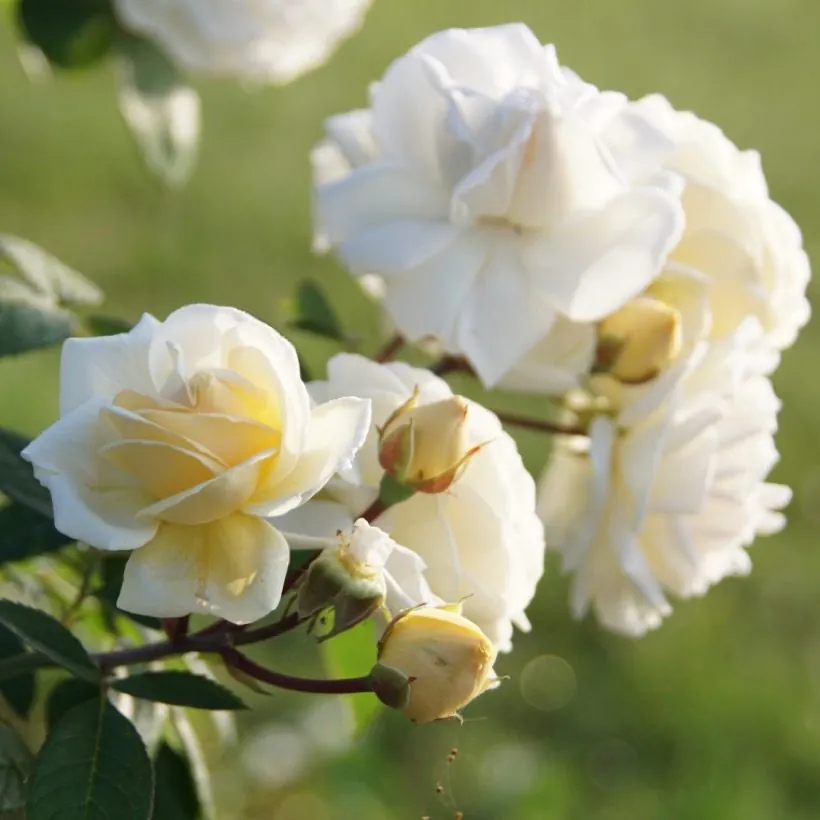
White, with pale yellow old-fashioned rosettes in clusters; fresh lily-of-the-valley scent; a healthy shrub from the Générosa collection.

Générosa® Guillot collection · named after textile designer Manuel Canovas

Variety profile

Flowering

Repeat flowering

Strongly repeat-flowering, from May to November. Months are approximate, for the climate of Ukraine.

Legacy

Générosa®

Guillot collection: old-rose form and fragrance, with modern health

Winter hardiness

−18 °C

USDA zone 6b–9. South and centre of Ukraine; in the north — with winter cover. South and centre of Ukraine · in the north, with winter protection.

Compare reference temperatures

Plant size

120–130 × 90–100 cm
person 170 cm120–130 cm
Habit
Compact, upright, well-branched, free-flowering
Dimensions
About 120–130 cm tall × 90–100 cm wide
Support
Not needed — a self-supporting bush
Shoots
Sturdy
Branching
Good

Flower

≈ 5 cm

35–40 petals.

Bud shape
Medium, pointed
Open flower
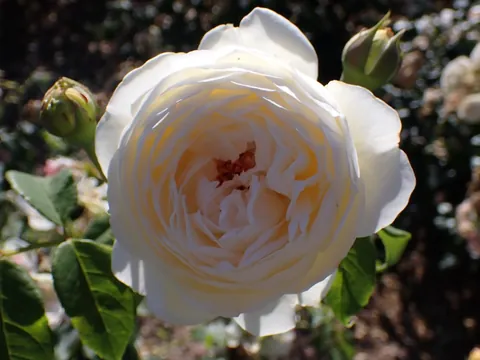
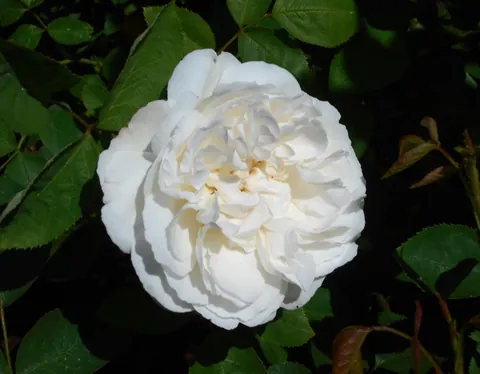
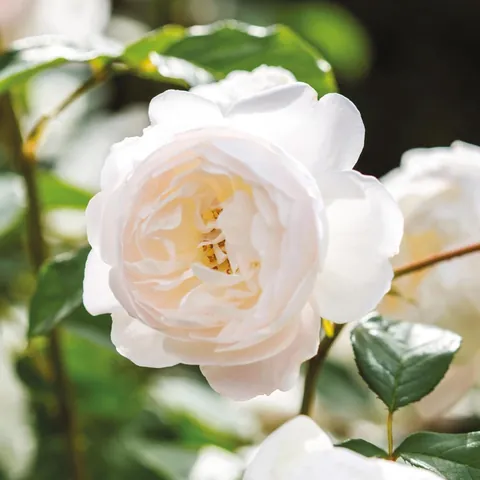
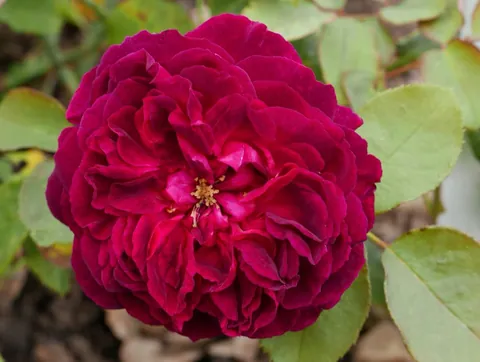
Cupped rosette of old-fashioned appearance; diameter about 5 cm
Centre
Yellowish in young flowers
Fullness
Double (about 35–40 petals)
Flower carriage
In small clusters (several flowers per stem)

Fragrance

Light; fresh, lily-of-the-valley (muguet)

Light — fresh, delicate, lily-of-the-valley (muguet), with a feeling of early spring.

Disease resistance

4 out of 5

Good to excellent disease resistance (a hallmark of the Générosa collection).

Sun

Full sun

Undemanding, free-flowering.

Thorns

Moderate
thornlessfewmoderatemanyvery many

Moderate prickliness (no precise data for this variety).

Foliage

Dark green, semi-glossy, leathery, healthy.

Other names

Breeder's code MASpagui.

All characteristics in a table
Group
Shrub rose (Générosa®)
Breeder
Dominique Massad / Guillot, France, 1995
Bud shape
Medium, pointed
Open flower
Cupped rosette of old-fashioned appearance; diameter about 5 cm
Centre
Yellowish in young flowers
Colour
White, slightly iridescent, with pale yellow (more saturated towards the centre); fades with age to almost pure white
Fullness
Double (about 35–40 petals)
Flower carriage
In small clusters (several flowers per stem)
Flowering
Strongly repeat-flowering, from May to November
Fragrance
Light — fresh, delicate, lily-of-the-valley (muguet), with a feeling of early spring
Hips
Unknown
Habit
Compact, upright, well-branched, free-flowering
Branching
Good
Shoots
Sturdy
Thorns
Moderate prickliness (no precise data for this variety).
Dimensions
About 120–130 cm tall × 90–100 cm wide
Support
Not needed — a self-supporting bush
Foliage
Dark green, semi-glossy, leathery, healthy
Resistance
Good to excellent disease resistance (a hallmark of the Générosa collection)
Variations of the variety
No sports recorded

Colour scheme

White, slightly iridescent, with a pale yellow centre (more saturated towards the middle); fades with age to almost pure white

Rose neighbours

Perennials to plant nearby

Neighbouring roses

White and cream varieties keep the same clean, elegant mood around Manuel Canovas.

Companion perennials

Blue, lavender and white plants bring out the purity of the white flower:

catmintCaradonna sageMunstead lavendergypsophila

Contrasting accents

Blue spires and lavender tones add depth to the white palette:

DelphiniumNepeta Six Hills GiantLavandula

More about the variety

Hips
Unknown
Variations of the variety
No sports recorded

How to grow

Where to plant. In a white or pastel flower bed, a border, small groups, a low hedge; also lovely for cutting.

Climate. South and centre of Ukraine — no cover needed; in the north — with winter cover (USDA zone 6b).

Care. Moderate; full sun, fertile soil; healthy foliage makes care easier; feeding twice per season.

About the name

Name. After Manuel Canovas (1935–2019), a well-known French designer of fabrics and interiors, founder of the Paris house of decorative fabrics and wallpapers. The rose symbolically combines two historic French houses — the Guillot nursery (where 'La France', 1867, the first Hybrid Tea, was bred) and the Canovas decorative fabric house.

Breeding. Bred by Dominique Massad (often signed 'Guillot-Massad'), introduced by Roseraie Guillot (France); crossed in 1995. Code MASpagui. Parent forms have not been published.

Significance. A member of the Générosa® Guillot collection — modern shrub roses that combine the form and fragrance of old roses with modern health and repeat flowering.

Frequently asked questions about Manuel Canovas

Does Manuel Canovas need winter protection?

The cultivar’s reference temperature is −18 °C (USDA zone 6b–9). Overwintering depends on the conditions. South and centre of Ukraine; in the north — with winter cover.

How many times a season does Manuel Canovas flower?

Strongly repeat-flowering, from May to November.

How big does Manuel Canovas grow?

120–130 cm tall, 90–100 cm wide.

Which diseases affect Manuel Canovas?

Overall resistance: 4 out of 5. Good to excellent — a characteristic feature of Générosa.

How much sun does Manuel Canovas need?

Full sun; undemanding, free-flowering.

What does Manuel Canovas smell like?

Light — fresh, delicate, lily-of-the-valley (muguet), with a feeling of early spring.

Gardeners' photos and reviews

My climate

Choose a reference temperature to compare with the cultivar’s data. This is not an overwintering forecast or advice on winter protection; consider wind, moisture and the duration of frost.

Regional data are generalised. USDA describes average annual extreme minima, not a forecast; the values in the list are rounded. Check the conditions at your site. More information: Roses in Ukraine's climate.