



Back to catalogue
Floribunda; garden roseGeorges Delbard; Pépinières Delbard, 2006Red

Malicorne

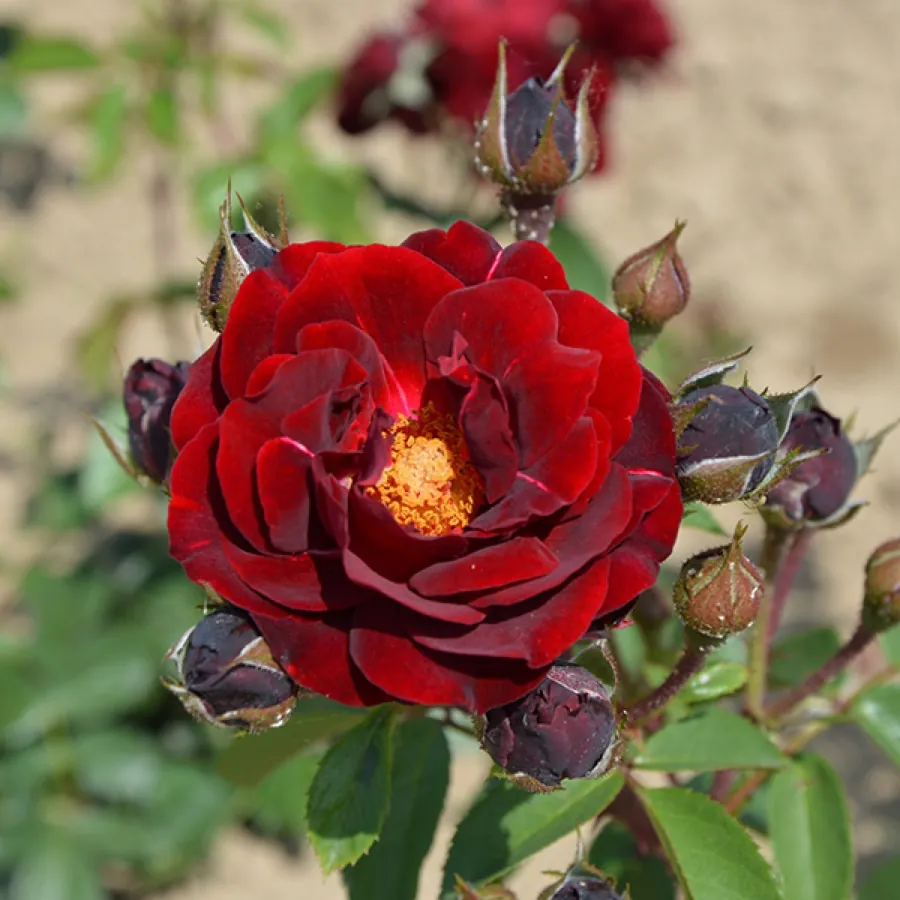
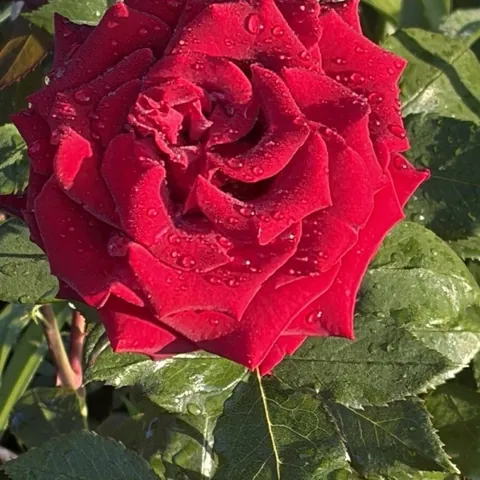
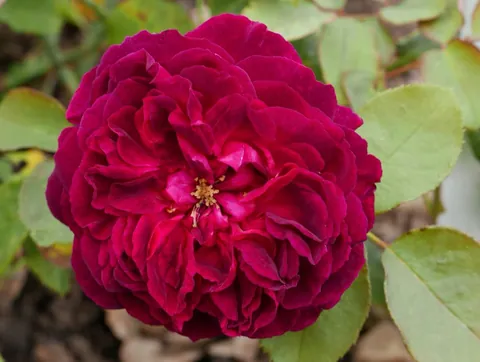
Velvety dark red with a purple tint; named after Georges Delbard's native village — a personal, family-biographical variety; CORRECTION: Delbard, NOT Massad / NOT Guillot / NOT Generosa.

Pépinières Delbard

Variety profile

Flowering

Repeat, in flushes

Repeat-flowering, in flushes from June to October. Months are approximate, for the climate of Ukraine.

Awards

1 medal

Delbard catalogue · specifics not given

Winter hardiness

−20 °C

USDA zone 6b–9b. All of Ukraine with moderate winter cover.

Compare reference temperatures

Plant size

80–100 × 50–60 cm
person 170 cm80–100 cm
Habit
Compact upright Floribunda
Dimensions
80–100 × 50–60 cm; compact
Support
Does not need support
Shoots
Sturdy, straight, medium length
Branching
Good, from the base

Flower

5–7 cm
Bud shape
Round, dark cherry-purple, with a velvety sheen
Open flower
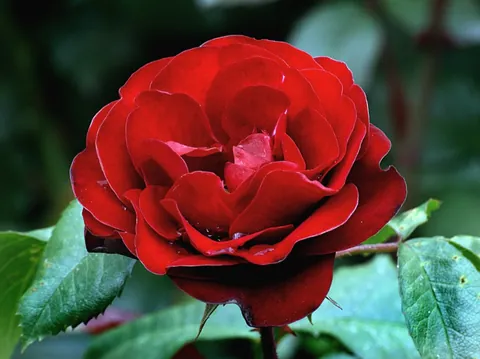
Double, cupped — deep velvet, not 'flattened'
Centre
Tightly packed, dark red
Fullness
17–25 petals (double)
Flower carriage
In clusters of 3–7 flowers — typical for Floribundas

Fragrance

Light

Light — not the variety's main strength; the emphasis is on colour and velvety texture.

Disease resistance

4 out of 5

4/5 — good; typical of modern Delbard roses from the 2000s.

Sun

Full sun

The velvet opens in the light.

Thorns

Moderate
thornlessfewmoderatemanyvery many

Average number of thorns, typical of Floribundas.

Foliage

Dark green, leathery.

Other names

The Grayson Rose
All characteristics in a table
Group
Floribunda; garden rose
Breeder
Georges Delbard; Pépinières Delbard, France, 2006
Bud shape
Round, dark cherry-purple, with a velvety sheen
Open flower
Double, cupped — deep velvet, not 'flattened'
Centre
Tightly packed, dark red
Colour
Velvety dark red with a purple tint — 'deep blood red, velvet'; more intense in bright sun; the typical 'Bordeaux velvet' of modern Delbard roses
Fullness
17–25 petals (double)
Flower carriage
In clusters of 3–7 flowers — typical for Floribundas
Flowering
Repeat-flowering, in flushes from June to October
Fragrance
Light — not the variety's main strength; the emphasis is on colour and velvety texture
Hips
Not documented
Habit
Compact upright Floribunda
Branching
Good, from the base
Shoots
Sturdy, straight, medium length
Thorns
Average number of thorns, typical of Floribundas.
Dimensions
80–100 × 50–60 cm; compact
Support
Does not need support
Foliage
Dark green, leathery
Resistance
4/5 — good; typical of modern Delbard roses from the 2000s
Variations of the variety
Code DELrocarm; year bred 2005, market 2006. Synonym: The Grayson Rose (English-speaking market). CORRECTION: often wrongly credited to Massad / Guillot / Generosa because of the similarity of the French houses' names — it is Delbard, not Guillot. Parentage not published

Colour scheme

Velvety dark red with a purple tint — 'deep blood red, velvet'; more intense in bright sun; the typical 'Bordeaux velvet' of modern Delbard roses

Rose neighbours

Perennials to plant nearby

Neighbouring roses

A dark red family for velvety contrasts:

Companion perennials

A silvery-purple family — it sets off the velvety dark red:

lavenderByzantine betony (Stachys byzantina)gypsophilasoft lady's mantle (Alchemilla)

Availability worldwide

A classic modern Delbard, active in Europe and Ukraine:

🇫🇷 France: high · Delbard🇩🇪 Germany/🇪🇺 EU: high · via dealers🇬🇧 UK: moderate · as 'The Grayson Rose'🇺🇦 Ukraine: high · via Ukrainian nurseries

More about the variety

Hips
Not documented
Variations of the variety
Code DELrocarm; year bred 2005, market 2006. Synonym: The Grayson Rose (English-speaking market). CORRECTION: often wrongly credited to Massad / Guillot / Generosa because of the similarity of the French houses' names — it is Delbard, not Guillot. Parentage not published

How to grow

Where to plant. In a mixed border with silver and white neighbours for dramatic contrast; at the front of the border (thanks to its compact 80–100 cm height); as an accent in gardens of classic style.

Climate. To −20 °C — all of Ukraine with moderate winter cover; the south without cover.

Care. Classic Floribunda — spring pruning; removing spent flowers encourages new flushes; routine seasonal disease prevention.

About the name

Name. 'Malicorne' — after the village of Malicorne in France (Allier, Auvergne-Rhône-Alpes region) — the native village of Georges Delbard and the site where the Pépinières Delbard nursery was founded in 1935. This is a personal, family-biographical variety — a rare case where a breeding house dedicates a rose not to a person or an event, but to its founder's home village. The English-speaking market sells the variety under the trade name 'The Grayson Rose'. Do not confuse it with Malicorne-sur-Sarthe — a different village on the Sarthe; Delbard historically meant Malicorne (Allier).

Breeding. Bred by Georges Delbard / SAS Pépinières Delbard (France), bred in 2005, released on the market in 2006. Code DELrocarm. Parentage is not published (typical Delbard practice). The catalogue lists 1 medal for Delbard, with no details given. MAJOR ATTRIBUTION CORRECTION: in our legacy data and in many Ukrainian sources the variety was wrongly credited to Massad / Guillot / Generosa because of the similarity of the French houses' names — it is Delbard, not Guillot.

Significance. The 6th Delbard work in our catalogue (alongside Blue Nile, Dames de Chenonceau, La Rose de Molinard, Impératrice Farah, Mamy Blue). A separate stable group of 'French Delbard' roses in the catalogue. The dark red Floribunda pairs with Lavaglut (Kordes 1978), Black Magic (Tantau 1997) and Burgund 81 (Kordes 1981) — a separate velvety Bordeaux group in the catalogue for dramatic contrast plantings.

Frequently asked questions about Malicorne

Does Malicorne need winter protection?

The cultivar’s reference temperature is −20 °C (USDA zone 6b–9b). Overwintering depends on the conditions. All of Ukraine with moderate winter cover.

How many times a season does Malicorne flower?

Repeat-flowering, in flushes from June to October.

How big does Malicorne grow?

80–100 cm tall, 50–60 cm wide.

Which diseases affect Malicorne?

Overall resistance: 4 out of 5. Good; a modern Delbard-type selection.

How much sun does Malicorne need?

Sun; full sun; the velvet opens in the light.

What does Malicorne smell like?

Light — not the variety's main strength; the emphasis is on colour and velvety texture.

Gardeners' photos and reviews

My climate

Choose a reference temperature to compare with the cultivar’s data. This is not an overwintering forecast or advice on winter protection; consider wind, moisture and the duration of frost.

Regional data are generalised. USDA describes average annual extreme minima, not a forecast; the values in the list are rounded. Check the conditions at your site. More information: Roses in Ukraine's climate.