



Back to catalogue
FloribundaReimer Kordes; W. Kordes' SöhneRed

Lavaglut

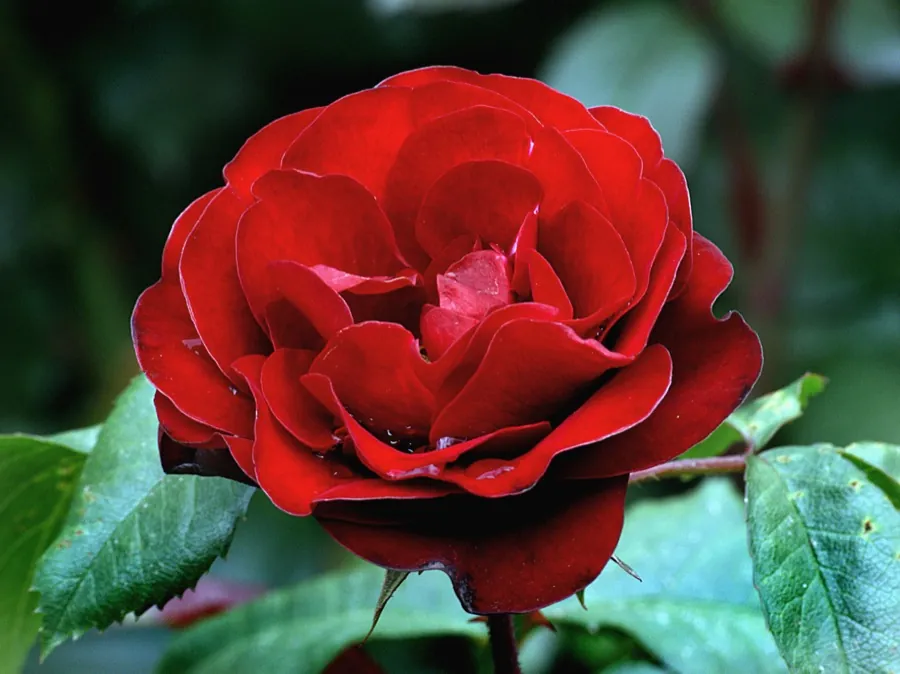
A dark red 'velvety-wine' classic from Reimer Kordes; RNRS Trial Ground Certificate 1980; one of the best dark red floribundas of the twentieth century; from its maternal parent Gruss an Bayern.

One of the finest dark red FLs of the twentieth century

Variety profile

Flowering

Repeat-flowering, very profuse

Awards

RNRS 1980

Trial Ground Certificate · RHS AGM not confirmed

Winter hardiness

−26 °C

USDA zone 5b. In Ukraine without winter protection for most of the territory.

Compare reference temperatures

Plant size

60–90 × 50–60 cm
person 170 cm60–90 cm
Habit
Compact, round, upright — a typical 1970s Kordes Floribunda
Dimensions
60–90 × 50–60 cm — compact
Support
No support needed
Shoots
Sturdy, straight, hold large clusters of flowers well
Branching
Good, from the base

Flower

6–8 cm
Bud shape
Round, dark red with a velvety sheen
Open flower
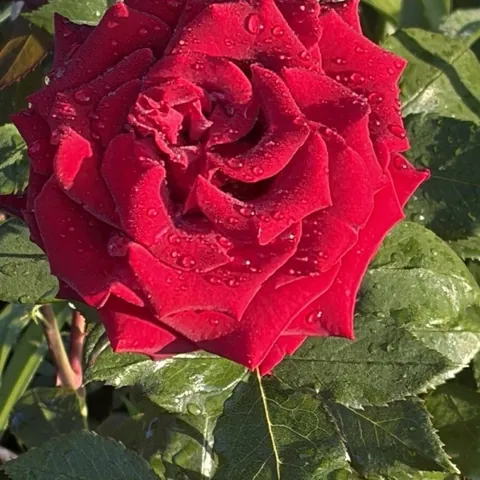
Globular full form with ~24–25 petals; a deep 'glowing' dark red like a lava glow
Centre
Tightly packed, in the same wine tone
Fullness
Full, ~24–25 petals
Flower carriage
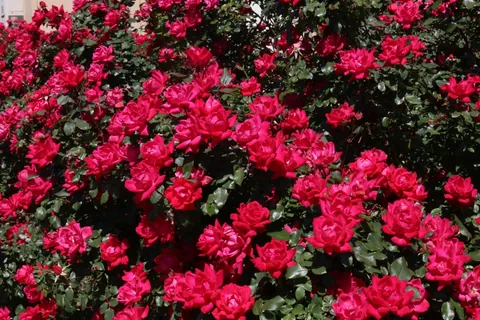
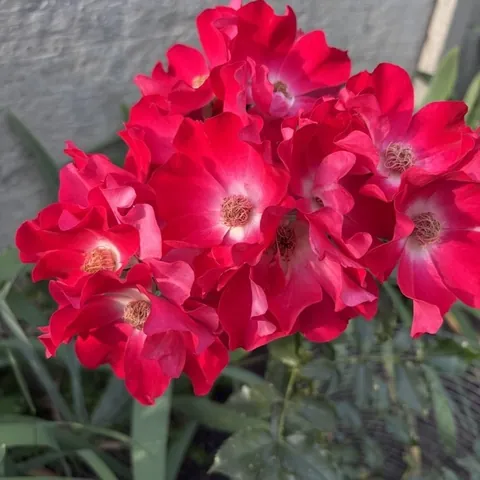
In large clusters of 5–10 flowers — typical Floribunda-form

Fragrance

Light

Light — no pronounced notes; this is an ornamental variety, not grown for scent.

Disease resistance

3 out of 5
Black spotsusceptiblePowdery mildewresistant

High against powdery mildew, tolerant of heat and rain; susceptible to black spot — the variety's weak point.

Sun

Full sun

Tolerates heat and rain.

Thorns

Moderate
thornlessfewmoderatemanyvery many

Medium number, typical of classic Kordes FL.

Foliage

Glossy dark green — a decorative effect against the red flowers.

Other names

Lavaglow, Lava Glow, Lavaglo, Lavaglühen, Lava Flow, Intrigue, Kordes' Intrigue
All characteristics in a table
Group
Floribunda
Breeder
Reimer Kordes; W. Kordes' Söhne, Germany
Bud shape
Round, dark red with a velvety sheen
Open flower
Globular full form with ~24–25 petals; a deep 'glowing' dark red like a lava glow
Centre
Tightly packed, in the same wine tone
Colour
Dark velvety wine-red ('deep velvety red') with a 'glowing' effect — like a lava glow. NO ink-black tones (often confused with Black Magic — a different Tantau variety).
Fullness
Full, ~24–25 petals
Flower carriage
In large clusters of 5–10 flowers — typical Floribunda-form
Flowering
Repeat-flowering, very profuse
Fragrance
Light — no pronounced notes; this is an ornamental variety, not grown for scent
Hips
Not documented
Habit
Compact, round, upright — a typical 1970s Kordes Floribunda
Branching
Good, from the base
Shoots
Sturdy, straight, hold large clusters of flowers well
Thorns
Medium number, typical of classic Kordes FL.
Dimensions
60–90 × 50–60 cm — compact
Support
No support needed
Foliage
Glossy dark green — a decorative effect against the red flowers
Resistance
High against powdery mildew, tolerant of heat and rain; susceptible to black spot — the variety's weak point
Variations of the variety
Code KORlech; parentage 'Gruss an Bayern' (Floribunda, Kordes 1971) × unnamed seedling; many synonyms: Lavaglow, Lava Glow, Lavaglo, Lavaglühen, Lava Flow (USA via Regan Nursery), Intrigue / Kordes' Intrigue (note: in the USA there is a DIFFERENT variety called Intrigue, from Warriner/J&P 1982 — these are different plants!)

Colour scheme

Dark velvety wine-red ('deep velvety red') with a 'glowing' effect — like a lava glow. NO ink-black tones (often confused with Black Magic — a different Tantau variety).

Rose neighbours

Perennials to plant nearby

Rose neighbours

Dark red family and contrasting reds:

Companion perennials

Silvery-violet family for contrast:

lamb's ear (Stachys byzantina)lavenderornamental grassesgypsophila

Availability worldwide

Classic Kordes Floribunda, 45+ years in cultivation:

🇩🇪 Germany: high · official Kordes🇪🇺 Europe: high · classic🇺🇸 USA: high · as Lava Flow🇺🇦 Ukraine: moderate · via European nurseries

More about the variety

Hips
Not documented
Variations of the variety
Code KORlech; parentage 'Gruss an Bayern' (Floribunda, Kordes 1971) × unnamed seedling; many synonyms: Lavaglow, Lava Glow, Lavaglo, Lavaglühen, Lava Flow (USA via Regan Nursery), Intrigue / Kordes' Intrigue (note: in the USA there is a DIFFERENT variety called Intrigue, from Warriner/J&P 1982 — these are different plants!)

How to grow

Where to plant. Mono-red borders, hedges, urban formal groups, landscape drifts; ideal as a specimen against white or silvery neighbours for dramatic contrast.

Climate. Down to −26 °C — in Ukraine without winter protection for most of the territory; in the northern areas with little snow, moderate protection.

Care. A classic Floribunda — prune in spring to 4–6 buds; seasonal prevention of black spot is essential — the variety's weak point.

About the name

Name. 'Lavaglut' — German for 'lava glow' (Lava + Glut — 'heat, glowing embers'); the variant 'Lavaglühen' — 'lava blaze'. The name describes the flower's character precisely: a 'glowing' dark red, like molten lava. A descriptive, poetic name typical of Kordes in the 1970s (alongside Flammentanz 'fire dance', Friesia 'Frisian').

Breeding. Bred by Reimer Kordes at W. Kordes' Söhne (Sparrieshoop, Germany), bred in 1978, on the market in 1979. Code KORlech. Parentage: 'Gruss an Bayern' (Floribunda, Kordes 1971) × unnamed seedling. Reimer Kordes is the 3rd generation of the Kordes house (alongside Friesia, 1973, in our catalogue).

Significance. One of the best-known dark red Floribundas of the late 1970s; considered one of the best dark red Floribundas in its class — consistently high ratings from American rose societies. A classic for borders and hedges. RNRS Trial Ground Certificate 1980 (UK). RHS Award of Garden Merit not confirmed (contrary to some sources — there is no RHS AGM in the official list). No direct ADR confirmation found. Common mistakes: confusing it with the American 'Intrigue' (Warriner, J&P 1982, purple with fragrance — a different variety!); confusing it with 'Black Magic' (Tantau, Hybrid Tea — a different class and breeder!).

Frequently asked questions about Lavaglut

Does Lavaglut need winter protection?

The cultivar’s reference temperature is −26 °C (USDA zone 5b). Overwintering depends on the conditions. In Ukraine without winter protection for most of the territory.

How many times a season does Lavaglut flower?

Repeat-flowering, very profuse.

How big does Lavaglut grow?

60–90 cm tall, 50–60 cm wide.

Which diseases affect Lavaglut?

Overall resistance: 3 out of 5. High against powdery mildew; susceptible to black spot.

How much sun does Lavaglut need?

Sun; full sun; tolerates heat and rain.

What does Lavaglut smell like?

Light — no pronounced notes; this is an ornamental variety, not grown for scent.

Gardeners' photos and reviews

My climate

Choose a reference temperature to compare with the cultivar’s data. This is not an overwintering forecast or advice on winter protection; consider wind, moisture and the duration of frost.

Regional data are generalised. USDA describes average annual extreme minima, not a forecast; the values in the list are rounded. Check the conditions at your site. More information: Roses in Ukraine's climate.