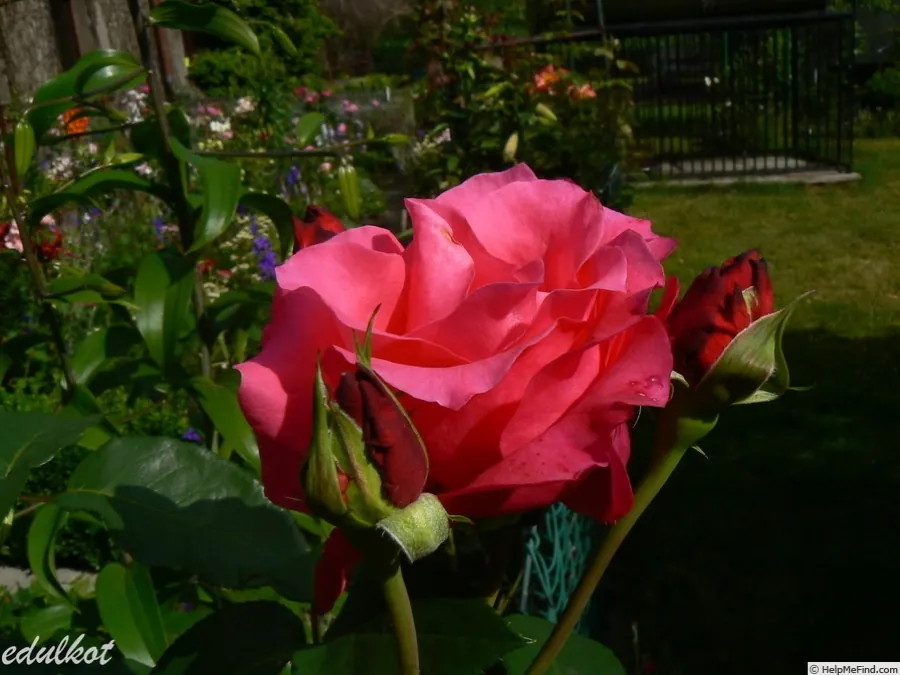
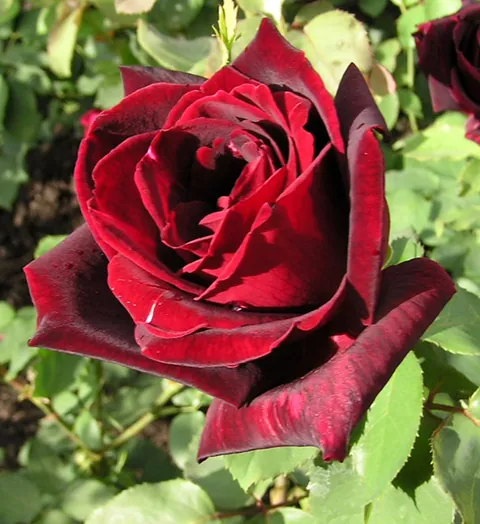
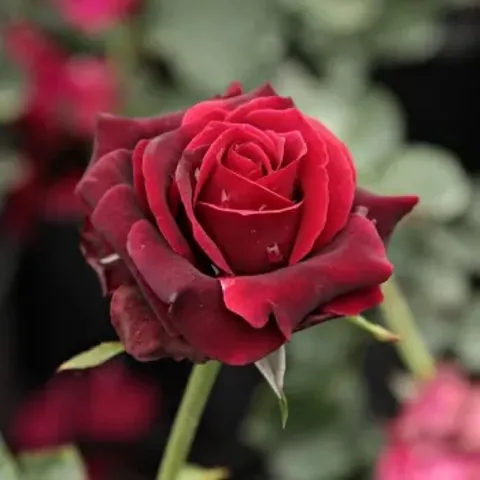
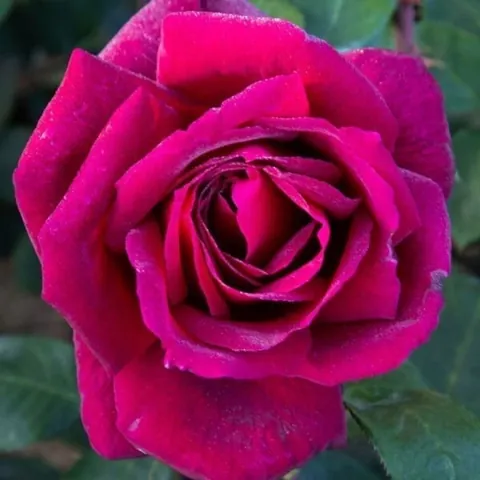



Pamyati Visotskogo, close-up of the flower
Photo: Nataliia (own garden)
Back to catalogue
Hybrid Tea; fragrantStanisław Żyła; private breeding, 1980Red

Pamyati Visotskogo

A 'folk' name in the post-Soviet area: 'Pamyati Vysotskogo' (In Memory of Vysotsky); the official name is Venrosa, a Polish private variety by Stanisław Żyła, 1980. The year of introduction coincided with the year of Vladimir Vysotsky's death (25.07.1980); there is no official dedication, it is a folk synonym name.

Polish variety, 1980 (the year Vysotsky died) · a 'folk' name across the post-Soviet region

Variety profile

Flowering

Repeat flowering

Repeat flowering from June to October. Months are approximate, for the climate of Ukraine.

Legacy

Żyła 1980

Polish private breeding

Winter hardiness

−23 °C

USDA zone 5–6. All of Ukraine with winter protection.

Compare reference temperatures

Plant size

80–110 cm
person 170 cm80–110 cm
Habit
Upright, medium; typical Hybrid Tea
Dimensions
80–110 cm in northern conditions (Ukraine, Poland), up to 150–200 cm in milder climates (southern Europe)
Support
Not needed; self-supporting
Shoots
Strong and straight; good for cutting
Branching
Well branched, with sturdy stems

Flower

11–13 cm
Bud shape
Elongated and pointed, crimson-red
Open flower
Cupped Hybrid Tea form: 11–13 cm, opens slowly
Centre
Tightly packed, with a sharp centre that slowly opens to yellow-cream stamens
Fullness
26–40 petals (full)
Flower carriage
Mostly singly on long stems; typical Hybrid Tea, good for cutting

Fragrance

Strong; reminiscent of old roses

Strong and rich, reminiscent of old roses (Old Rose style); a rare combination with the Hybrid Tea form.

Disease resistance

4 out of 5

Good, 4/5 against disease; USDA hardiness 5–6, needs winter protection in Ukraine; 45 years of commercial success in the post-Soviet area confirm its reliability.

Sun

Full sun

Colour brighter in cool weather.

Thorns

Moderate
thornlessfewmoderatemanyvery many

Average number of thorns; typical of 1980s Hybrid Teas.

Foliage

Dark green, semi-glossy.

Other names

Пам'яті Висоцького, Памяти Высоцкого, Visockiy, Венроза
All characteristics in a table
Group
Hybrid Tea; fragrant
Breeder
Stanisław Żyła; private breeding, Poland, 1980
Bud shape
Elongated and pointed, crimson-red
Open flower
Cupped Hybrid Tea form: 11–13 cm, opens slowly
Centre
Tightly packed, with a sharp centre that slowly opens to yellow-cream stamens
Colour
Crimson-red, deepening to a rich pink over time. The colour change during the life of the bloom is a special feature
Fullness
26–40 petals (full)
Flower carriage
Mostly singly on long stems; typical Hybrid Tea, good for cutting
Flowering
Repeat flowering from June to October
Fragrance
Strong and rich, reminiscent of old roses (Old Rose style); a rare combination with the Hybrid Tea form
Hips
Not documented; cut for repeat flowering
Habit
Upright, medium; typical Hybrid Tea
Branching
Well branched, with sturdy stems
Shoots
Strong and straight; good for cutting
Thorns
Average number of thorns; typical of 1980s Hybrid Teas.
Dimensions
80–110 cm in northern conditions (Ukraine, Poland), up to 150–200 cm in milder climates (southern Europe)
Support
Not needed; self-supporting
Foliage
Dark green, semi-glossy
Resistance
Good, 4/5 against disease; USDA hardiness 5–6, needs winter protection in Ukraine; 45 years of commercial success in the post-Soviet area confirm its reliability
Variations of the variety
Official name 'Venrosa' (bred in Poland). Synonyms: Pam'yati Vysotskoho / Pamyati Vysotskogo / Visockiy / Venroza. HelpMeFind ID 2.51013. Breeder Stanisław Żyła, private Polish breeding. Introduced 1980. Parentage: 'Crêpe de Chine' × 'Mr. Standfast'

Colour scheme

Crimson-red, deepening to a rich pink over time. The colour change during the life of the bloom is a special feature

Rose neighbours

Perennials to plant nearby

Rose neighbours

A red fragrant family — a 'classic romantic corner':

Perennial companions

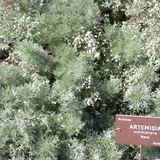
Silvery pastel perennials set off the raspberry-red:

stachysgypsophilalavenderartemisia

Availability worldwide

Very popular across the post-Soviet region:

  • 🇺🇦 Ukraine: very high · KustikOptom, EDROSES, Rozarii, Dvorik
  • 🇷🇺 Russia: high
  • 🇵🇱 Poland: high · home-grown, like Venrosa
  • 🇪🇺 West: almost never seen

More about the variety

Hips
Not documented; cut for repeat flowering
Variations of the variety
Official name 'Venrosa' (bred in Poland). Synonyms: Pam'yati Vysotskoho / Pamyati Vysotskogo / Visockiy / Venroza. HelpMeFind ID 2.51013. Breeder Stanisław Żyła, private Polish breeding. Introduced 1980. Parentage: 'Crêpe de Chine' × 'Mr. Standfast'

How to grow

Where to plant. In classic Hybrid Tea borders, as a 'commemorative' solo accent, a memorial to Vladimir Vysotsky; by paths and benches so the fragrance can be enjoyed; a cutting shrub for home bouquets.

Climate. All of Ukraine with winter protection (USDA 5–6); tolerates summer heat well.

Care. Full sun; a well-ventilated site; moderate disease prevention; feed 3 times per season; prune one third in spring.

About the name

Name. 'Pamyati Vysotskogo' (also 'Pam'yati Vysotskoho' in Ukrainian), a 'folk' synonym name used across the post-Soviet area. Named after Vladimir Vysotsky (25.01.1938 – 25.07.1980), an outstanding Soviet bard, poet and actor of the Taganka Theatre. A voice of the 1960s–70s generation and a symbol of nonconformism in Soviet culture. The official name of the variety is 'Venrosa' (Polish). In the post-Soviet area the variety spread precisely as 'Pamyati Vysotskogo', because the year of introduction (1980) matched the year of Vysotsky's death. There is no official dedication; the meaning is folk.

Breeding. Bred by Stanisław Żyła in private Polish breeding (Poland). Official name 'Venrosa'. HelpMeFind ID 2.51013. Introduced 1980. Parentage: 'Crêpe de Chine' × 'Mr. Standfast'. In Poland and across the post-Soviet area it is one of the most cult 'Slavic' varieties, sold in dozens of Ukrainian nurseries.

Significance. One of the most popular varieties in the post-Soviet area, sold by KustikOptom, EDROSES, Rozarii, Dvorik and dozens of other Ukrainian nurseries. A 'folk' cultural phenomenon: the official Polish name Venrosa spread as 'Pamyati Vysotskogo' through a symbolic-historical coincidence (year of introduction = year of Vysotsky's death). A strong, old-rose-style fragrance is a rare combination with the modern Hybrid Tea form. No major official awards (AARS and ADR not given).

Frequently asked questions about Pamyati Visotskogo

Does Pamyati Visotskogo need winter protection?

The cultivar’s reference temperature is −23 °C (USDA zone 5–6). Overwintering depends on the conditions. All of Ukraine with winter protection.

How many times a season does Pamyati Visotskogo flower?

Repeat flowering from June to October.

How big does Pamyati Visotskogo grow?

80–110 cm tall.

Which diseases affect Pamyati Visotskogo?

Overall resistance: 4 out of 5. Good; proven over decades of cultivation.

How much sun does Pamyati Visotskogo need?

Sun; full sun; colour brighter in cool weather.

What does Pamyati Visotskogo smell like?

Strong and rich, reminiscent of old roses (Old Rose style); a rare combination with the Hybrid Tea form.

Gardeners' photos and reviews

My climate

Choose a reference temperature to compare with the cultivar’s data. This is not an overwintering forecast or advice on winter protection; consider wind, moisture and the duration of frost.

Regional data are generalised. USDA describes average annual extreme minima, not a forecast; the values in the list are rounded. Check the conditions at your site. More information: Roses in Ukraine's climate.