


Back to catalogue
English Rose (Austin); English shrub rose; repeat-floweringDavid AustinPink

Wildeve

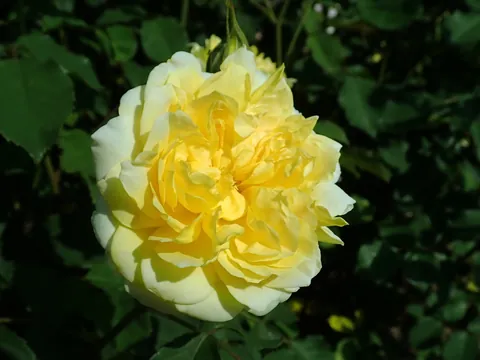
'A rose for difficult places'; tolerates partial shade, poor soils and rain — a rarity among roses; named after Damon Wildeve, a character in Thomas Hardy's novel 'The Return of the Native'; an old-fashioned rosette form with soft pink quartered flowers.

One of the healthiest and toughest Austin shrubs · shade-tolerant

Variety profile

Flowering

Repeat flowering

Repeat, almost continuous in flushes from late spring to the first light frosts. Months are approximate, for the climate of Ukraine.

Legacy

English Rose

Benchmark for a tough, healthy Austin shrub

Plant size

100–150 × 90–150 cm
person 170 cm100–150 cm
Habit
Spreading, arching — on long curved canes it forms a rounded 'cushion'; wider than tall
Dimensions
1.0–1.5 m tall × 0.9–1.5 m wide — a spreading garden shrub
Support
Not needed — stands on its own as a free-standing shrub
Shoots
Long, arching
Branching
Well-branched shrub

Flower

10–13 cm
Bud shape
Round, soft pink
Open flower
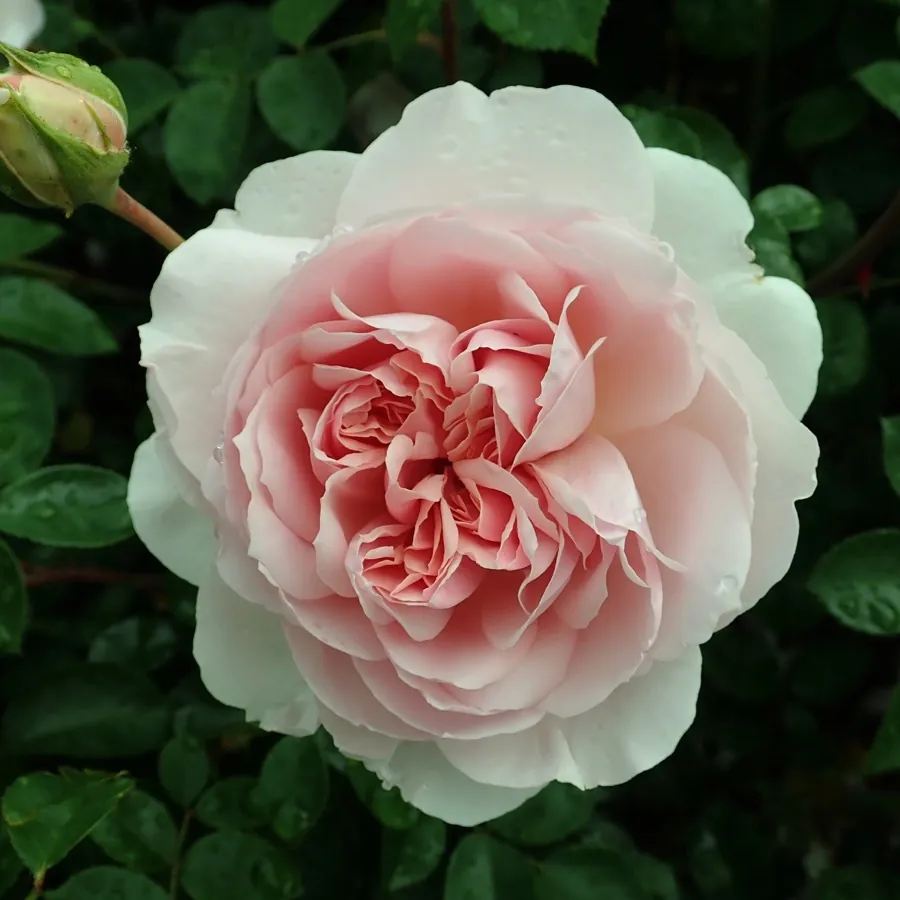
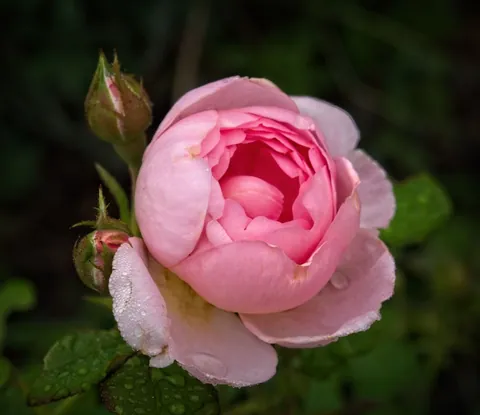
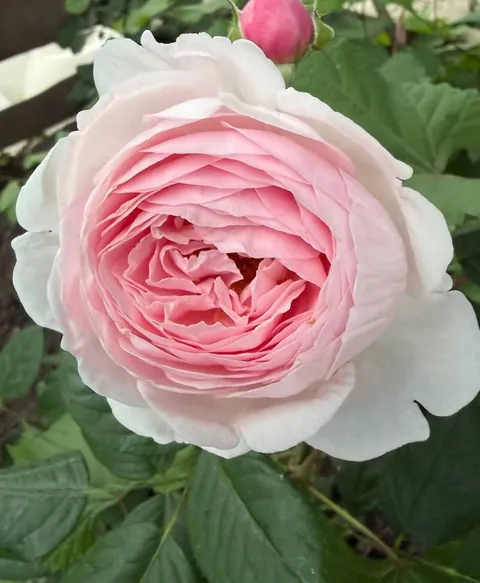
Old-fashioned rosette, distinctly quartered (divided into sectors) — the classic 'English Rose' form
Centre
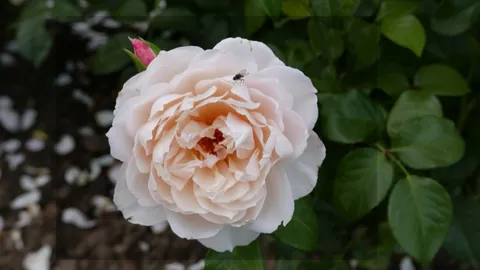
Warmer — with a peach-apricot glow deep inside
Fullness
Fully double — Austin's official listing gives about 95 petals; some catalogues give about 70
Flower carriage
In small clusters of several flowers

Fragrance

Light

Light fruity (per Austin's official description, 'light and fruity').

Disease resistance

5 out of 5

Very high: described as 'very healthy', recommended for less-than-ideal places in the garden; petals are rain-resistant.

Sun

Sun and shade

Tolerates partial shade — a rarity for roses.

Thorns

Moderate
thornlessfewmoderatemanyvery many

No precise data — roughly a moderate number, as with most Austin shrubs.

Foliage

Large, semi-glossy, dark green.

All characteristics in a table
Group
English Rose (Austin); English shrub rose; repeat-flowering
Breeder
David Austin, United Kingdom
Bud shape
Round, soft pink
Open flower
Old-fashioned rosette, distinctly quartered (divided into sectors) — the classic 'English Rose' form
Centre
Warmer — with a peach-apricot glow deep inside
Colour
Soft pink 'blush'; outer petals fade almost to white at the edges; overall a gentle pink that fades to lighter shades
Fullness
Fully double — Austin's official listing gives about 95 petals; some catalogues give about 70
Flower carriage
In small clusters of several flowers
Flowering
Repeat, almost continuous in flushes from late spring to the first light frosts
Fragrance
Light fruity (per Austin's official description, 'light and fruity')
Hips
Not documented
Habit
Spreading, arching — on long curved canes it forms a rounded 'cushion'; wider than tall
Branching
Well-branched shrub
Shoots
Long, arching
Thorns
No precise data — roughly a moderate number, as with most Austin shrubs.
Dimensions
1.0–1.5 m tall × 0.9–1.5 m wide — a spreading garden shrub
Support
Not needed — stands on its own as a free-standing shrub
Foliage
Large, semi-glossy, dark green
Resistance
Very high: described as 'very healthy', recommended for less-than-ideal places in the garden; petals are rain-resistant
Variations of the variety
Code AUSbonny. Parentage: unnamed seedling × Golden Celebration. Bred 1995, commercially introduced 2003

Colour scheme

Soft pink 'blush'; outer petals fade almost to white at the edges; overall a gentle pink that fades to a lighter shade

Rose neighbours

Perennials to plant nearby

Neighbouring roses

The family of gentle English Roses — a soft pastel palette with contrasting silhouettes:

Companion perennials

Blue and lavender perennials bring out the soft pink tone of the bush:

lavendercatmintwoodland sagehardy geranium

Where it shines best

⭐ A variety for the 'difficult' corners of the garden:

  • 🌥 partial shade — flowers where other roses struggle
  • 🌧 rain — petals do not go soggy
  • 🌿 mixed border · rose hedge
  • 🇺🇦 Ukraine: a hardy choice for beginners

More about the variety

Hips
Not documented
Variations of the variety
Code AUSbonny. Parentage: unnamed seedling × Golden Celebration. Bred 1995, commercially introduced 2003

How to grow

Where to plant. In mixed borders, as a rose hedge, in shaded or less-than-ideal corners; thanks to its spreading, arching silhouette it works well as a standalone 'cushion' or in a group planting.

Climate. USDA zones 5–11, good hardiness — most of Ukraine with light protection; tolerates shade and rain, so it suits awkward spots.

Care. Sun or partial shade; a formative spring prune of about a third for compactness; regular removal of spent flowers encourages repeat flushes; minimal disease prevention needed thanks to its excellent health.

About the name

Name. 'Wildeve' — after Damon Wildeve, a character in Thomas Hardy's novel 'The Return of the Native' (1878). David Austin traditionally named his roses after British literature — Shakespeare, Chaucer, Hardy.

Breeding. Bred by David C. H. Austin (United Kingdom), code AUSbonny. Bred in 1995, commercially introduced in 2003. Parentage: unnamed seedling × Golden Celebration — hence the warm peach tint deep in the flower.

Significance. One of David Austin's most long-lived and healthiest shrubs — recommended specifically for difficult places: partial shade, poorer soil, a rainy climate. Combines an old-fashioned rosette form and a light fruity fragrance with modern repeat flowering. An excellent choice for a novice gardener in Ukraine — it forgives care mistakes.

Frequently asked questions about Wildeve

How many times a season does Wildeve flower?

Repeat, almost continuous in flushes from late spring to the first light frosts.

How big does Wildeve grow?

100–150 cm tall, 90–150 cm wide.

Which diseases affect Wildeve?

Overall resistance: 5 out of 5. Very healthy; rain-resistant petals.

How much sun does Wildeve need?

Sun and shade; tolerates partial shade — a rarity for roses.

What does Wildeve smell like?

Light fruity (per Austin's official description, 'light and fruity').

Gardeners' photos and reviews

My climate

Choose a reference temperature to compare with the cultivar’s data. This is not an overwintering forecast or advice on winter protection; consider wind, moisture and the duration of frost.

Regional data are generalised. USDA describes average annual extreme minima, not a forecast; the values in the list are rounded. Check the conditions at your site. More information: Roses in Ukraine's climate.