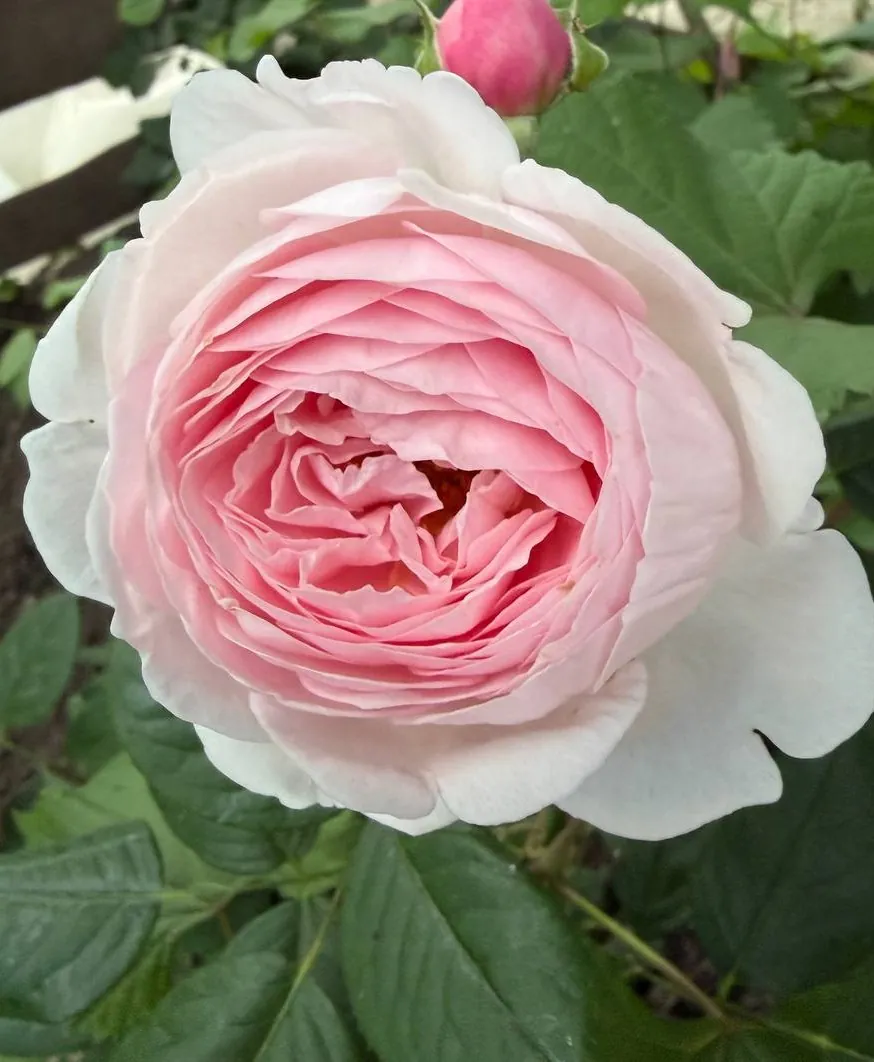
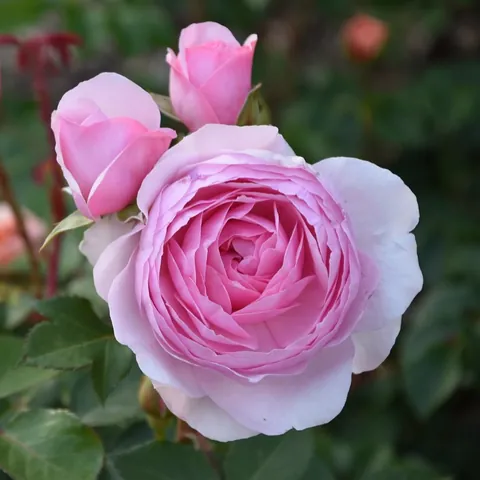
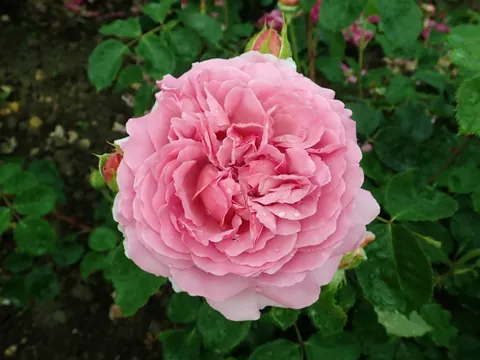
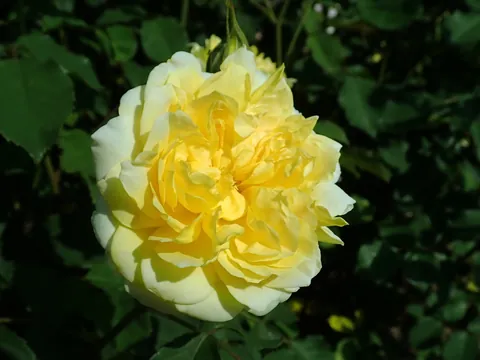




Queen of Sweden, close-up of the flower
Back to catalogue
English Shrub; David Austin English Roses collectionDavid C. H. Austin Sr.; David Austin Roses, 2004Pink

Queen of Sweden

A cool light-pink English Shrub with a myrrh scent; RHS AGM; 🇸🇪🇬🇧 named after the 350th anniversary of the Swedish–British treaty of 1654 (Treaty of Friendship and Commerce); presented in the presence of Queen Silvia; up to 140 petals in a cup-rosette.

RHS Award of Garden Merit · US PP17,150

Variety profile

Flowering

Repeat flowering

Repeat-flowering from June to October — generous. Months are approximate, for the climate of Ukraine.

Legacy

RHS AGM

Austin 2004 · US PP17,150

Winter hardiness

−23 °C

USDA zone 6b–9b. All of Ukraine with light winter protection.

Compare reference temperatures

Plant size

100 × 75 cm
person 170 cm100 cm
Habit
Upright, medium — a typical new English Shrub
Dimensions
About 100 cm high × about 75 cm wide (per HMF); some sources give up to 120–150 cm in a mild climate
Support
Not needed — self-supporting
Shoots
Strong, straight
Branching
Well branched, with strong stems

Flower

≈ 7 cm

Up to 140 petals.

Bud shape
Round, apricot-pink blend
Open flower
Shallow cup / cup-rosette: about 7 cm, very full, with a characteristic small blocked centre
Centre
Tightly packed, with curled 'quartered' petals
Fullness
Up to 140 petals — record fullness among Austins
Flower carriage
In small clusters of 3–5 on strong stems

Fragrance

Light; myrrh

Light myrrh scent — typical of many Austin-varieties (the Constance Spry family).

Disease resistance

4 out of 5

High, 4/5 — typical of the new generation of Austins; USDA 6b–9b.

Sun

Sun and shade

Full sun or light shade.

Thorns

Few
thornlessfewmoderatemanyvery many

Few thorns — typical of modern Austins.

Foliage

Dark green, glossy — healthy.

All characteristics in a table
Group
English Shrub; David Austin English Roses collection
Breeder
David C. H. Austin Sr.; David Austin Roses, United Kingdom, 2004
Bud shape
Round, apricot-pink blend
Open flower
Shallow cup / cup-rosette: about 7 cm, very full, with a characteristic small blocked centre
Centre
Tightly packed, with curled 'quartered' petals
Colour
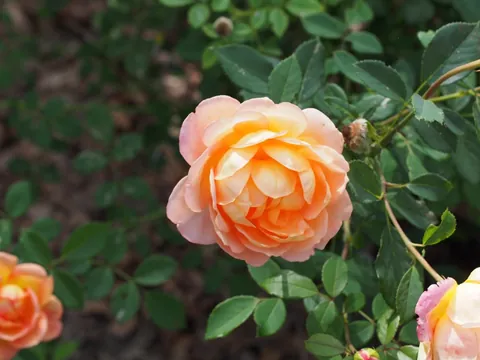
Metamorphosis: the bud is an apricot-pink blend, turning soft light pink in mature flowers. Fully mature, cool light pink with apricot tones inside
Fullness
Up to 140 petals — record fullness among Austins
Flower carriage
In small clusters of 3–5 on strong stems
Flowering
Repeat-flowering from June to October — generous
Fragrance
Light myrrh scent — typical of many Austin-varieties (the Constance Spry family)
Hips
Not documented — flowers are cut to encourage repeat flowering
Habit
Upright, medium — a typical new English Shrub
Branching
Well branched, with strong stems
Shoots
Strong, straight
Thorns
Few thorns — typical of modern Austins.
Dimensions
About 100 cm high × about 75 cm wide (per HMF); some sources give up to 120–150 cm in a mild climate
Support
Not needed — self-supporting
Foliage
Dark green, glossy — healthy
Resistance
High, 4/5 — typical of the new generation of Austins; USDA 6b–9b
Variations of the variety
Code AUStiger. US Plant Patent PP17,150 (2006). Introduced 2004. Parentage: unnamed seedling × 'Charlotte' (Austin's yellow shrub rose, before 1992)

Colour scheme

Metamorphosis: the bud is an apricot-pink blend, turning soft light pink in mature flowers. Fully open, cool light pink with apricot tones inside

Rose neighbours

Perennials to plant nearby

Neighbouring roses

Other Austin English Roses create a 'royal corner':

Companion perennials

Classic English cottage palette:

lavenderlady's mantle (Alchemilla)catmint (Nepeta)lamb's ears (Stachys)

Availability worldwide

One of the best-known 'royal' Austin varieties:

🇬🇧 UK: very high · home country🇸🇪 Sweden: high · a popular 'national' rose🇺🇸🇪🇺: high · via Austin partners🇺🇦 Ukraine: moderate · via Austin partners

More about the variety

Hips
Not documented — flowers are cut to encourage repeat flowering
Variations of the variety
Code AUStiger. US Plant Patent PP17,150 (2006). Introduced 2004. Parentage: unnamed seedling × 'Charlotte' (Austin's yellow shrub rose, before 1992)

How to grow

Where to plant. In English cottage gardens, as a 'royal' solo accent; in pastel borders among other Austin-varieties; a cutting shrub for romantic bouquets — the characteristic cup-rosette is very photogenic.

Climate. All of Ukraine with light winter protection (USDA 6b); tolerates summer heat well.

Care. Full sun or light shade; a well-ventilated spot; feed 2× per season; prune about ⅓ in spring; high disease resistance — minimal preventive care.

About the name

Name. 'Queen of Sweden' — in honour of the 350th anniversary of the Swedish–British 'Treaty of Friendship and Commerce' (1654). The variety was presented in the presence of Queen Silvia during David Austin's visit to Sweden. More precisely, the name commemorates the historic treaty, not Queen Silvia or any other Swedish queen directly (it is often written as 'named after Queen Silvia', but that is a simplification). Austin traditionally gives varieties commemorative and historical names.

Breeding. Bred by David C. H. Austin Sr. at David Austin Roses (Albrighton, Great Britain). Code AUStiger. Introduced 2004. Parentage: unnamed seedling × 'Charlotte' (Austin's yellow shrub rose, before 1992). US Plant Patent PP17,150 (2006).

Significance. RHS Award of Garden Merit — practical British recognition. Up to 140 petals — a record fullness among Austin-varieties. A characteristic shallow cup-rosette, a special flower form in Austins. One of the best-known 'royal' Austins, alongside Queen of England, William Shakespeare and Princess Anne. A myrrh scent from the Constance Spry family — a rare combination in modern shrub roses.

Frequently asked questions about Queen of Sweden

Does Queen of Sweden need winter protection?

The cultivar’s reference temperature is −23 °C (USDA zone 6b–9b). Overwintering depends on the conditions. All of Ukraine with light winter protection.

How many times a season does Queen of Sweden flower?

Repeat-flowering from June to October — generous.

How big does Queen of Sweden grow?

About 100 cm tall, about 75 cm wide.

Which diseases affect Queen of Sweden?

Overall resistance: 4 out of 5. High; typical of new Austins.

How much sun does Queen of Sweden need?

Sun and shade; full sun or light shade.

What does Queen of Sweden smell like?

Light myrrh scent — typical of many Austin-varieties (the Constance Spry family).

Gardeners' photos and reviews

My climate

Choose a reference temperature to compare with the cultivar’s data. This is not an overwintering forecast or advice on winter protection; consider wind, moisture and the duration of frost.

Regional data are generalised. USDA describes average annual extreme minima, not a forecast; the values in the list are rounded. Check the conditions at your site. More information: Roses in Ukraine's climate.