



About the name
Name. 'Scepter'd Isle' = 'this sceptred isle', a line from John of Gaunt's speech in Shakespeare's 'Richard II' (Act II, Scene 1): “This royal throne of kings, this scepter'd isle… this England.” A poetic declaration of love for England, one of the best-known patriotic passages in English literature. David Austin traditionally named roses after Shakespearean images and English poetry, and this name sums up his philosophy of the 'English rose'.
Breeding. Bred by David Austin at David Austin Roses (Albrighton, Shropshire, England). Code AUSland. Introduced 1996. Parentage: not published, a typical Austin-practice. It belongs to the English Shrub Rose group, which combines the form and scent of historic Old Garden Roses with the repeat flowering and colours of modern roses.
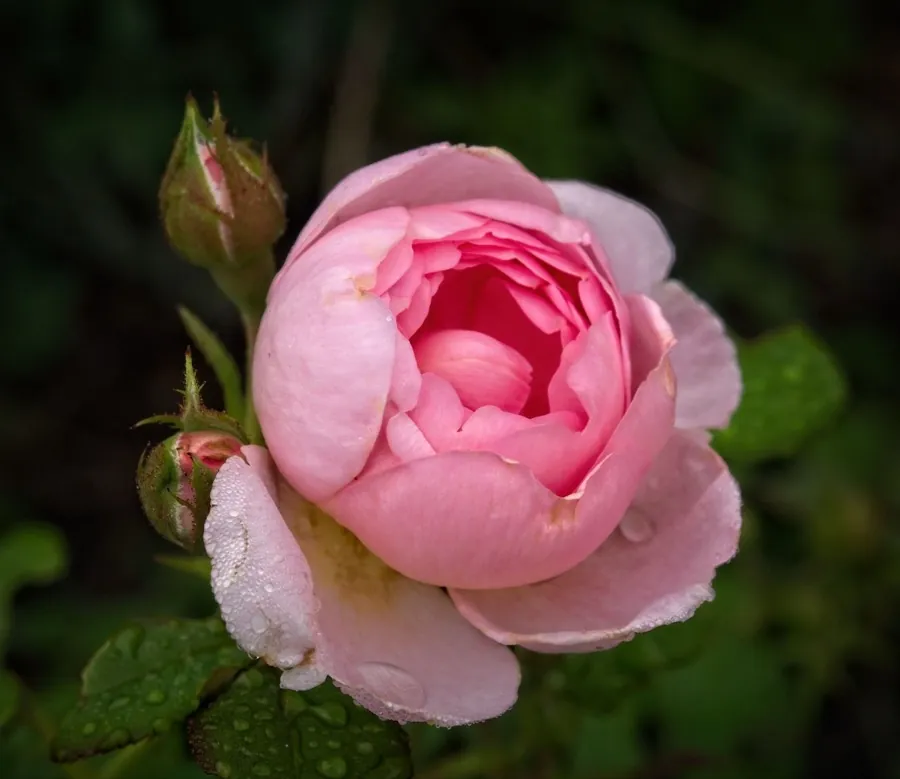
Significance. RHS Award of Garden Merit, a Royal Horticultural Society endorsement of reliability. Royal National Rose Society Fragrance Award, an award for scent itself, which places 'Scepter'd Isle' among the small group of Austin-type varieties with recognised 'perfume' status. One of the most distinct myrrh scents in the Austin catalogue: the sweet, aniseed myrrh note is rare among modern roses and is inherited from 'Constance Spry'. A cupped flower with open stamens is a rarity for Austin, where a fully double 'rosette' usually dominates. The Shakespearean name makes it a favourite for English patriotic gardens and literature-themed collections. A compact, neat bush that fits well in a mixed border and does not sprawl.