


Back to catalogue
English Shrub RoseDavid Austin, 1994Yellow

Molineux

Ausmol; RHS Award of Garden Merit; President's International Trophy 1996, 'best new rose of the year' (RNRS).

English Musk · compact, very free-flowering

Variety profile

Flowering

Repeat, in flushes

Repeat-flowering in strong waves from early summer to the frosts; one of the most reliably repeating English roses. Months are approximate, for the climate of Ukraine.

Awards

RHS AGM

+ 'Best New Rose' 1996 · Henry Edland Medal for fragrance

Winter hardiness

−20 °C

USDA zone 5–9. Most of Ukraine; the north with light winter protection. Most of Ukraine · north — with light cover.

Compare reference temperatures

Plant size

90–120 × 60–90 cm
person 170 cm90–120 cm
Habit
Compact, even, upright: closer to floribundas and hybrid teas than to typical English roses
Dimensions
90–120 cm tall × 60–90 cm wide
Support
Needs no support: a self-supporting bush, suitable for a border, a container or a low hedge
Shoots
Strong, healthy
Branching
Good, bushy; holds its shape

Flower

7–8 cm
Bud shape
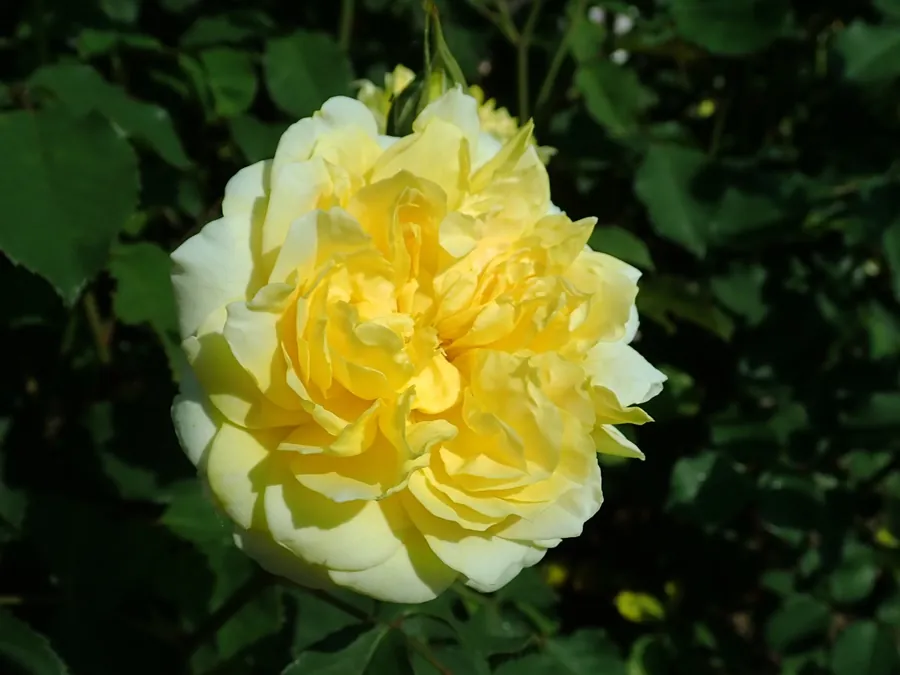
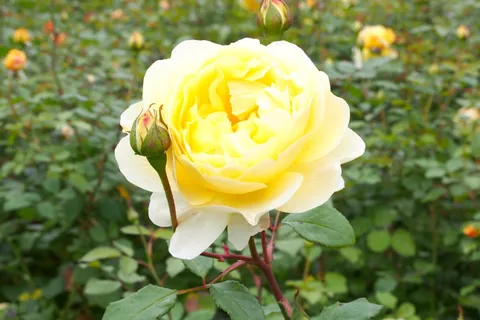
Round, with a slight orange tint as it opens
Open flower
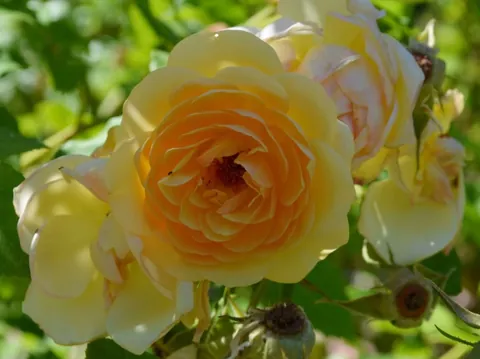
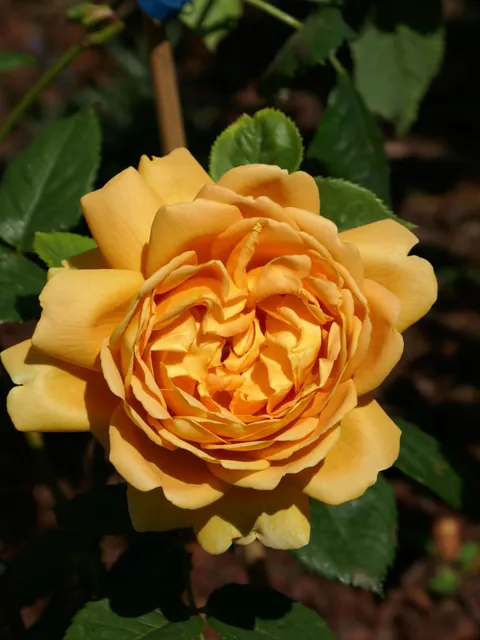
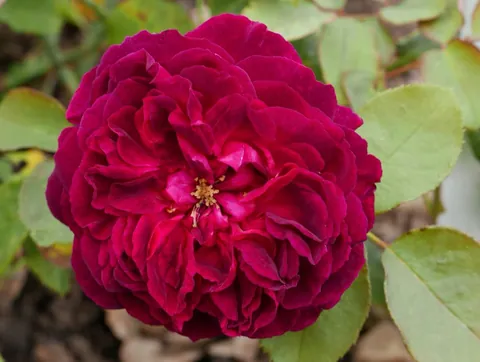
Very double rosette of the old-fashioned type; about 7–8 cm across
Centre
Tightly packed, symmetrical rosette
Fullness
Very double, 110–120 petals
Flower carriage
In small clusters

Fragrance

Moderate; a tea-musk scent

Moderate; a tea-rose fragrance with musky notes (Tea/musk).

Disease resistance

4 out of 5
Black spotresistantPowdery mildewresistantRustresistant

Good: resistant to the main rose diseases.

Sun

5–6 hours

Full sun; tolerates light partial shade; at least 5–6 hours of direct light.

Thorns

Few
thornlessfewmoderatemanyvery many

Almost thornless: comfortable to care for.

Foliage

Large, leathery, semi-glossy dark green; 5 leaflets.

All characteristics in a table
Group
English Shrub Rose
Breeder
David Austin, 1994
Bud shape
Round, with a slight orange tint as it opens
Open flower
Very double rosette of the old-fashioned type; about 7–8 cm across
Centre
Tightly packed, symmetrical rosette
Colour
A clean, saturated deep yellow; it holds its colour better than most yellow varieties and hardly fades
Fullness
Very double, 110–120 petals
Flower carriage
In small clusters
Flowering
Repeat-flowering in strong waves from early summer to the frosts; one of the most reliably repeating English roses
Fragrance
Moderate; a tea-rose fragrance with musky notes (Tea/musk)
Hips
Practically none form, because of the double-ness
Habit
Compact, even, upright: closer to floribundas and hybrid teas than to typical English roses
Branching
Good, bushy; holds its shape
Shoots
Strong, healthy
Thorns
Almost thornless: comfortable to care for.
Dimensions
90–120 cm tall × 60–90 cm wide
Support
Needs no support: a self-supporting bush, suitable for a border, a container or a low hedge
Foliage
Large, leathery, semi-glossy dark green; 5 leaflets
Resistance
Good: resistant to the main rose diseases
Variations of the variety
An unusual English Musk: in character it leans towards old tea roses (Tea), hence the tea fragrance and abundant repeat flowering

Colour scheme

A clean, saturated deep yellow; it holds its colour better than most yellow varieties and hardly fades

Rose neighbours

Perennials to plant nearby

Neighbouring roses

Other yellow English roses by Austin keep a single warm, sunny mood around Molineux.

Companion perennials

Blue-violet flowers give a clean contrast to the saturated yellow — a classic sunny lavender palette:

sage 'Caradonna'catmintlavender 'Munstead'perovskia

Contrasting accents

For rhythm and depth — blue spires, violet globes and a sheer 'smoke':

DelphiniumAllium Purple SensationNepeta Six Hills Giant

More about the variety

Hips
Practically none form, because of the double-ness
Variations of the variety
An unusual English Musk: in character it leans towards old tea roses (Tea), hence the tea fragrance and abundant repeat flowering

How to grow

Where to plant. Ideal for the front of a mixed border, a low hedge, a container or beside a path, thanks to its compact, even bush and continuous flowering.

Climate. Most of Ukraine; the centre, west and south without problems; in the north, with light winter protection (USDA zone 5).

Care. Prune by a third in spring to shape it; removing spent flowers encourages new flushes; mulch; feed twice (in spring and after the first flush).

About the name

Name. 'Molineux', after the Molineux stadium, the home ground of the Wolverhampton Wanderers football club, David Austin's favourite team (the name sounds French, but it is actually English).

Breeding. Bred by David C. H. Austin (David Austin Roses) in 1994. Patent code Ausmol. Parentage: 'Graham Thomas' × a seedling ('Golden Showers' × unknown).

Significance. 'best new rose of the year' in RNRS trials in 1996, RHS Award of Garden Merit (2001), and the Henry Edland Medal for fragrance. An unusual member of the English Musk Roses; in character it is closer to old tea roses, hence its tea fragrance and abundant repeat flowering.

Frequently asked questions about Molineux

Does Molineux need winter protection?

The cultivar’s reference temperature is −20 °C (USDA zone 5–9). Overwintering depends on the conditions. Most of Ukraine; the north with light winter protection.

How many times a season does Molineux flower?

Repeat-flowering in strong waves from early summer to the frosts; one of the most reliably repeating English roses.

How big does Molineux grow?

90–120 cm tall, 60–90 cm wide.

Which diseases affect Molineux?

Overall resistance: 4 out of 5. Good; resistant to powdery mildew, blackspot and rust.

How much sun does Molineux need?

Full sun; tolerates light partial shade; at least 5–6 hours of direct light.

What does Molineux smell like?

Moderate; a tea-rose fragrance with musky notes (Tea/musk).

Gardeners' photos and reviews

My climate

Choose a reference temperature to compare with the cultivar’s data. This is not an overwintering forecast or advice on winter protection; consider wind, moisture and the duration of frost.

Regional data are generalised. USDA describes average annual extreme minima, not a forecast; the values in the list are rounded. Check the conditions at your site. More information: Roses in Ukraine's climate.