



Back to catalogue
Hybrid Musk; shrubLouis Lens, 1996Pink

Alden Biesen

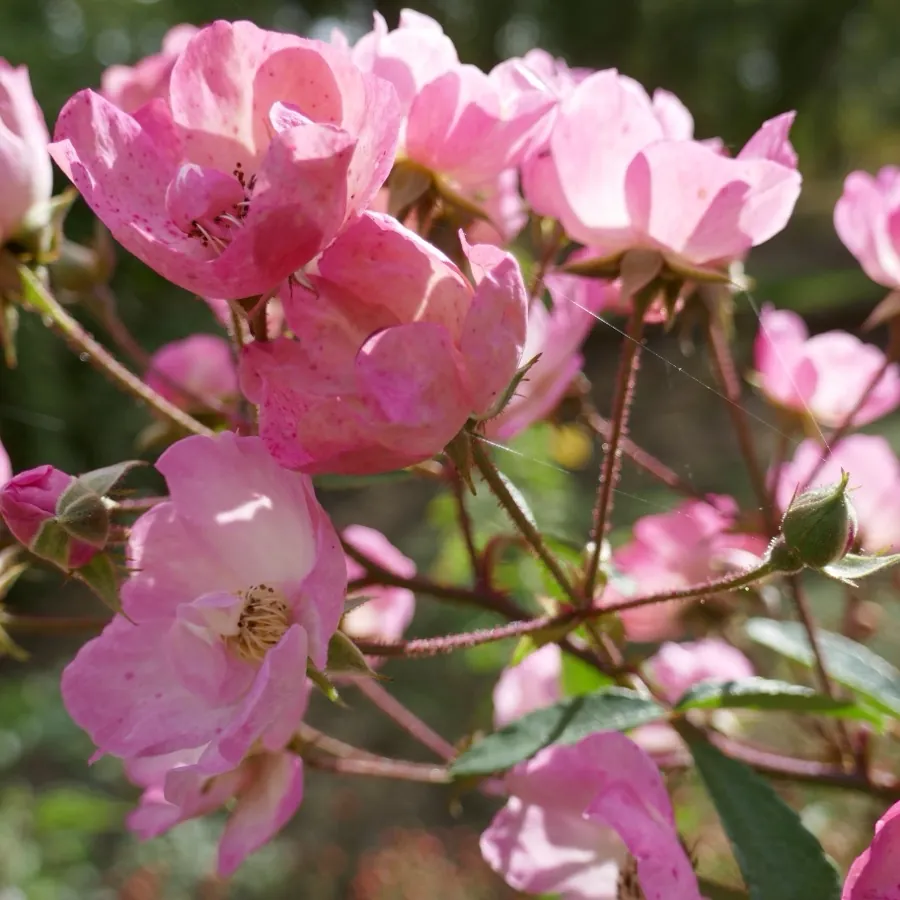
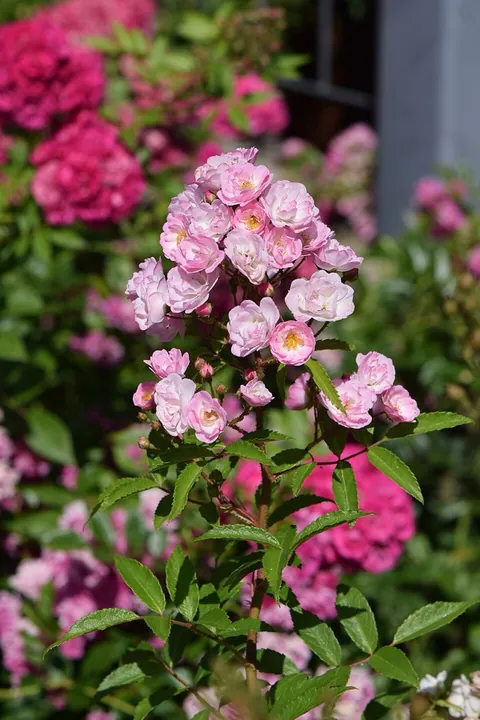
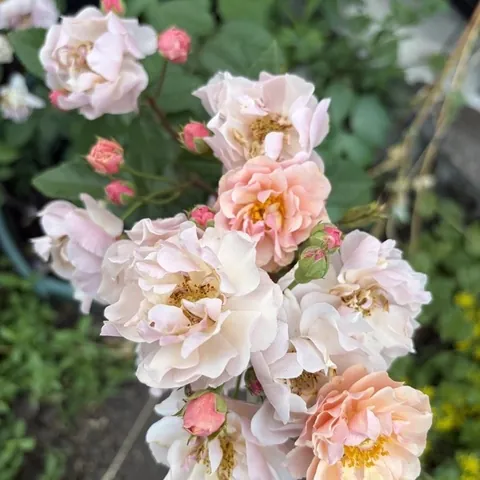
Soft pink 'marzipan' flowers with a white centre in large pyramidal clusters; as they fade the petals turn green — a decorative effect; abundant red hips in autumn; 🇧🇪 a classic Hybrid Musk by Louis Lens.

Named after the Teutonic Order commandery castle in Belgium

Variety profile

Flowering

Repeat flowering

Repeat-flowering, almost continuous from June to the first frosts. Months are approximate, for the climate of Ukraine.

Awards

Monza 1997

No. 87 at a competition (Italy)

Plant size

125–200 × 150 cm
person 170 cm125–200 cm
Habit
Upright, vigorous, with arched/drooping cane tips; readily produces basal shoots
Dimensions
125–200 cm tall × ~150 cm wide — a large bush for a free-flowing hedge or drift
Support
Does not need; a light support can be given in windy spots
Shoots
Long, flexible — hold well in a free-flowing hedge
Branching
Long, flexible, arching canes

Flower

3–4 cm
Bud shape
Small, soft pink
Open flower
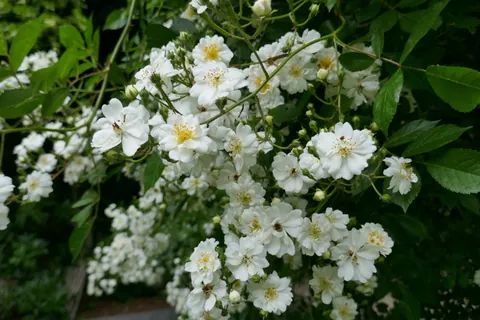
Single to semi-double, cup-shaped; in large, long pyramidal clusters (resembling hydrangea flower heads)
Centre
White, with yellow stamens
Fullness
Single to semi-double, 4–11 petals
Flower carriage
In large pyramidal clusters of many small flowers

Fragrance

Barely noticeable

Barely noticeable / light (mild).

Disease resistance

4 out of 5

~4/5: Lens Hybrid Musks are generally quite healthy.

Sun

Sun + shade

Tolerates light partial shade.

Thorns

Few
thornlessfewmoderatemanyvery many

No precise data — Hybrid Musks are usually low in thorns.

Foliage

Dark green, slightly glossy, long-elliptic.

All characteristics in a table
Group
Hybrid Musk; shrub
Breeder
Louis Lens, Belgium, 1996
Bud shape
Small, soft pink
Open flower
Single to semi-double, cup-shaped; in large, long pyramidal clusters (resembling hydrangea flower heads)
Centre
White, with yellow stamens
Colour
Soft pink 'marzipan' with a white centre; the reverse of the petals is white-cream; as they fade, the petals hang on for a long time and turn green
Fullness
Single to semi-double, 4–11 petals
Flower carriage
In large pyramidal clusters of many small flowers
Flowering
Repeat-flowering, almost continuous from June to the first frosts
Fragrance
Barely noticeable / light (mild)
Hips
Yes — decorative oval red hips, abundant from September
Habit
Upright, vigorous, with arched/drooping cane tips; readily produces basal shoots
Branching
Long, flexible, arching canes
Shoots
Long, flexible — hold well in a free-flowing hedge
Thorns
No precise data — Hybrid Musks are usually low in thorns.
Dimensions
125–200 cm tall × ~150 cm wide — a large bush for a free-flowing hedge or drift
Support
Does not need; a light support can be given in windy spots
Foliage
Dark green, slightly glossy, long-elliptic
Resistance
~4/5: Lens Hybrid Musks are generally quite healthy
Variations of the variety
Code LENgrati (LLX 8964). Parentage: Pleine de Grâce × Pretty Pink (both Lens Hybrid Musks). Bred in 1989, introduced in 1996

Colour scheme

Soft pink 'marzipan' with a white centre; the reverse of the petals is white-cream; as they fade, the petals hang on for a long time and turn green

Rose neighbours

Perennials to plant nearby

Neighbouring roses

The Lens family of Hybrid Musks — light flowers in large clusters:

Perennial companions

Lilac-blue perennials bring out the soft pink and the greenish tint of the petals:

lavendercatmint (Nepeta)woodland sagelady's mantle (Alchemilla)

What makes it special

⭐ A rose for a natural, 'wild' garden:

🍂 petals turn green — an unusual decoration🔴 abundant red hips in autumn🌥 tolerates light shade🏰 named after a Belgian commandery castle

More about the variety

Hips
Yes — decorative oval red hips, abundant from September
Variations of the variety
Code LENgrati (LLX 8964). Parentage: Pleine de Grâce × Pretty Pink (both Lens Hybrid Musks). Bred in 1989, introduced in 1996

How to grow

Where to plant. In natural or romantic gardens, in free-flowing flowering hedges and drifts; it tolerates light shade — a good choice for a 'wild' corner.

Climate. USDA 6b–9b; in harsh winters in central and eastern Ukraine, protecting the base is advisable.

Care. Fertile, moist but well-drained soil; care is minimal — sanitary pruning and thinning in spring; some of the spent clusters are left for the green petals and the red hips in autumn.

About the name

Name. 'Alden Biesen' — after the Landcommanderij Alden Biesen, a commandery castle of the Teutonic Order near the town of Bilzen (Limburg province, Belgium), one of the best-preserved complexes of the Order in the Benelux. The rose was christened in 1996 for the 25th anniversary of the commandery's handover to the Flemish Community.

Breeding. Bred by Louis Lens (1924–2001) at the Belgian Lens rose nursery — world-famous for its Hybrid Musks. Code LENgrati. Parentage: Pleine de Grâce × Pretty Pink (both Lens Hybrid Musks). Bred in 1989, introduced in 1996.

Significance. A classic Belgian Hybrid Musk — undemanding, healthy, with large 'hydrangea-like' clusters, an unusual 'greening' of the petals and abundant red hips. No. 87 at the Monza competition 1997. Ideal for a natural garden and a free-flowing hedge.

Frequently asked questions about Alden Biesen

How many times a season does Alden Biesen flower?

Repeat-flowering, almost continuous from June to the first frosts.

How big does Alden Biesen grow?

125–200 cm tall, about 150 cm wide.

Which diseases affect Alden Biesen?

Overall resistance: 4 out of 5. Healthy foliage (typical of Lens Hybrid Musks).

How much sun does Alden Biesen need?

Sun + shade; tolerates light partial shade.

What does Alden Biesen smell like?

Barely noticeable / light (mild).

Gardeners' photos and reviews

My climate

Choose a reference temperature to compare with the cultivar’s data. This is not an overwintering forecast or advice on winter protection; consider wind, moisture and the duration of frost.

Regional data are generalised. USDA describes average annual extreme minima, not a forecast; the values in the list are rounded. Check the conditions at your site. More information: Roses in Ukraine's climate.