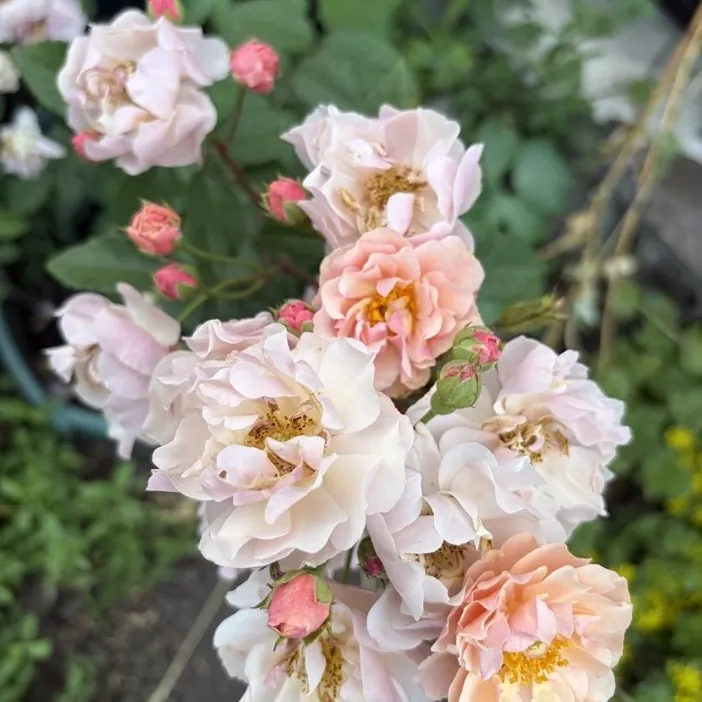
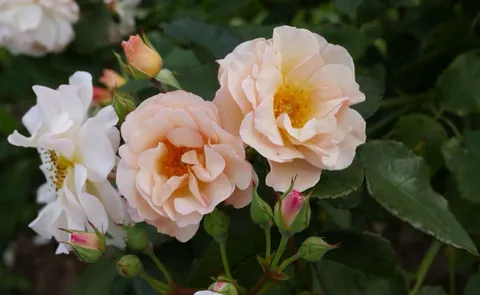
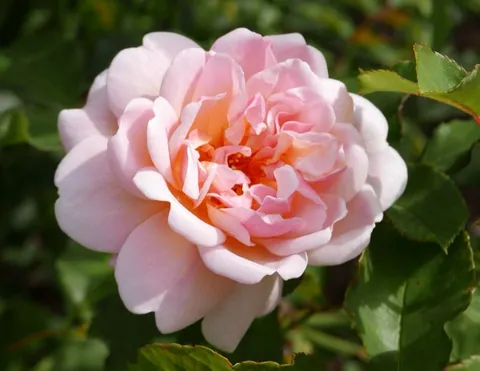
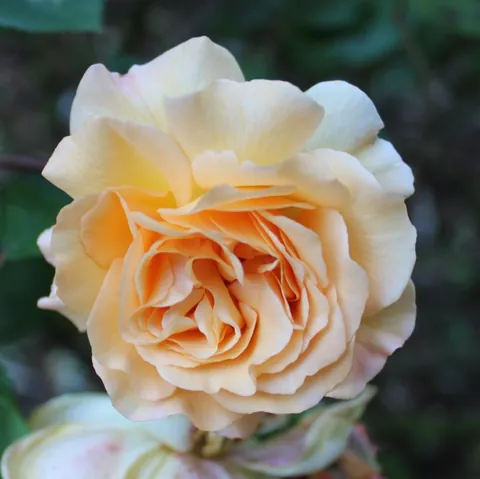
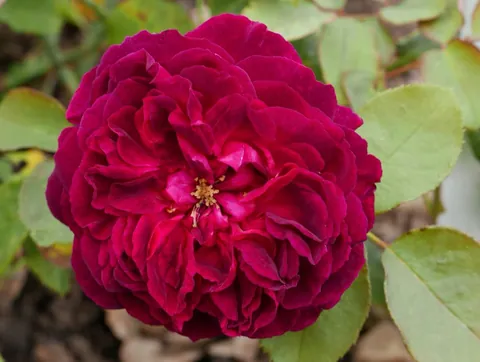


Cornelia, close-up of the flower
Back to catalogue
Hybrid MuskPemberton, 1925Pink

Cornelia

Joseph Hardwick Pemberton; one of Pemberton's 4 ‘legendary’ Hybrid Musks – 100 years in cultivation.

Pemberton Hybrid Musks

Variety profile

Flowering

Repeat, in flushes

Repeat-flowering, with strong flushes (June – October), with the best burst in September–October. Months are approximate, for the climate of Ukraine.

Awards

RHS AGM

Award of Garden Merit · 100 years of a classic

Winter hardiness

−29 °C

USDA zone 5–10. All of Ukraine, even the Carpathians with cover.

Compare reference temperatures

Plant size

150–250 × 150–185 cm
person 170 cmon a supportup to 3 m150–250 cm
Habit
Sprawling, fountain-like – shoots arch in a curve; can also be grown as a small climber on a support (up to 3 m)
Dimensions
150–250 cm tall × 150–185 cm wide; on a support up to 300 cm
Support
Optional – as a shrub it needs no support; as a small climber – a low support or wall
Shoots
Long, flexible, arching – a characteristic feature of Hybrid Musks
Branching
Dense; over time the bush becomes massive

Flower

5–7 cm
Bud shape
Small, round, dark copper-coral
Open flower
Semi-double rosette, open; diameter 5–7 cm
Centre
Yellow stamens are visible – a characteristic feature of semi-double Hybrid Musks
Fullness
Semi-double to double, 30–55 petals
Flower carriage
In large clusters of 20–30 flowers each – a characteristic feature of Hybrid Musks

Fragrance

Medium

Medium – classic musk (solid musk), with notes of honey and green; it carries over a distance – a characteristic of Hybrid Musks.

Disease resistance

5 out of 5
Black spotresistantPowdery mildewresistantRustresistant

Exceptional – almost no chemical protection needed; one of the healthiest old roses.

Sun

Sun or partial shade

Tolerates partial shade better than most roses – 4+ hours of sun is enough.

Thorns

Thornless
thornlessfewmoderatemanyvery many

Practically thornless – very easy to look after.

Foliage

Dark green, healthy, typical of Hybrid Musks.

All characteristics in a table
Group
Hybrid Musk
Breeder
Pemberton, 1925
Bud shape
Small, round, dark copper-coral
Open flower
Semi-double rosette, open; diameter 5–7 cm
Centre
Yellow stamens are visible – a characteristic feature of semi-double Hybrid Musks
Colour
Opens copper-apricot coral-pink with a yellow tinge at the centre – turns warm pink – fades to a muted pearly pink; the tone is more intense in autumn
Fullness
Semi-double to double, 30–55 petals
Flower carriage
In large clusters of 20–30 flowers each – a characteristic feature of Hybrid Musks
Flowering
Repeat-flowering, with strong flushes (June – October), with the best burst in September–October
Fragrance
Medium – classic musk (solid musk), with notes of honey and green; it carries over a distance – a characteristic of Hybrid Musks
Hips
Forms small orange hips, but rarely – some of the flowers do not set
Habit
Sprawling, fountain-like – shoots arch in a curve; can also be grown as a small climber on a support (up to 3 m)
Branching
Dense; over time the bush becomes massive
Shoots
Long, flexible, arching – a characteristic feature of Hybrid Musks
Thorns
Practically thornless – very easy to look after.
Dimensions
150–250 cm tall × 150–185 cm wide; on a support up to 300 cm
Support
Optional – as a shrub it needs no support; as a small climber – a low support or wall
Foliage
Dark green, healthy, typical of Hybrid Musks
Resistance
Exceptional – almost no chemical protection needed; one of the healthiest old roses
Variations of the variety
No sports; 'sister' varieties of Pemberton's: Penelope, Felicia, Buff Beauty

Colour scheme

Opens copper-apricot coral-pink with a yellow tinge at the centre – turns warm pink – fades to a muted pearly pink; the tone is more intense in autumn

Rose neighbours

Perennials to plant nearby

Neighbouring roses

Other Pemberton's Hybrid Musks and classic 'vintage' varieties:

Companion perennials

Classic English garden perennials — purple, blue and pink spires:

purple foxglovepeach-leaved bellflowerblood-red cranesbillcatmint 'Six Hills Giant'

Contrasting accents

For depth and a silvery 'haze':

mountain cornflowerAllium christophiiartemisia 'Powis Castle'

More about the variety

Hips
Forms small orange hips, but rarely – some of the flowers do not set
Variations of the variety
No sports; 'sister' varieties of Pemberton's: Penelope, Felicia, Buff Beauty

How to grow

Where to plant. Large mixed borders, romantic cottage gardens, next to paths (for the fragrance), as a ‘fountain’ in the centre of a flower bed; it tolerates partial shade well – suitable for planting under trees.

Climate. Down to −29 °C – overwinters across the whole of Ukraine, including the coldest regions; one of the most frost-hardy Hybrid Musks.

Care. Minimal – exceptional disease resistance. Pruning only sanitary (removing old or diseased shoots); shaping is not needed. Regular feeding supports abundant flowering.

About the name

Name. 'Cornelia' – an ancient Roman female name (Cornelia), meaning ‘of the Cornelii family’. In the nineteenth century it was popular in England as a symbol of virtue and family roots. Bred by the Reverend Joseph Hardwick Pemberton (1852–1926) at the Pemberton house (Havering, Essex, Great Britain), 1925. The parentage is officially unknown (Pemberton used Trier as the base variety for Hybrid Musks).

Significance. One of Pemberton's 4 ‘legendary’ Hybrid Musks – alongside Penelope, Felicia and Buff Beauty. Over 100 years in cultivation. Has the RHS Award of Garden Merit. A classic of romantic cottage gardens – the combination of a healthy bush, continuous flowering, musk fragrance and exceptional hardiness has made Cornelia a long-lived variety in all the canonical nurseries of England.

Frequently asked questions about Cornelia

Does Cornelia need winter protection?

The cultivar’s reference temperature is −29 °C (USDA zone 5–10). Overwintering depends on the conditions.

How many times a season does Cornelia flower?

Repeat-flowering, with strong flushes (June – October), with the best burst in September–October.

How big does Cornelia grow?

150–250 cm tall, 150–185 cm wide. On a support — up to 300 cm.

Which diseases affect Cornelia?

Overall resistance: 5 out of 5. Exceptional resistance to black spot, powdery mildew and rust; almost no treatments needed.

How much sun does Cornelia need?

Sun or partial shade; tolerates partial shade better than most roses – 4+ hours of sun is enough.

What does Cornelia smell like?

Medium – classic musk (solid musk), with notes of honey and green; it carries over a distance – a characteristic of Hybrid Musks.

Gardeners' photos and reviews

My climate

Choose a reference temperature to compare with the cultivar’s data. This is not an overwintering forecast or advice on winter protection; consider wind, moisture and the duration of frost.

Regional data are generalised. USDA describes average annual extreme minima, not a forecast; the values in the list are rounded. Check the conditions at your site. More information: Roses in Ukraine's climate.