




Dinky, close-up of the flower
Photo: © Lens Roses (Belgium)
Back to catalogue
Hybrid Musk; cluster-flowered; a 'child' of Heavenly PinkAnn Velle; Lens Roses, 2009Pink

Dinky

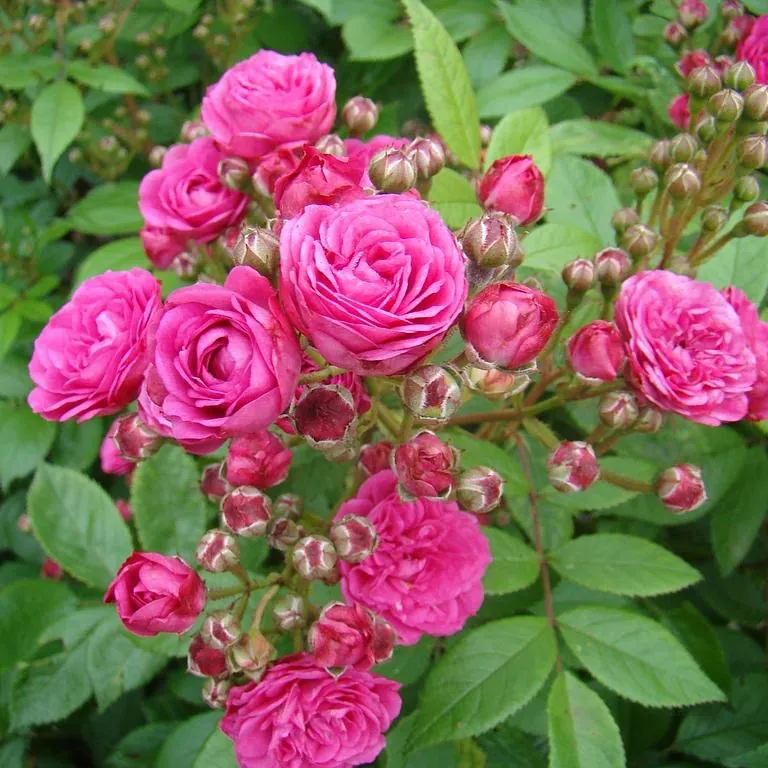
Saturated fuchsia-pink that does NOT fade; small flowers in huge sprays (up to ~180!); completely thornless; very healthy foliage (5/5); 🇧🇪 Belgian school of Lens Hybrid Musks.

THORNLESS · huge pyramidal clusters of up to ~180 flowers

Variety profile

Flowering

Repeat, in flushes

Repeat-flowering; starts later than most roses (late June to July), with a second wave in September to October. Months are approximate, for the climate of Ukraine.

Legacy

× Heavenly Pink

Hybrid Musks from the house of Lens

Plant size

100–125 cm
person 170 cm100–125 cm
Habit
Upright bush with arching, slightly drooping shoots
Dimensions
100–125 cm tall: a compact bush, spreading across the width with its flower sprays
Support
Not needed as a bush; can be trained on an obelisk or pyramid, or as a standard
Shoots
Long, flexible
Branching
Long, flexible shoots that carry the huge sprays

Flower

≈ 3 cm

17–25 petals.

Bud shape
Small, fuchsia-pink
Open flower
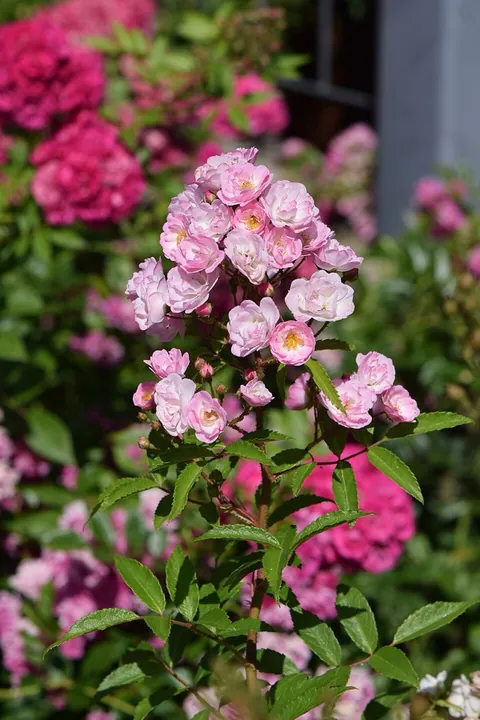
Small cupped flowers in clusters, gathered into huge pyramidal sprays of up to ~180 flowers
Centre
Dense, double
Fullness
Double, 17–25 petals
Flower carriage
In huge pyramidal sprays on long, flexible shoots

Fragrance

Barely noticeable

Barely noticeable (from 'no scent' according to Lens to 'mild' according to HelpMeFind).

Disease resistance

5 out of 5

5/5: Lens stresses 'very healthy foliage'; tolerates rain well.

Sun

Even on poorer soil

Rain-resistant.

Thorns

Thornless
thornlessfewmoderatemanyvery many

Completely thornless (spikeless); the official Lens description.

Foliage

Large, semi-glossy, medium green, very healthy.

All characteristics in a table
Group
Hybrid Musk; cluster-flowered; a 'child' of Heavenly Pink
Breeder
Ann Velle; Lens Roses, Belgium, 2009
Bud shape
Small, fuchsia-pink
Open flower
Small cupped flowers in clusters, gathered into huge pyramidal sprays of up to ~180 flowers
Centre
Dense, double
Colour
Rich fuchsia-pink / purple-magenta; very resistant to fading, it barely pales
Fullness
Double, 17–25 petals
Flower carriage
In huge pyramidal sprays on long, flexible shoots
Flowering
Repeat-flowering; starts later than most roses (late June to July), with a second wave in September to October
Fragrance
Barely noticeable (from 'no scent' according to Lens to 'mild' according to HelpMeFind)
Hips
Not recorded
Habit
Upright bush with arching, slightly drooping shoots
Branching
Long, flexible shoots that carry the huge sprays
Shoots
Long, flexible
Thorns
Completely thornless (spikeless); the official Lens description.
Dimensions
100–125 cm tall: a compact bush, spreading across the width with its flower sprays
Support
Not needed as a bush; can be trained on an obelisk or pyramid, or as a standard
Foliage
Large, semi-glossy, medium green, very healthy
Resistance
5/5: Lens stresses 'very healthy foliage'; tolerates rain well
Variations of the variety
Code VELheav. Parentage: Heavenly Pink × unknown pollen parent. Breeder: Ann Velle-Boudolf. Bred in 2002; on sale from 2009

Colour scheme

Rich fuchsia-pink / purple-magenta; very resistant to fading, it barely pales

Rose neighbours

Perennials to plant nearby

Neighbouring roses

The Lens Hybrid Musk family — light flowers in large clusters:

Perennial companions

Silver foliage and lilac perennials — a contrast to fuchsia:

lavendercatmint (Nepeta)silver-leaved lamb's earlady's mantle

Why it's easy

⭐ Undemanding and versatile:

🌵 completely thornless — easy to care for🌿 very healthy foliage · rain-resistant✂️ good for cutting · lasts well in water🪴 specimen · container · obelisk · standard

More about the variety

Hips
Not recorded
Variations of the variety
Code VELheav. Parentage: Heavenly Pink × unknown pollen parent. Breeder: Ann Velle-Boudolf. Bred in 2002; on sale from 2009

How to grow

Where to plant. Thanks to being thornless and having healthy foliage, it is a pleasure in a mixed border, as a specimen, in a container, on an obelisk or pyramid, or as a standard; also a good cut rose.

Climate. USDA 7b and warmer; in the colder winters of Ukraine it overwinters with light protection of the base.

Care. A sunny spot (it grows even on poorer soil); mulching, moderate watering, sanitary pruning in spring. Care is minimal: no thorns and very healthy.

About the name

Name. 'Dinky' (English) means 'tiny, dainty, neat', a hint at the small flowers gathered into enormous sprays.

Breeding. Raised by Ann Velle-Boudolf at the Lens Roses nursery (Belgium), code VELheav; bred in 2002, on sale from 2009. Parentage: Heavenly Pink × an unknown pollen parent; a direct descendant of the well-known Lens Hybrid Musk. The Lens house is a leading European school of Hybrid Musks (Guirlande d'Amour, Heavenly Pink, Pink Ballerina).

Significance. An example of a modern Hybrid Musk: undemanding, completely thornless, with exceptional health and a fuchsia colour that does not fade. Huge pyramidal sprays (up to ~180 flowers) make the bush a spectacular 'bouquet' throughout the second season.

Frequently asked questions about Dinky

How many times a season does Dinky flower?

Repeat-flowering; starts later than most roses (late June to July), with a second wave in September to October.

How big does Dinky grow?

100–125 cm tall.

Which diseases affect Dinky?

Overall resistance: 5 out of 5. Very healthy foliage (Lens).

How much sun does Dinky need?

Sun; even on poorer soil; rain-resistant.

What does Dinky smell like?

Barely noticeable (from 'no scent' according to Lens to 'mild' according to HelpMeFind).

Gardeners' photos and reviews

My climate

Choose a reference temperature to compare with the cultivar’s data. This is not an overwintering forecast or advice on winter protection; consider wind, moisture and the duration of frost.

Regional data are generalised. USDA describes average annual extreme minima, not a forecast; the values in the list are rounded. Check the conditions at your site. More information: Roses in Ukraine's climate.