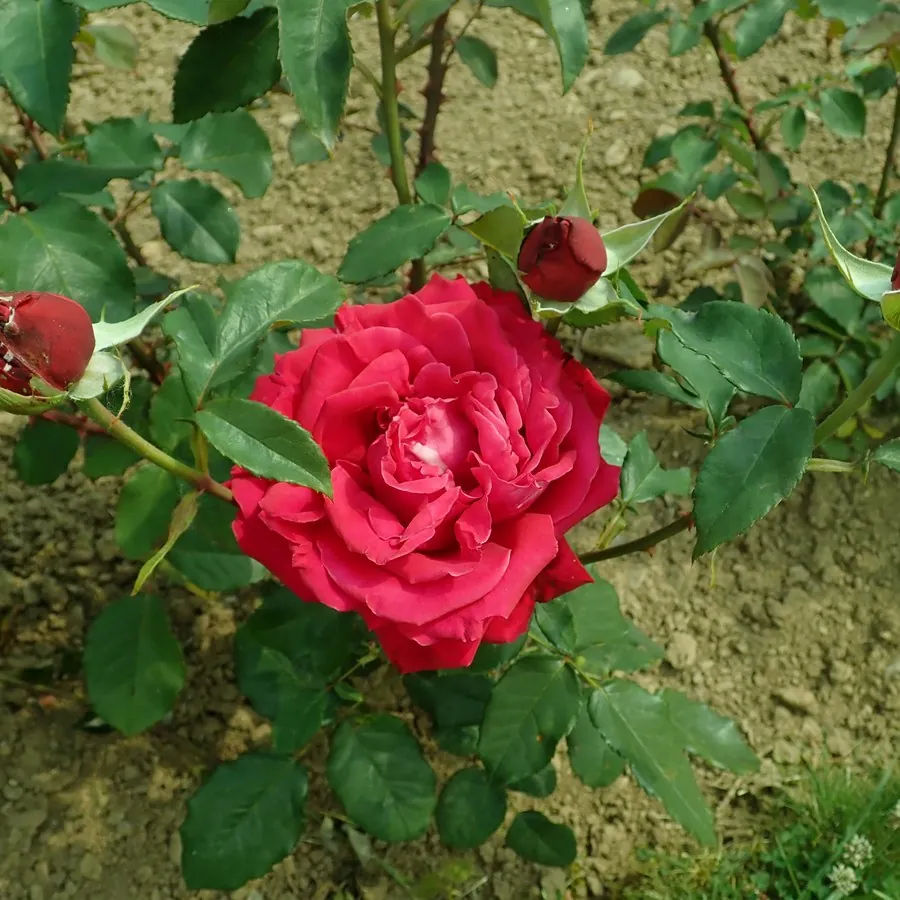
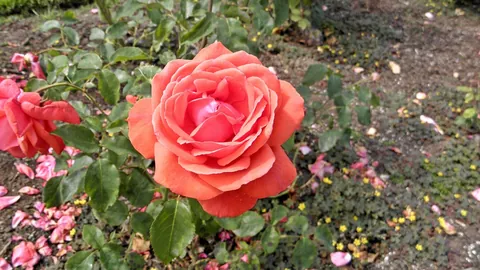
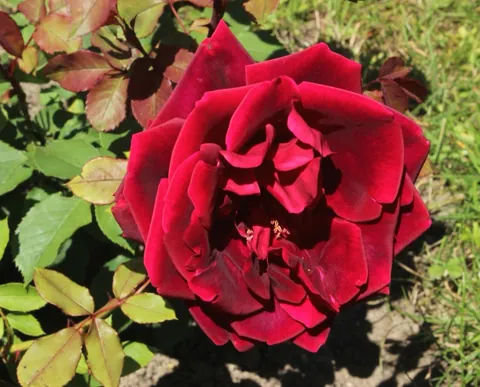
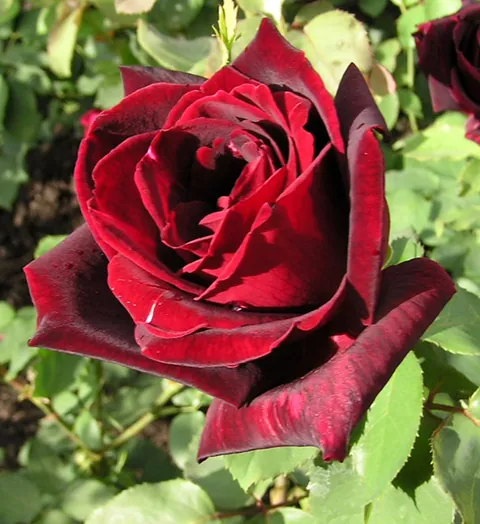
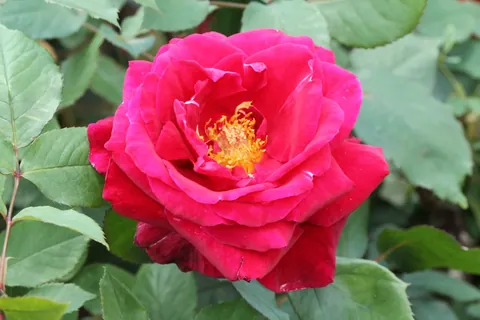




Alec's Red, close-up of the flower
Photo: Salicyna, CC BY-SA 4.0
Back to catalogue
Hybrid TeaAlec Cocker; James Cocker & Sons, 1970Red

Alec's Red

A cherry-red classic with almost black buds; very large, very double flowers 13–15 cm; awarded for its scent — a few flowers fill a room; holds up in rain and wind.

Fragrant Cloud × Dame de Coeur · has a climbing sport, Climbing Alec's Red

Variety profile

Flowering

Repeat, in flushes

Repeat-flowering — blooms in flushes from mid-June to early October. Months are approximate, for the climate of Ukraine.

Awards

Edland · ADR · Gold

Edland Fragrance Medal 1969 · RNRS President's International Trophy 1970 · RNRS Gold Medal · Belfast Fragrance Prize 1972 · ADR 1973

Winter hardiness

−20 °C

USDA zone 5b–10b. RHS H6 (~−20 °C); Forest-Steppe/Steppe — earthing up the base; north/east — light protection. RHS H6 (~−20 °C) · Forest-Steppe/Steppe — mound up the base · north/east — light winter protection.

Compare reference temperatures

Plant size

75–100 × 60–100 cm
person 170 cm75–100 cm
Habit
Dense, upright, compact
Dimensions
75–100 × 60–100 cm
Support
Does not need — the bush stands on its own
Shoots
Sturdy flower stems that hold the large blooms well, even in bad weather
Branching
Dense, bushy

Flower

13–15 cm
Bud shape
Round, almost black — opens into a very large flower
Open flower
Very large, 13–15 cm in diameter; the form develops from globular through high-centred to cupped
Fullness
36–45 petals — very double
Flower carriage
Mostly large flowers borne singly on sturdy stems; they hold up even in rain and wind

Fragrance

Strong; sweet damask

Strong, rich, sweet damask type; a few flowers fill a room with scent, strongest in the morning. Awarded specifically for its fragrance (Edland Fragrance Medal, Belfast Fragrance Prize).

Disease resistance

4 out of 5
Black spotresistantPowdery mildewresistant

~4/5 — healthy and fast-growing; preventive treatment is advisable.

Sun

Stable

Colour lightens a little with age, but does not fade much in the sun.

Thorns

Moderate
thornlessfewmoderatemanyvery many

Moderate number of thorns — typical of Hybrid Teas.

Foliage

Healthy, with good resistance to black spot and powdery mildew.

All characteristics in a table
Group
Hybrid Tea
Breeder
Alec Cocker; James Cocker & Sons, Scotland, 1970
Bud shape
Round, almost black — opens into a very large flower
Open flower
Very large, 13–15 cm in diameter; the form develops from globular through high-centred to cupped
Colour
Cherry-red / rich true red (crimson / cherry-red); the flower becomes a little lighter with age, but does not fade much in the sun
Fullness
36–45 petals — very double
Flower carriage
Mostly large flowers borne singly on sturdy stems; they hold up even in rain and wind
Flowering
Repeat-flowering — blooms in flushes from mid-June to early October
Fragrance
Strong, rich, sweet damask type; a few flowers fill a room with scent, strongest in the morning. Awarded specifically for its fragrance (Edland Fragrance Medal, Belfast Fragrance Prize)
Hips
No data
Habit
Dense, upright, compact
Branching
Dense, bushy
Shoots
Sturdy flower stems that hold the large blooms well, even in bad weather
Thorns
Moderate number of thorns — typical of Hybrid Teas.
Dimensions
75–100 × 60–100 cm
Support
Does not need — the bush stands on its own
Foliage
Healthy, with good resistance to black spot and powdery mildew
Resistance
~4/5 — healthy and fast-growing; preventive treatment is advisable
Variations of the variety
A separate climbing sport exists, Climbing Alec's Red (a variation of the same variety)

Colour scheme

Cherry-red / rich true red (crimson / cherry-red); the flower becomes a little lighter with age, but does not fade much in the sun

Rose neighbours

Perennials to plant nearby

Neighbouring roses

Classic fragrant red Hybrid Teas — a family of scent-award winners:

Perennial companions

Silver foliage and lilac-blue flower heads bring out the rich red:

lavendercatmint (Nepeta)Stachyssalvia

Distinctions

One of the most scent-awarded red varieties:

🏅 Edland Fragrance Medal 1969🏆 RNRS President's International Trophy 1970🥇 RNRS Gold Medal🌹 Belfast Fragrance Prize 1972🇩🇪 ADR 1973

More about the variety

Hips
No data
Variations of the variety
A separate climbing sport exists, Climbing Alec's Red (a variation of the same variety)

How to grow

Where to plant. A reliable classic red Hybrid Tea for a sunny spot and fertile soil. The dense, upright, compact bush needs no support. The large flowers hold up even in rain and wind, so the variety looks good in open borders and as a cut flower. The rich cherry-red combines beautifully with silver foliage (Stachys) and lilac-blue perennials (lavender, catmint, salvia).

Climate. USDA 5b–10b, RHS H6 (tolerates about −20 °C). In the Forest-Steppe and Steppe of Ukraine, earthing up the base of the bush is enough; in the north and east — light protection for winter.

Care. A healthy, fast-growing rose with good resistance to black spot and powdery mildew; preventive treatment is still advisable. It repeat-flowers in flushes from mid-June to early October.

About the name

Name. The variety is named after the breeder Alec Cocker (Alec Cocker). The name 'Alec's Red' was suggested by his wife Anne Cocker — herself a well-known rose grower.

Breeding. Bred by Alec Cocker at the nursery James Cocker & Sons (Aberdeen, Scotland), introduced in 1970. Registration code: COred. Parents: Fragrant Cloud × Dame de Coeur. A separate climbing sport exists, Climbing Alec's Red — a variation of the same variety.

Significance. One of the most fragrance-awarded red Hybrid Teas: Edland Fragrance Medal (1969), RNRS President's International Trophy (1970), RNRS Gold Medal, Belfast Fragrance Prize (1972) and ADR (1973). It inherited a strong, sweet damask scent from its parent Fragrant Cloud. It stands alongside classic fragrant reds — Crimson Glory, Papa Meilland, Mister Lincoln.

Frequently asked questions about Alec's Red

Does Alec's Red need winter protection?

The cultivar’s reference temperature is −20 °C (USDA zone 5b–10b). Overwintering depends on the conditions. RHS H6 (~−20 °C); Forest-Steppe/Steppe — earthing up the base; north/east — light protection.

How many times a season does Alec's Red flower?

Repeat-flowering — blooms in flushes from mid-June to early October.

How big does Alec's Red grow?

75–100 cm tall, 60–100 cm wide.

Which diseases affect Alec's Red?

Overall resistance: 4 out of 5. ~4 / 5; good resistance to black spot and powdery mildew; healthy and fast-growing; preventive treatment is advisable.

How much sun does Alec's Red need?

Stable; colour lightens a little with age, but does not fade much in the sun.

What does Alec's Red smell like?

Strong, rich, sweet damask type; a few flowers fill a room with scent, strongest in the morning. Awarded specifically for its fragrance (Edland Fragrance Medal, Belfast Fragrance Prize).

Gardeners' photos and reviews

My climate

Choose a reference temperature to compare with the cultivar’s data. This is not an overwintering forecast or advice on winter protection; consider wind, moisture and the duration of frost.

Regional data are generalised. USDA describes average annual extreme minima, not a forecast; the values in the list are rounded. Check the conditions at your site. More information: Roses in Ukraine's climate.