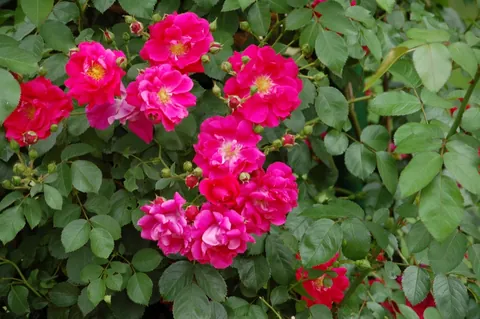
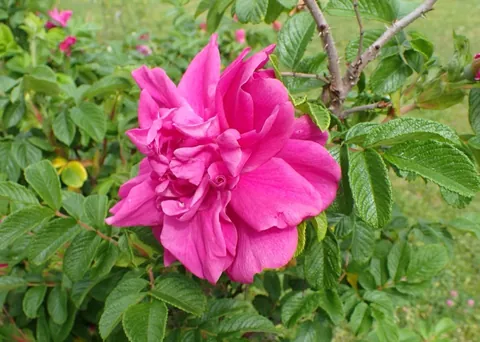
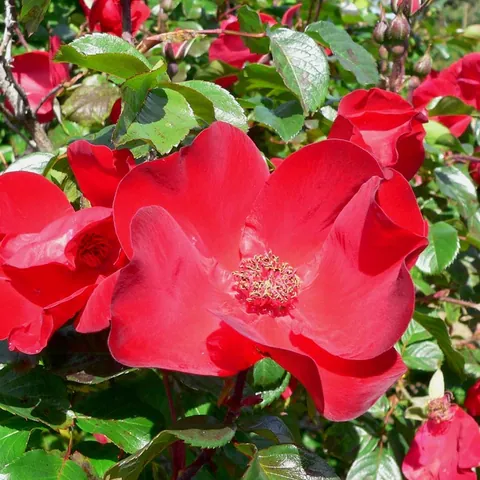
Adelaide Hoodless, close-up of the flower
Back to catalogue
Shrub; Parkland series (Canada)Marshall, 1973Red

Adelaide Hoodless

Parkland series; a red Canadian shrub rose, hardy to zone 2–3.

RSM 65 · exceptionally winter-hardy

Variety profile

Flowering

Repeat, in flushes

Repeat flowering in flushes, peaking in July and September. Months are approximate, for the climate of Ukraine.

Feature

Clusters

Up to 35 flowers per cluster — the bush is covered in blooms

Winter hardiness

−40 °C

USDA zone 2–3. To ≈ −40 °C; overwinters without protection in the coldest areas. To ≈ −40 °C · overwinters without cover in the coldest sites.

Compare reference temperatures

Plant size

100–180 cm
person 170 cm100–180 cm
Habit
Spreading, arching, graceful, very free-flowering
Dimensions
100–180 cm tall × as wide (depending on climate)
Support
Not needed; the arching canes can be tied in along the fence
Shoots
Arching
Branching
Good

Flower

6–7 cm
Bud shape
Small, dark red
Open flower
Semi-double, in large clusters; ~6–7 cm
Centre
With visible stamens
Fullness
Semi-double, 12–16 petals
Flower carriage
In large clusters — up to 35 flowers per cluster
Flower durability
Exceptionally abundant flowering

Fragrance

Light

Disease resistance

3 out of 5
Powdery mildewresistant

Good against powdery mildew; black spot resistance — variable.

Sun

Full sun

Repeat flowering (peaks in July and September).

Thorns

Moderate
thornlessfewmoderatemanyvery many

Data on thorns is incomplete.

Foliage

Glossy, dark green.

All characteristics in a table
Group
Shrub; Parkland series (Canada)
Breeder
Marshall, Canada, 1973
Bud shape
Small, dark red
Open flower
Semi-double, in large clusters; ~6–7 cm
Centre
With visible stamens
Colour
Rich dark pinkish red
Fullness
Semi-double, 12–16 petals
Flower carriage
In large clusters — up to 35 flowers per cluster
Flowering
Repeat flowering in flushes, peaking in July and September
Fragrance
Light
Flower durability
Exceptionally abundant flowering
Habit
Spreading, arching, graceful, very free-flowering
Branching
Good
Shoots
Arching
Thorns
Data on thorns is incomplete.
Dimensions
100–180 cm tall × as wide (depending on climate)
Support
Not needed; the arching canes can be tied in along the fence
Foliage
Glossy, dark green
Resistance
Good against powdery mildew; black spot resistance — variable
Use
Hedge along a fence, groups — reliable for cold climates
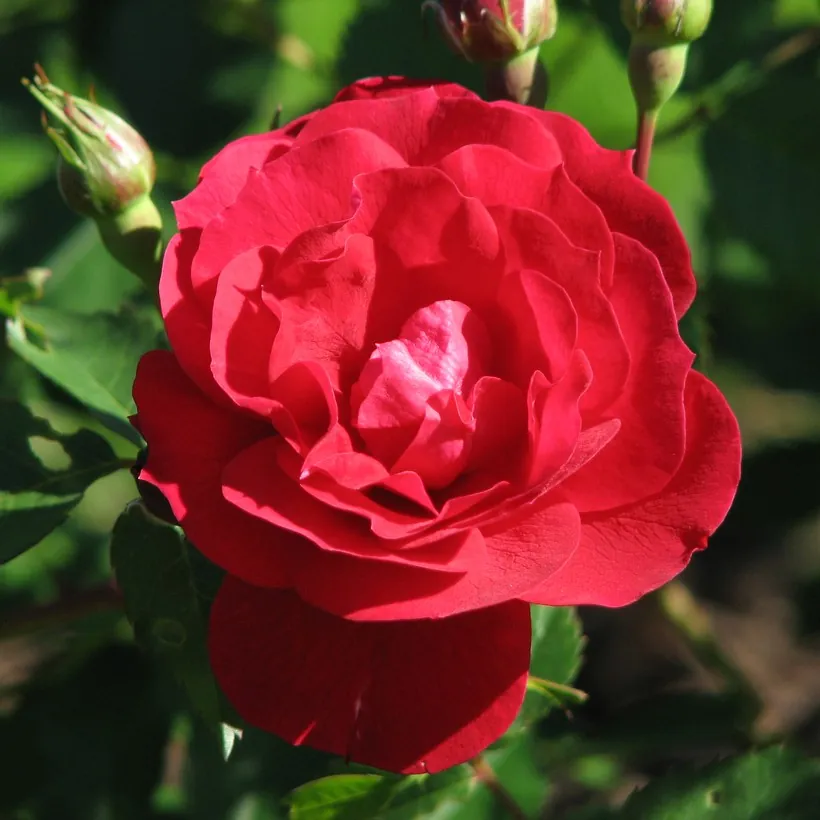
Colour scheme

Rich dark pinkish red

Rose neighbours

Perennials to plant nearby

Neighbouring roses

Hardy red roses keep a rich palette along the fence.

Perennial companions

Blue perennials bring out the red:

catmint (Nepeta)salviaperovskialavender

Contrasting accents

For contrast beside the red, use white or blue accents:

white rosedelphiniumsilver foliage

More about the variety

Use
Hedge along a fence, groups — reliable for cold climates
How to grow

Where to plant. A hedge along a fence, groups, large drifts — covered in flowers all summer. Along a fence: plant no closer than ~1 m from the next bush, so the bushes get enough light and air.

Climate. Exceptionally hardy (USDA 2–3, to ≈ −40 °C) — suitable for the coldest sites without protection.

Care. Undemanding; deadheading encourages repeat flowering. Good disease resistance; in a wet summer, watch for black spot.

About the name

Name. After Adelaide Hoodless (1858–1910), a Canadian educational reformer and founder of the Women's Institute; named for the organisation's 75th anniversary.

Breeding. Henry Marshall, Agriculture Canada, Morden, introduced 1973; Parkland series.

Significance. One of the hardiest red roses — it flowers reliably where most varieties are killed back by winter cold.

Frequently asked questions about Adelaide Hoodless

Does Adelaide Hoodless need winter protection?

The cultivar’s reference temperature is −40 °C (USDA zone 2–3). Overwintering depends on the conditions. To ≈ −40 °C; overwinters without protection in the coldest areas.

How many times a season does Adelaide Hoodless flower?

Repeat flowering in flushes, peaking in July and September.

How big does Adelaide Hoodless grow?

100–180 cm tall.

Which diseases affect Adelaide Hoodless?

Overall resistance: 3 out of 5. Good against powdery mildew; black spot — variable.

How much sun does Adelaide Hoodless need?

Sun; full sun; repeat flowering (peaks in July and September).

What does Adelaide Hoodless smell like?

Light.

Gardeners' photos and reviews

My climate

Choose a reference temperature to compare with the cultivar’s data. This is not an overwintering forecast or advice on winter protection; consider wind, moisture and the duration of frost.

Regional data are generalised. USDA describes average annual extreme minima, not a forecast; the values in the list are rounded. Check the conditions at your site. More information: Roses in Ukraine's climate.