



Back to catalogue
Hybrid Tea; FATHER OF ALL DARK-RED HT XX CENTURYWilhelm J.H. Kordes II; W. Kordes' Söhne, 1935Red

Crimson Glory

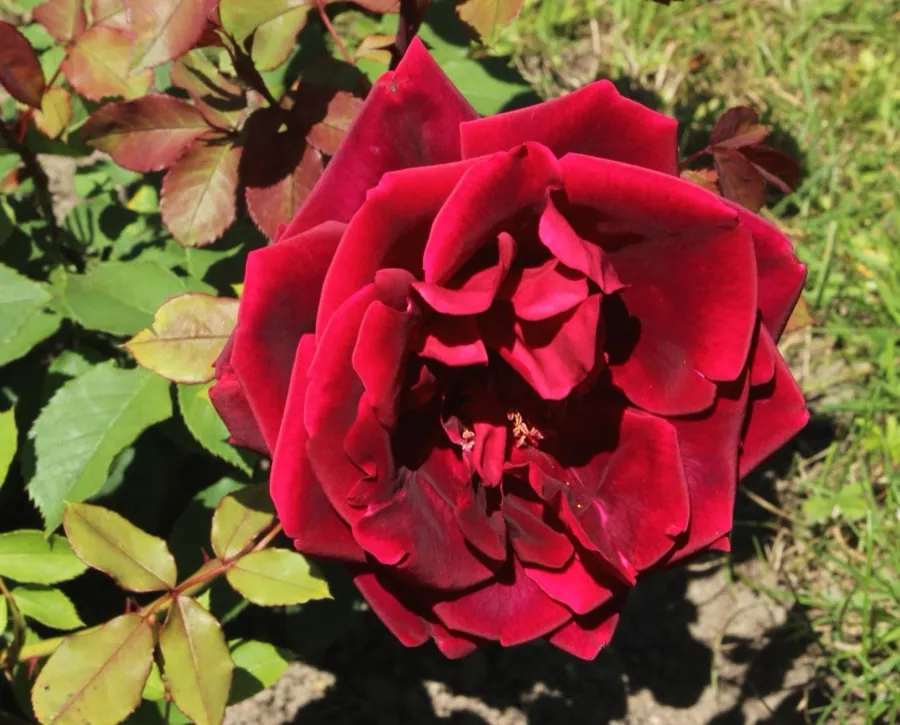
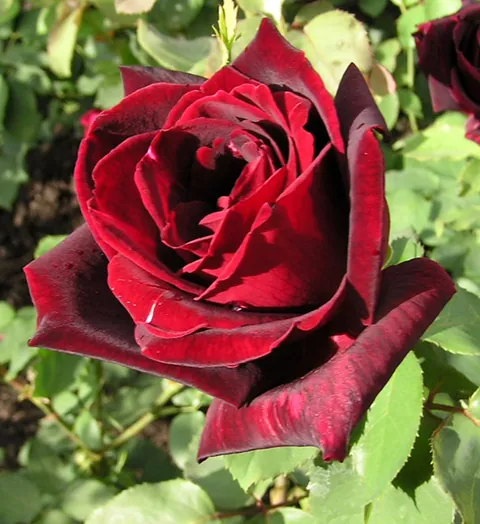
THE FIRST ROSE IN HISTORY TO RECEIVE THE ARS Gamble Fragrance Medal (1961); FATHER OF ALL DARK-RED HT XX CENTURY – genetic heritage via 'Charles Mallerin' – Mister Lincoln and thousands of others; velvety dark raspberry with purple sheen; 🇩🇪 bred by Wilhelm Kordes II in 1935; considered the benchmark of red rose fragrance of the twentieth century.

ARS Gamble Fragrance Medal 1961 — THE FIRST ROSE IN THE HISTORY OF THIS MEDAL! · NRS Gold 1936

Variety profile

Flowering

Remontant, good repeat flowering

Legacy

Gamble 1961 FIRST

+ NRS Gold 1936

Winter hardiness

−32 °C

USDA zone 4b. All of Ukraine without winter protection.

Compare reference temperatures

Plant size

75–200 × 90 cm
person 170 cm75–200 cm
Habit
Upright; in warm zones it forms a majestic bush
Dimensions
75–200 cm tall × ~90 cm wide – varies; taller in warm zones
Support
Not needed – self-supporting
Shoots
Medium stiffness
Branching
Well branched

Flower

12-13 cm
Bud shape
Long, conical, dark raspberry
Open flower
Cupped: 12–13 cm, 22–30 petals (sometimes up to 35)
Centre
Densely set, with a velvety lustre
Fullness
22–35 petals (medium)
Flower carriage
Singly on a long stem

Fragrance

Legendary; clove + damask + rose

LEGENDARY – very strong clove + damask + rose. Considered the BENCHMARK OF THE RED ROSE FRAGRANCE OF THE TWENTIETH CENTURY. The first rose in history to win the ARS Gamble Fragrance Medal (1961).

Disease resistance

3 out of 5
Powdery mildewsusceptible

Moderate 3/5: prone to powdery mildew and black spot; sensitive to the scorching sun – petals can burn. USDA 4b–9b – all of Ukraine without winter protection (characteristic Kordes cold hardiness).

Sun

The petals can ‘scorch’ in the heat

Thorns

Moderate
thornlessfewmoderatemanyvery many

Medium number of thorns – typical of HTs.

Foliage

Dark green.

All characteristics in a table
Group
Hybrid Tea; FATHER OF ALL DARK-RED HT XX CENTURY
Breeder
Wilhelm J.H. Kordes II; W. Kordes' Söhne, Germany, 1935
Bud shape
Long, conical, dark raspberry
Open flower
Cupped: 12–13 cm, 22–30 petals (sometimes up to 35)
Centre
Densely set, with a velvety lustre
Colour
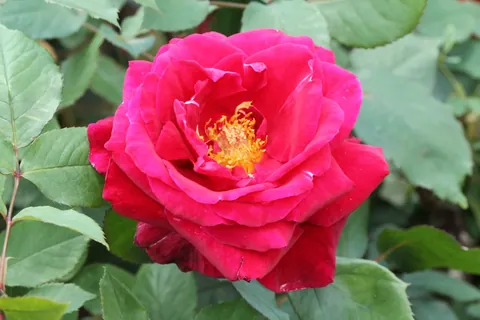
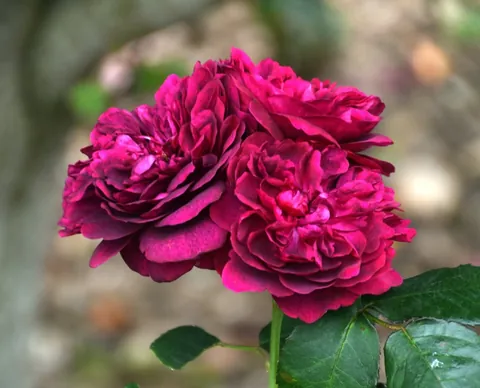
Dark raspberry-red (crimson) with PURPLE SHEEN as it matures; velvety lustre of the petals
Fullness
22–35 petals (medium)
Flower carriage
Singly on a long stem
Flowering
Remontant, good repeat flowering
Fragrance
LEGENDARY – very strong clove + damask + rose. Considered the BENCHMARK OF THE RED ROSE FRAGRANCE OF THE TWENTIETH CENTURY. The first rose in history to win the ARS Gamble Fragrance Medal (1961)
Hips
Not documented – usually cut
Habit
Upright; in warm zones it forms a majestic bush
Branching
Well branched
Shoots
Medium stiffness
Thorns
Medium number of thorns – typical of HTs.
Dimensions
75–200 cm tall × ~90 cm wide – varies; taller in warm zones
Support
Not needed – self-supporting
Foliage
Dark green
Resistance
Moderate 3/5: prone to powdery mildew and black spot; sensitive to the scorching sun – petals can burn. USDA 4b–9b – all of Ukraine without winter protection (characteristic Kordes cold hardiness)
Variations of the variety
No official code (1935). Bred by Wilhelm J.H. Kordes II (1891–1976) at W. Kordes' Söhne (Sparrieshoop, Germany). Introduced 1935. Parentage: seedling 'Cathrine Kordes' (HT, dark red) × 'W.E. Chaplin' (HT, dark red). Wilhelm Kordes II – father of Reimer Kordes, founder of the Kordesii series (cold-hardy climbers)

Colour scheme

Dark raspberry-red (crimson) with PURPLE SHEEN as it matures; velvety lustre of the petals

Rose neighbours

Perennials to plant nearby

Neighbouring roses

Collection of Gamble Medal winners + descendants of Crimson Glory:

Companion perennials

Cool purple-silver tones bring out the purple-crimson:

lavenderlamb's earslady's mantle (Alchemilla)salvia

Availability worldwide

⭐⭐ A classic of the 1930s, a historic variety for collections:

🇩🇪 Germany: high · homeland of Kordes🇬🇧 UK: high · NRS Gold 1936🇺🇸 USA: high · first Gamble Medal winner🇺🇦 Ukraine: moderate

More about the variety

Hips
Not documented – usually cut
Variations of the variety
No official code (1935). Bred by Wilhelm J.H. Kordes II (1891–1976) at W. Kordes' Söhne (Sparrieshoop, Germany). Introduced 1935. Parentage: seedling 'Cathrine Kordes' (HT, dark red) × 'W.E. Chaplin' (HT, dark red). Wilhelm Kordes II – father of Reimer Kordes, founder of the Kordesii series (cold-hardy climbers)

How to grow

Where to plant. As a ‘genealogical accent’ next to descendants (Mister Lincoln); by a bench for the legendary fragrance; in a fragrance corner; in ‘genealogical’ collections of dark-red HTs; partial shade in the heat – the petals can scorch.

Climate. All of Ukraine without winter protection (USDA 4b – the characteristic Kordes-hardiness).

Care. Full sun (with protection from the scorching midday sun); prevention against powdery mildew and black spot; feeding 3× per season; pruning ⅓ in spring; water at the root, not on the leaves.

About the name

Name. 'Crimson Glory' – English, meaning ‘crimson glory’: a poetic name that describes the saturated crimson-raspberry colour as the ‘glory’ of the dark-red range. A tradition of English poetic names for the international market, typical of Kordes in the 1930s. Bred by Wilhelm J.H. Kordes II (1891–1976) at W. Kordes' Söhne (Sparrieshoop, Germany). Introduced 1935. Parentage: seedling 'Cathrine Kordes' × 'W.E. Chaplin' (both dark-red HTs). Wilhelm Kordes II – a legendary German breeder, father of Reimer Kordes, founder of the Hybrid Kordesii series (cold-hardy climbers in the style of Sympathie).

Significance. ARS JAMES ALEXANDER GAMBLE FRAGRANCE MEDAL 1961 – THE FIRST ROSE IN HISTORY TO RECEIVE THIS MEDAL! Checked against the official ARS list – Crimson Glory opens the list of Gamble Medal winners. 'FATHER OF DARK-RED HT XX CENTURY' – used in the parentage of a huge number of dark-red varieties of the twentieth century, including, via 'Charles Mallerin', an indirect ancestor of Mister Lincoln (Swim 1964). NRS Gold Medal 1936 (Great Britain) – National Rose Society. CONSIDERED THE BENCHMARK OF RED-ROSE FRAGRANCE OF THE TWENTIETH CENTURY. It overturned the standard for red roses: previously dark-red roses lost their fragrance, while Crimson Glory was the first to combine a deep colour with a strong scent. 91 years in cultivation without a break (1935–2026). Legacy of Wilhelm Kordes II: together with Crimson Glory, Kordes set the standard of German HT breeding in the twentieth century. James Mason Memorial Medal 1976 – a MYTH in secondary sources: the medal did not exist in 1976 (it was established after James Mason's death in 1984). NOT in the WFRS Hall of Fame – despite its revolutionary significance for red HT breeding.

Frequently asked questions about Crimson Glory

Does Crimson Glory need winter protection?

The cultivar’s reference temperature is −32 °C (USDA zone 4b). Overwintering depends on the conditions. All of Ukraine without winter protection.

How many times a season does Crimson Glory flower?

Remontant, good repeat flowering.

How big does Crimson Glory grow?

75–200 cm tall, about 90 cm wide.

Which diseases affect Crimson Glory?

Overall resistance: 3 out of 5. Prone to powdery mildew.

How much sun does Crimson Glory need?

Sun; the petals can ‘scorch’ in the heat.

What does Crimson Glory smell like?

LEGENDARY – very strong clove + damask + rose. Considered the BENCHMARK OF THE RED ROSE FRAGRANCE OF THE TWENTIETH CENTURY. The first rose in history to win the ARS Gamble Fragrance Medal (1961).

Gardeners' photos and reviews

My climate

Choose a reference temperature to compare with the cultivar’s data. This is not an overwintering forecast or advice on winter protection; consider wind, moisture and the duration of frost.

Regional data are generalised. USDA describes average annual extreme minima, not a forecast; the values in the list are rounded. Check the conditions at your site. More information: Roses in Ukraine's climate.