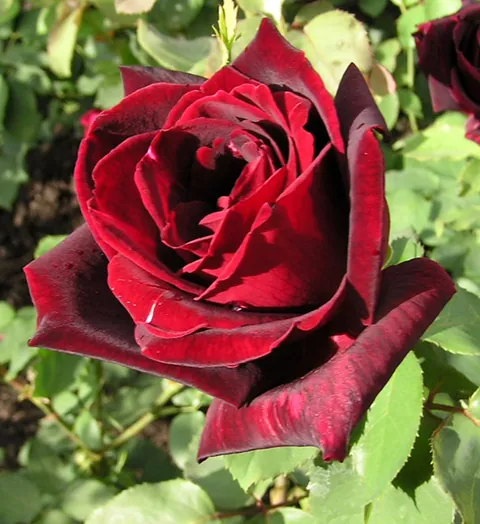
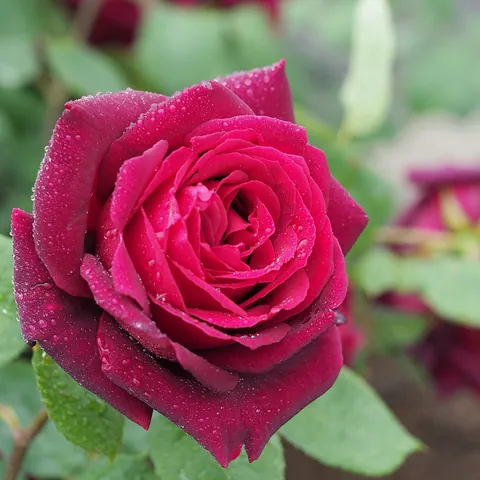
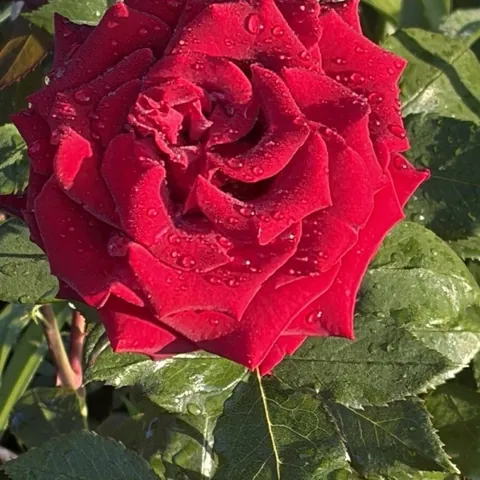
Barkarole, close-up of the flower
Back to catalogue
Hybrid TeaTantau, 1988Red

Barkarole

Also Taboo and Grand Château; one of the darkest garden reds, with an inky petal edge; holds its colour well and is not bothered by rain.

Also sold as 'Taboo' and 'Grand Château'

Variety profile

Flowering

Repeat, in flushes

Repeat-flowering, in flushes from June to autumn. Months are approximate, for the climate of Ukraine.

Feature

Rain-resistant

A rarity among dark varieties; holds its shape

Winter hardiness

−23 °C

USDA zone 6b–9b. Light cover in the north.

Compare reference temperatures

Plant size

90–170 × 60 cm
person 170 cm90–170 cm
Habit
Upright, slender
Dimensions
90–170 cm tall × 60 cm wide
Support
No support needed — the bush is self-supporting (support is needed only for climbing varieties)
Shoots
Sturdy, straight, almost thornless
Branching
Moderate, vertical

Flower

≈ 12 cm

26–40 petals.

Bud shape
Classic elongated, almost black at the edges
Open flower
Tall centre, Hybrid Tea type; large, about 12 cm
Centre
Tightly curled, elegant
Fullness
Full, 26–40 petals
Flower carriage
Mostly borne singly, on a sturdy stem

Fragrance

Moderate, fruity

Moderate — light fruity.

Disease resistance

4 out of 5
Black spotresistantPowdery mildewsusceptible

Good against black spot; vulnerable to powdery mildew.

Sun

Partial shade

Morning sun and midday shade — so that the edge does not scorch.

Thorns

Few
thornlessfewmoderatemanyvery many

Almost smooth shoots — pleasant to cut.

Foliage

Dark green, glossy.

Other names

Breeder's code TANelorak.

All characteristics in a table
Group
Hybrid Tea
Breeder
Tantau, 1988
Bud shape
Classic elongated, almost black at the edges
Open flower
Tall centre, Hybrid Tea type; large, about 12 cm
Centre
Tightly curled, elegant
Colour
Dark red velvet with an inky overlay on the edges and darker veining
Fullness
Full, 26–40 petals
Flower carriage
Mostly borne singly, on a sturdy stem
Flowering
Repeat-flowering, in flushes from June to autumn
Fragrance
Moderate — light fruity
Special features
Rain-resistant — keeps its shape even in bad weather, which is rare for dark varieties
Habit
Upright, slender
Branching
Moderate, vertical
Shoots
Sturdy, straight, almost thornless
Thorns
Almost smooth shoots — pleasant to cut.
Dimensions
90–170 cm tall × 60 cm wide
Support
No support needed — the bush is self-supporting (support is needed only for climbing varieties)
Foliage
Dark green, glossy
Resistance
Good against black spot; vulnerable to powdery mildew
Variations of the variety
The same rose is sold as Taboo (USA) and Grand Château
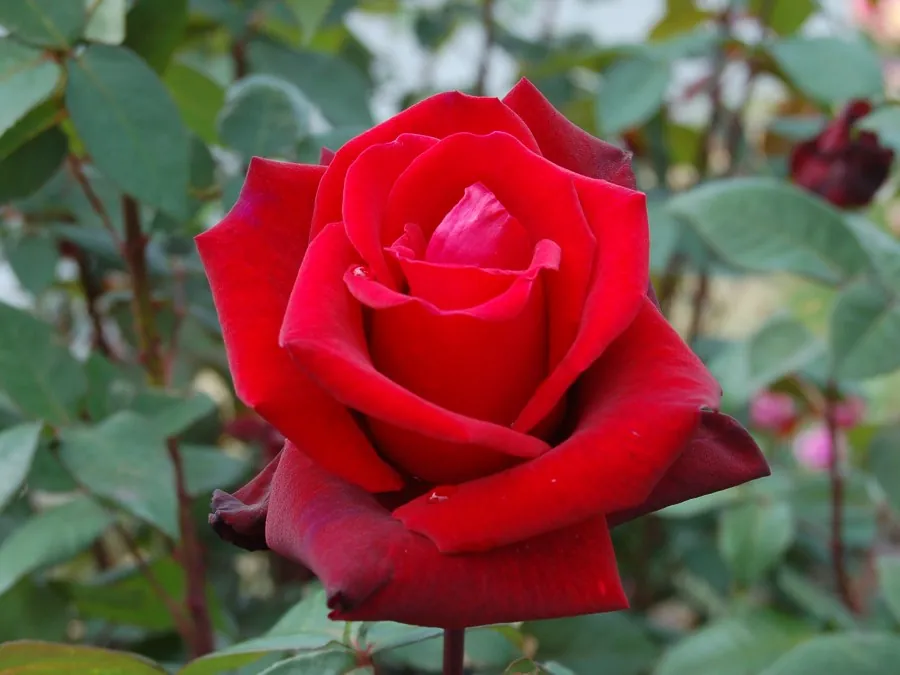
Colour scheme

Dark red velvet with an inky overlay on the edges and darker veining

Rose neighbours

Perennials to plant nearby

Neighbouring roses

Velvety dark reds alongside, and one light variety for contrast:

Perennial companions

Silver and purple bring out the velvety depth of the flower:

woolly lamb's earssalvia 'Caradonna'catmintgypsophila

Contrasting accents

Light and silvery surroundings, so the dark velvet does not 'vanish':

silver artemisiaperovskiawhite phlox

More about the variety

Special features
Rain-resistant — keeps its shape even in bad weather, which is rare for dark varieties
Variations of the variety
The same rose is sold as Taboo (USA) and Grand Château
How to grow

Where to plant. A cutting-garden corner (almost thornless — pleasant to cut), a dark accent in a mixed border, or a formal group beside a light background. Light: morning sun and shade from the midday heat. In scorching sun the inky petal edge burns, so it looks best in lacy partial shade and in cool weather.

Care. Water at the base, spring pruning, prevention of powdery mildew in humid summers.

About the name

Name. Barkarole (barcarolle) — a lilting song of the Venetian gondoliers; the name conveys the flower's smooth, 'musical' elegance.

Breeding. Hans Jürgen Evers for Rosen Tantau (Germany), 1988; patent code TANelorak. One rose, three names: the same variety is sold as Taboo (in the USA) and Grand Château. If you come across these names, it is the same Barkarole.

Frequently asked questions about Barkarole

Does Barkarole need winter protection?

The cultivar’s reference temperature is −23 °C (USDA zone 6b–9b). Overwintering depends on the conditions.

How many times a season does Barkarole flower?

Repeat-flowering, in flushes from June to autumn.

How big does Barkarole grow?

90–170 cm tall, about 60 cm wide.

Which diseases affect Barkarole?

Overall resistance: 4 out of 5. Resistant to black spot; vulnerable to powdery mildew.

How much sun does Barkarole need?

Partial shade; morning sun and midday shade — so that the edge does not scorch.

What does Barkarole smell like?

Moderate — light fruity.

Gardeners' photos and reviews

My climate

Choose a reference temperature to compare with the cultivar’s data. This is not an overwintering forecast or advice on winter protection; consider wind, moisture and the duration of frost.

Regional data are generalised. USDA describes average annual extreme minima, not a forecast; the values in the list are rounded. Check the conditions at your site. More information: Roses in Ukraine's climate.