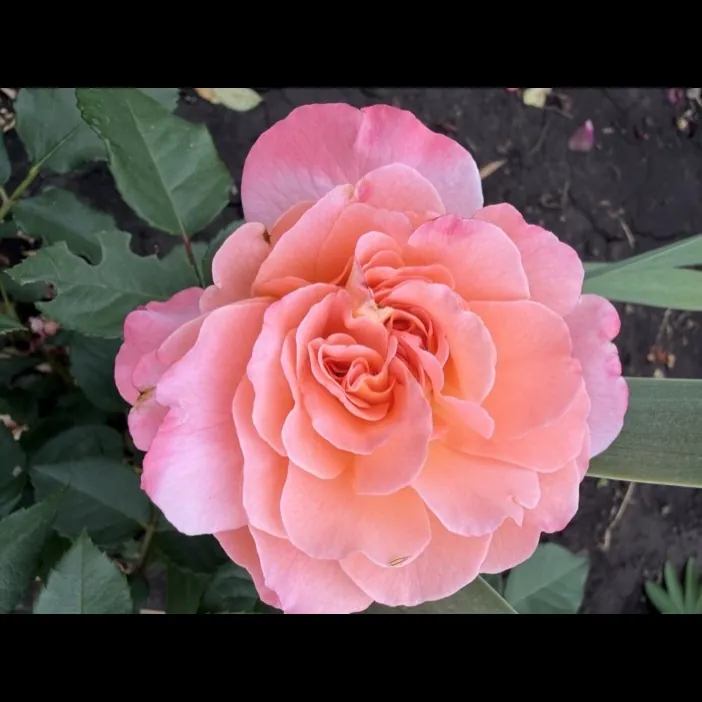
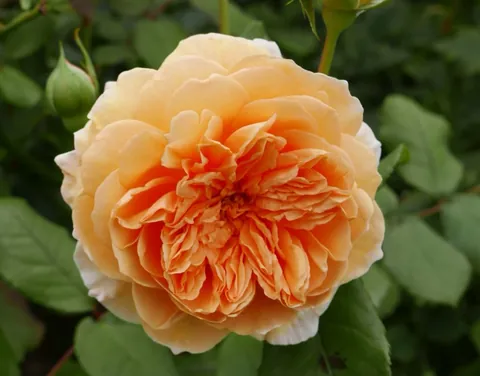
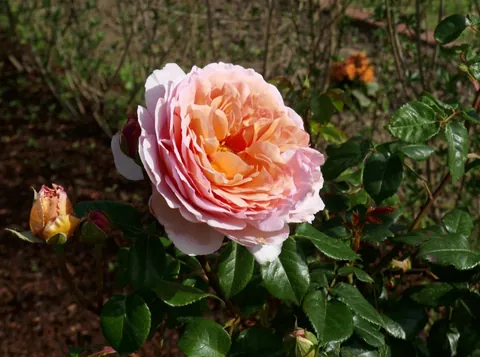
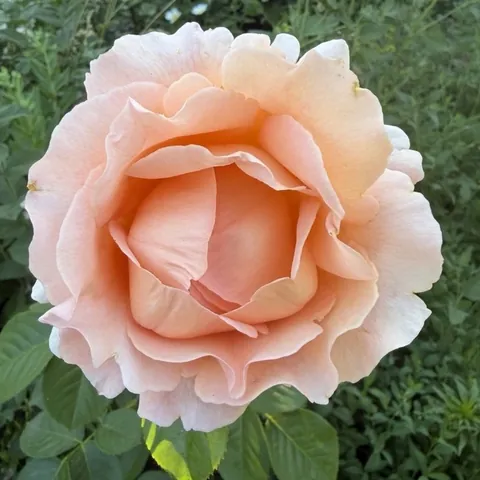
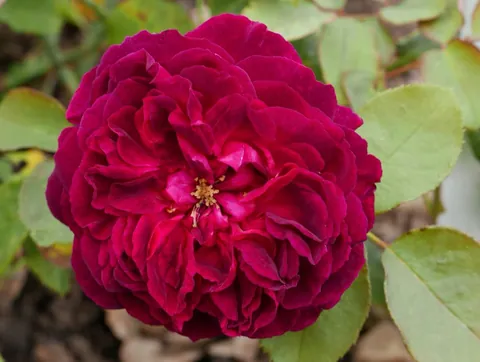


Augusta Luise, close-up of the flower
Back to catalogue
Hybrid Tea; nostalgicTantau, 1999Apricot and orange

Augusta Luise

Also Fox-Trot (UK); Rachel; Hayley Westenra (NZ); the benchmark of peach-cream romance; the mother variety of the sport Aquarell.

Nostalgic Roses Tantau series

Variety profile

Flowering

Abundant in flushes all season

Awards

Excellent

HelpMeFind rating · one of the best-known Tantau Nostalgic Roses

Winter hardiness

−20 °C

USDA zone 6b+. Left-Bank Ukraine and the north: with winter cover.

Compare reference temperatures

Plant size

100–150 × 70–100 cm
person 170 cm100–150 cm
Habit
Upright, fairly tall
Dimensions
100–150 cm tall × 70–100 cm wide
Support
No support needed — the bush is self-supporting (support is needed only for climbing varieties)
Shoots
Sturdy, straight — they hold the heavy flower well
Branching
Medium

Flower

10–15 cm
Bud shape
Large, rounded
Open flower
Deep cup with frilled petal edges, nostalgic; diameter 10–15 cm
Centre
Quartered, with curled petals
Fullness
Very full, 50+ petals
Flower carriage
Mostly borne singly, on a sturdy stem (suitable for cutting)

Fragrance

Strong

Strong — fruity, sweet, with notes of citrus and old rose.

Disease resistance

3.5 out of 5

Good overall; needs preventive treatment against black spot.

Sun

Full sun for 6+ hours

The colour shows best in cool weather.

Thorns

Moderate
thornlessfewmoderatemanyvery many

Standard for a Hybrid Tea.

Foliage

Medium green, semi-matt.

Other names

Fox-Trot, Rachel, Hayley Westenra

Breeder's code TANgust.

All characteristics in a table
Group
Hybrid Tea; nostalgic
Breeder
Tantau, 1999
Bud shape
Large, rounded
Open flower
Deep cup with frilled petal edges, nostalgic; diameter 10–15 cm
Centre
Quartered, with curled petals
Colour
Centre peach-apricot with creamy yellow, passing towards the edge into soft pink and coral-pink; every flower is unique — the palette changes with the weather (a cold morning makes the pink tone stronger, heat brings more peach-cream)
Fullness
Very full, 50+ petals
Flower carriage
Mostly borne singly, on a sturdy stem (suitable for cutting)
Flowering
Abundant in flushes all season
Fragrance
Strong — fruity, sweet, with notes of citrus and old rose
Hips
Rarely sets hips
Habit
Upright, fairly tall
Branching
Medium
Shoots
Sturdy, straight — they hold the heavy flower well
Thorns
Standard for a Hybrid Tea.
Dimensions
100–150 cm tall × 70–100 cm wide
Support
No support needed — the bush is self-supporting (support is needed only for climbing varieties)
Foliage
Medium green, semi-matt
Resistance
Good overall; needs preventive treatment against black spot
Variations of the variety
Stands in a vase for 7–10 days; mother variety of the sport Aquarell (1999, Evers); synonyms: Fox-Trot (UK), Rachel, Hayley Westenra (NZ)

Colour scheme

Centre peach-apricot with creamy yellow, passing towards the edge into soft pink and coral-pink; every flower is unique — the palette changes with the weather (a cold morning makes the pink tone stronger, heat brings more peach-cream)

Rose neighbours

Perennials to plant nearby

Neighbouring roses

Warm peach-apricot tones keep one romantic mood around Augusta Luise.

Perennial companions

A silver-purple frame and terracotta accents enhance the warm glow of the flower:

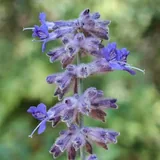
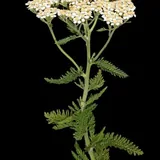
Russian sage (Perovskia)woolly lamb's earsyarrow 'Terracotta'salvia 'Caradonna'

Contrasting accents

For play with intensity: warm orange and airy purple accents:

Echinacea Tiki TorchCoreopsis MoonbeamVerbena bonariensis

More about the variety

Hips
Rarely sets hips
Variations of the variety
Stands in a vase for 7–10 days; mother variety of the sport Aquarell (1999, Evers); synonyms: Fox-Trot (UK), Rachel, Hayley Westenra (NZ)

How to grow

Where to plant. As a specimen in a formal area, in the centre of a bed, or in romantic compositions; excellent for cutting — it stands in a vase for 7–10 days.

Climate. Excellent for central and western Ukraine; in the east and south — with moderate watering and mulch against the heat; in the north — with winter cover.

Care. Deep planting with compost, mulch, regular watering at the base, prevention against black spot 2× a season, pruning by 1/3 in spring.

About the name

Name. After Countess Auguste Luise zu Stolberg-Stolberg (1753–1835), the muse of the young Johann Wolfgang von Goethe, with whom he corresponded for many years.

Breeding. Bred by Hans Jürgen Evers (Tantau) in 1999. The parentage is not officially published (even HelpMeFind lists it as “unknown”). Patent code: TANgust.

Meaning. A tribute to German cultural history, to the spirit of Romanticism and to the epistolary genre. One of Tantau's best-known nostalgic varieties — the benchmark of 'peach-cream romance'. The sport of Augusta Luise is Aquarell (Evers, 1999): both come from the same breeder with the same flower form, but Aquarell adds 'watercolour' strokes of pink and raspberry. Also sold as Fox-Trot (Great Britain), Rachel and Hayley Westenra (New Zealand).

Frequently asked questions about Augusta Luise

Does Augusta Luise need winter protection?

The cultivar’s reference temperature is −20 °C (USDA zone 6b+). Overwintering depends on the conditions.

How many times a season does Augusta Luise flower?

Abundant in flushes all season.

How big does Augusta Luise grow?

100–150 cm tall, 70–100 cm wide.

Which diseases affect Augusta Luise?

Overall resistance: 3.5 out of 5. 3.5 / 5; good against powdery mildew; moderate against black spot, needs preventive treatment.

How much sun does Augusta Luise need?

Sun; full sun for 6+ hours; the colour shows best in cool weather.

What does Augusta Luise smell like?

Strong — fruity, sweet, with notes of citrus and old rose.

Gardeners' photos and reviews

My climate

Choose a reference temperature to compare with the cultivar’s data. This is not an overwintering forecast or advice on winter protection; consider wind, moisture and the duration of frost.

Regional data are generalised. USDA describes average annual extreme minima, not a forecast; the values in the list are rounded. Check the conditions at your site. More information: Roses in Ukraine's climate.