


Back to catalogue
English Shrub / English Climbing Rose; dual habit — shrub or climber up to 3.6 mDavid Austin; David Austin Roses, 1991Bicolour

The Pilgrim

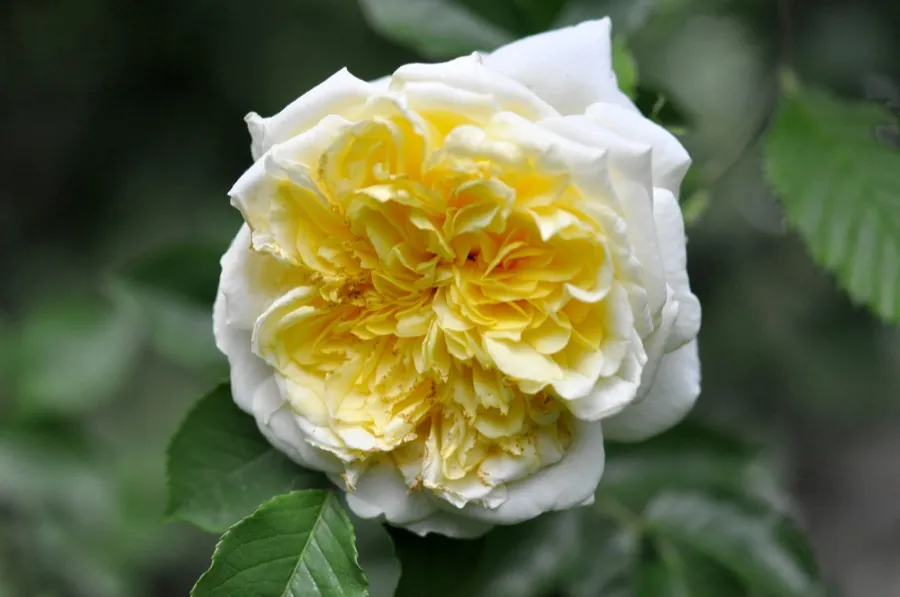
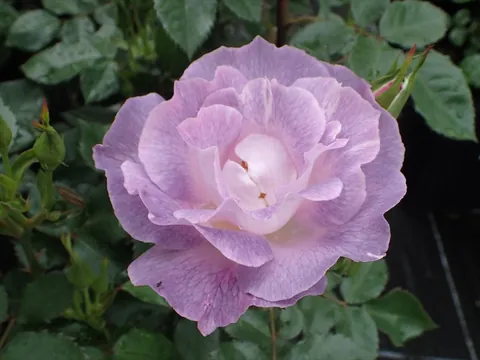
Soft yellow centre with pale lemon, almost white edges in a rosette form; RHS Award of Garden Merit; named after the pilgrims in Geoffrey Chaucer's “The Canterbury Tales” (XIV century); dual nature: young — a neat shrub, mature — a climber up to 3.6 m; in Germany “Gartenarchitekt Günther Schulze”.

RHS Award of Garden Merit · in Germany 'Gartenarchitekt Günther Schulze'

Variety profile

Flowering

Repeat flowering

Generous repeat flowering from June to October. Months are approximate, for the climate of Ukraine.

Legacy

RHS AGM

+ Chaucer 1387

Winter hardiness

−29 °C

USDA zone 5b. Central Ukraine with winter protection for the climbing form.

Compare reference temperatures

Plant size

120 × 90–120 cm
person 170 cmon a supportup to 3.6 m120 cm
Habit
Dual: young — a neat shrub; mature — a climber up to 3.6 m
Dimensions
As a shrub: ~120 cm × 90–120 cm; as a climber: 300–360 cm tall (David Austin: 12 ft; RHS classifies it as “Climber Wall Shrub”)
Support
Not needed as a shrub; as a climber, an arch, pergola or wall is essential
Shoots
Long and flexible — shape well vertically
Branching
Well branched

Flower

7-10 cm
Bud shape
Round, soft yellow
Open flower
Rosette form: 7–10 cm, ~140 petals (per Austin, HMF up to 170) — very dense
Centre
Tightly packed with a symmetrical rosette
Fullness
~140 petals (very full)
Flower carriage
Singly or in small clusters

Fragrance

Medium; Tea with notes of myrrh

Medium — Tea with notes of myrrh. A complex “perfumed” Austin-type fragrance.

Disease resistance

4 out of 5
Powdery mildewsusceptible

Good 4/5; prone to powdery mildew in humid seasons; needs regular prevention. USDA 5b-10b — in Central Ukraine with moderate winter protection as a climber.

Sun

Full sun

Thorns

Few
thornlessfewmoderatemanyvery many

Few thorns — typical for Austin.

Foliage

Dark green, semi-matt.

All characteristics in a table
Group
English Shrub / English Climbing Rose; dual habit — shrub or climber up to 3.6 m
Breeder
David Austin; David Austin Roses, United Kingdom, 1991
Bud shape
Round, soft yellow
Open flower
Rosette form: 7–10 cm, ~140 petals (per Austin, HMF up to 170) — very dense
Centre
Tightly packed with a symmetrical rosette
Colour
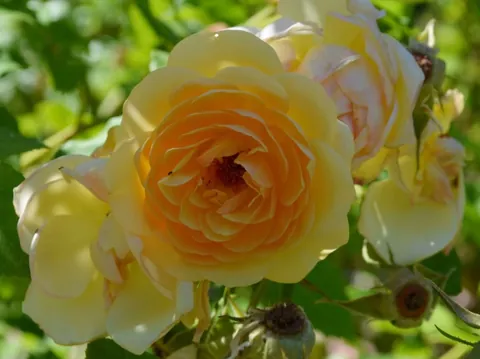
Soft yellow centre with pale lemon, almost white outer petals — a two-tone gradient from a warm centre to cool edges
Fullness
~140 petals (very full)
Flower carriage
Singly or in small clusters
Flowering
Generous repeat flowering from June to October
Fragrance
Medium — Tea with notes of myrrh. A complex “perfumed” Austin-type fragrance
Hips
Not documented — typically cut
Habit
Dual: young — a neat shrub; mature — a climber up to 3.6 m
Branching
Well branched
Shoots
Long and flexible — shape well vertically
Thorns
Few thorns — typical for Austin.
Dimensions
As a shrub: ~120 cm × 90–120 cm; as a climber: 300–360 cm tall (David Austin: 12 ft; RHS classifies it as “Climber Wall Shrub”)
Support
Not needed as a shrub; as a climber, an arch, pergola or wall is essential
Foliage
Dark green, semi-matt
Resistance
Good 4/5; prone to powdery mildew in humid seasons; needs regular prevention. USDA 5b-10b — in Central Ukraine with moderate winter protection as a climber
Variations of the variety
Code AUSwalker. Introduced 1991 through David Austin Roses. Parentage: 'Graham Thomas' × 'Yellow Button' — both parents are yellow Austins. In Germany it is sold under the name “Gartenarchitekt Günther Schulze” (NOT Schultheis — these are different things)

Colour scheme

Soft yellow centre with pale lemon, almost white outer petals — a two-tone gradient from a warm centre to cooler edges

Rose neighbours

Perennials to plant nearby

Neighbouring roses

Austin English Roses — creating a 'classic' English corner:

Perennial companions

A classic English cottage palette:

lavenderhostalady's mantle (Alchemilla)salvia

Availability worldwide

An Austin classic of the 90s, sold under two market names:

🇬🇧 UK: high · home of Austin🇩🇪 Germany: high · sold as 'Günther Schulze'🇺🇸 USA: high🇺🇦 Ukraine: moderate · via collector nurseries

More about the variety

Hips
Not documented — typically cut
Variations of the variety
Code AUSwalker. Introduced 1991 through David Austin Roses. Parentage: 'Graham Thomas' × 'Yellow Button' — both parents are yellow Austins. In Germany it is sold under the name “Gartenarchitekt Günther Schulze” (NOT Schultheis — these are different things)

How to grow

Where to plant. As a “neat shrub” when young, in a mixed border or flower bed; as a climber on a low arch, pergola or wall when mature; beside a bench for its fragrance; in a “literary” corner with Chaucerian allusions; under windows if grown as a shrub.

Climate. Central Ukraine with winter protection for the climbing form (USDA 5b-10b); tolerates summer heat well; in southern regions a light afternoon shade is useful.

Care. Full sun; prevention of powdery mildew in humid seasons; feed 2–3× per season; prune ⅓ in spring; as a climber, train it on a support.

About the name

Name. “The Pilgrim” = “The Pilgrim”. Named after the pilgrims in Geoffrey Chaucer's “The Canterbury Tales” (Geoffrey Chaucer, 1340–1400). The Canterbury Tales is the best-known work of Middle English literature, about a group of pilgrims travelling from London to Canterbury and telling stories. This follows a classic Austin-style tradition of dedicating varieties to classics of English literature (like Scepter'd Isle — to Shakespeare, Sherlock Holmes — to Doyle). Breeder: bred by David Austin at David Austin Roses (Albrighton, Shropshire, UK). Code AUSwalker. Introduced 1991. Parentage: 'Graham Thomas' (Austin, WFRS HoF 2009) × 'Yellow Button' (Austin 1975) — both parents are yellow Austins. In Germany it is also sold as “Gartenarchitekt Günther Schulze”, named after a garden architect (NOT to be confused with the nursery Rosenhof Schultheis).

Significance. RHS Award of Garden Merit — officially confirmed. Numerous exhibition wins in 1999–2001 at American rose societies. The “dual nature” — the young bush flowers like a neat shrub, while a mature plant climbs to 3+ metres. This is a rare quality that makes The Pilgrim suitable for any garden. About 140 petals — a record doubleness for Austins of that time. A two-tone gradient from a soft-yellow centre to almost white edges. Tea + myrrh fragrance — a rare combination. It has not received an ADR. Prone to powdery mildew in humid seasons.

Frequently asked questions about The Pilgrim

Does The Pilgrim need winter protection?

The cultivar’s reference temperature is −29 °C (USDA zone 5b). Overwintering depends on the conditions. Central Ukraine with winter protection for the climbing form.

How many times a season does The Pilgrim flower?

Generous repeat flowering from June to October.

How big does The Pilgrim grow?

About 120 cm tall, 90–120 cm wide. On a support — up to 360 cm.

Which diseases affect The Pilgrim?

Overall resistance: 4 out of 5. Prone to powdery mildew in humid seasons.

How much sun does The Pilgrim need?

Sun; full sun.

What does The Pilgrim smell like?

Medium — Tea with notes of myrrh. A complex “perfumed” Austin-type fragrance.

Gardeners' photos and reviews

My climate

Choose a reference temperature to compare with the cultivar’s data. This is not an overwintering forecast or advice on winter protection; consider wind, moisture and the duration of frost.

Regional data are generalised. USDA describes average annual extreme minima, not a forecast; the values in the list are rounded. Check the conditions at your site. More information: Roses in Ukraine's climate.