

Back to catalogue
Hybrid Musk / English ShrubDavid Austin, 2015White and cream

Desdemona

US PP30054; the last series of varieties by Austin Sr. himself before his death.

English Roses · the last series of Austin Sr.

Variety profile

Flowering

Repeat, in flushes

Exceptionally repeat-flowering, in waves from June to the first frosts. Months are approximate, for the climate of Ukraine.

Awards

AGM · Bronze

RHS AGM · «Best For Fragrance» Austin · Bronze National Rose Trial AU 2021

Winter hardiness

−20 °C

USDA zone 5–11. RHS H6; all of Ukraine with light protection. RHS H6 · all of Ukraine with light winter protection.

Compare reference temperatures

Plant size

120 × 90–100 cm
person 170 cm120 cm
Habit
Compact and rounded; a typical modern Austin (after the 'Best For Health' era)
Dimensions
120 cm tall × 90–100 cm wide (RHS: up to 150 cm wide)
Support
No support needed
Shoots
Sturdy, holding the cup-shaped flowers well
Branching
Dense; the bush looks round

Flower

8–9 cm
Bud shape
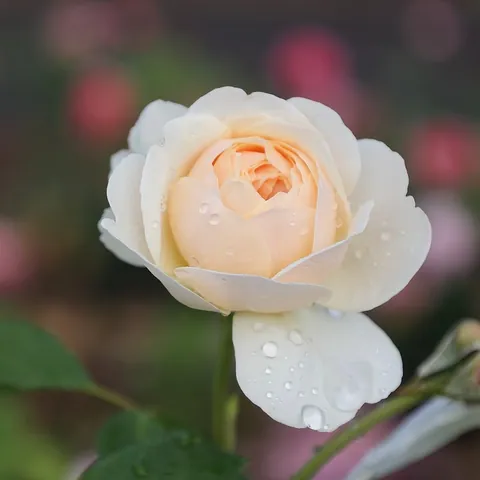
Round-conical, peach-pink
Open flower
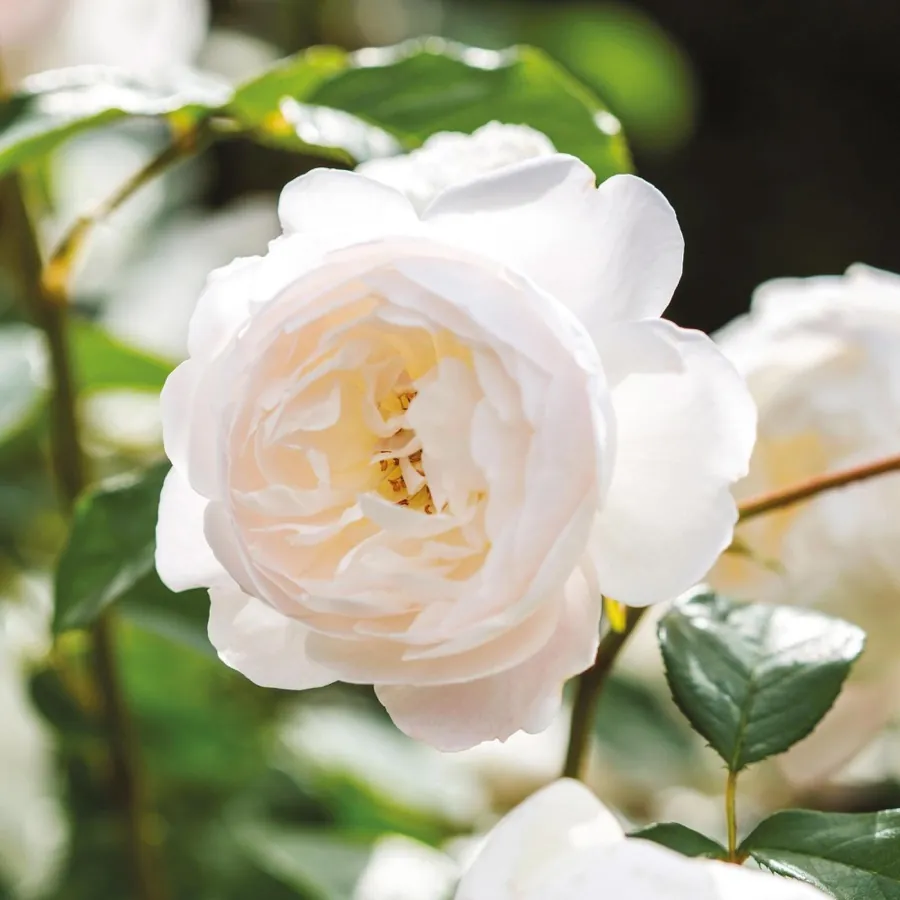
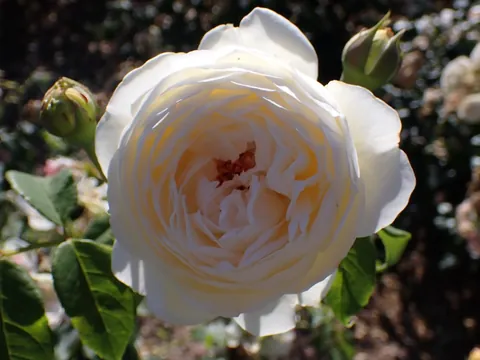
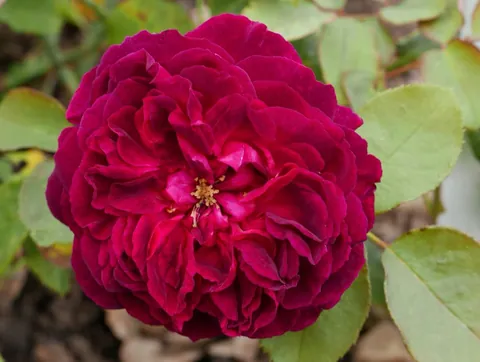
Chalice-shaped, with the petals curling inward; 8–9 cm across
Centre
Dense centre with petal swirls, opening into an open cup
Fullness
Very double, ~52 petals (full)
Flower carriage
In small clusters of 1–3 flowers on the stem

Fragrance

Strong

Strong; old pink with notes of almond blossom, cucumber and lemon zest (a unique palette among English Roses).

Disease resistance

5 out of 5

Very good; one of the most resistant among fresh English roses (typical of post-2010 Austins).

Sun

Sun or part shade

Tolerates eastern, southern and western exposure.

Thorns

Moderate
thornlessfewmoderatemanyvery many

Moderate number.

Foliage

Dark green, healthy.

Other names

Breeder's code AUSkindling.

All characteristics in a table
Group
Hybrid Musk / English Shrub
Breeder
David Austin, 2015
Bud shape
Round-conical, peach-pink
Open flower
Chalice-shaped, with the petals curling inward; 8–9 cm across
Centre
Dense centre with petal swirls, opening into an open cup
Colour
Peach-pink buds open into creamy white cupped flowers with a faint pink tint; with age they become pure milky white
Fullness
Very double, ~52 petals (full)
Flower carriage
In small clusters of 1–3 flowers on the stem
Flowering
Exceptionally repeat-flowering, in waves from June to the first frosts
Fragrance
Strong; old pink with notes of almond blossom, cucumber and lemon zest (a unique palette among English Roses)
Hips
Does not set hips
Habit
Compact and rounded; a typical modern Austin (after the 'Best For Health' era)
Branching
Dense; the bush looks round
Shoots
Sturdy, holding the cup-shaped flowers well
Thorns
Moderate number.
Dimensions
120 cm tall × 90–100 cm wide (RHS: up to 150 cm wide)
Support
No support needed
Foliage
Dark green, healthy
Resistance
Very good; one of the most resistant among fresh English roses (typical of post-2010 Austins)
Variations of the variety
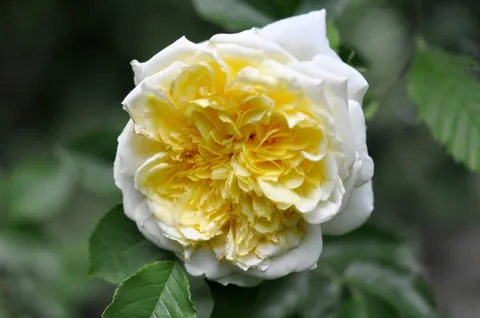
NOTE: on Wikimedia, under the name 'Rosa Desdemona', there is another rose: a Hybrid Perpetual by the breeder William Paul, 1912. Do not confuse them! This card is about Austin AUSkindling (2015).

Colour scheme

Peach-pink buds open into creamy white cupped flowers with a faint pink tint; with age they become pure milky white

Rose neighbours

Perennials to plant nearby

Neighbouring roses

Other white and cream English Roses — for a light 'moon garden':

Perennial companions

Classic English partners — white verticals + a grey-blue base:

white foxglovehosta 'Halcyon'sage 'Caradonna'lavender 'Hidcote'

Availability worldwide

Modern, but already widely available:

  • 🇬🇧 Europe: David Austin · Promesse de Fleurs
  • 🇺🇸 USA: Grace Rose Farm · Heirloom · Menagerie
  • 🇦🇺 Australia: David Austin AU · Eumundi
  • 🇺🇦 Ukraine: Florium · Yaskrava Klumba · Moisad · Agrosvit-Sad

More about the variety

Hips
Does not set hips
Variations of the variety
NOTE: on Wikimedia, under the name 'Rosa Desdemona', there is another rose: a Hybrid Perpetual by the breeder William Paul, 1912. Do not confuse them! This card is about Austin AUSkindling (2015).

How to grow

Where to plant. Light English-style borders, a 'moon garden' (a bed of white varieties), showy borders, the front of a bed with low perennials. Because of its strong scent, plant it near paths.

Climate. RHS H6, down to −20 °C; for all of Ukraine with light protection in the northern regions.

Care. Minimal; one of the healthiest Austins. Removing spent flowers encourages new waves.

About the name

Name. After Desdemona, the tragic heroine of William Shakespeare's play 'Othello' (1603-1604). The daughter of a Venetian senator and wife of the Moor Othello, her name became a symbol of innocence and purity, which the creamy white cups of the flowers emphasise.

Breeding. Raised by David Austin Sr. in Great Britain; presented at the RHS Chelsea Flower Show 2015. Patent code AUSkindling (US PP 30,054). The RHS classifies it as a Hybrid Musk, a rare English rose with musk characteristics (the Hybrid Musk family, like Cornelia and Buff Beauty). Parentage not disclosed.

Significance. This is the last series of roses bred by David Austin Sr. himself before his death in 2018, which gives it sentimental value for fans of English roses. It won the RHS Award of Garden Merit, a 'Highly Commended' from the RHS, a Bronze Medal at the National Rose Trial Garden (Australia) in 2021, and the David Austin 'Best For Fragrance' and 'Best For Flowering' awards.

Frequently asked questions about Desdemona

Does Desdemona need winter protection?

The cultivar’s reference temperature is −20 °C (USDA zone 5–11). Overwintering depends on the conditions. RHS H6; all of Ukraine with light protection.

How many times a season does Desdemona flower?

Exceptionally repeat-flowering, in waves from June to the first frosts.

How big does Desdemona grow?

About 120 cm tall, 90–100 cm wide.

Which diseases affect Desdemona?

Overall resistance: 5 out of 5. One of the most disease-resistant of the fresh English Roses.

How much sun does Desdemona need?

Sun or part shade; tolerates eastern, southern and western exposure.

What does Desdemona smell like?

Strong; old pink with notes of almond blossom, cucumber and lemon zest (a unique palette among English Roses).

Gardeners' photos and reviews

My climate

Choose a reference temperature to compare with the cultivar’s data. This is not an overwintering forecast or advice on winter protection; consider wind, moisture and the duration of frost.

Regional data are generalised. USDA describes average annual extreme minima, not a forecast; the values in the list are rounded. Check the conditions at your site. More information: Roses in Ukraine's climate.