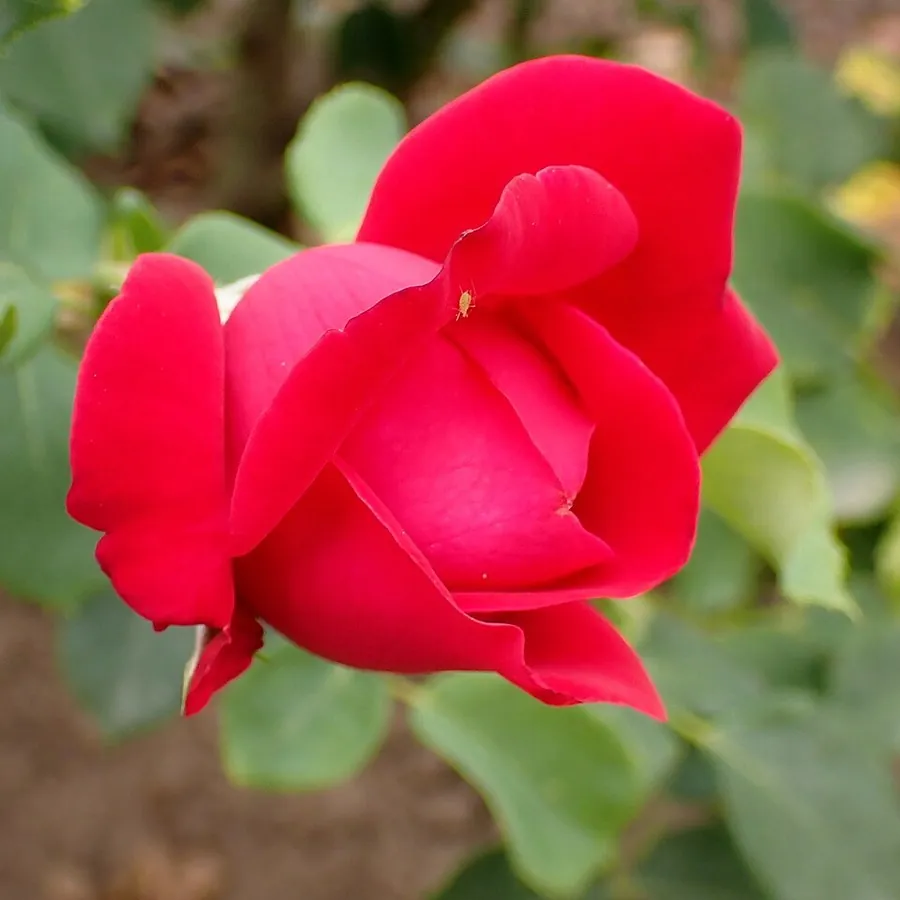
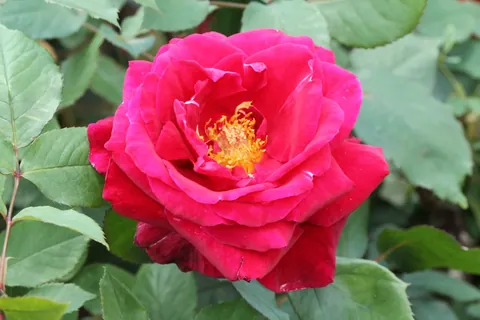
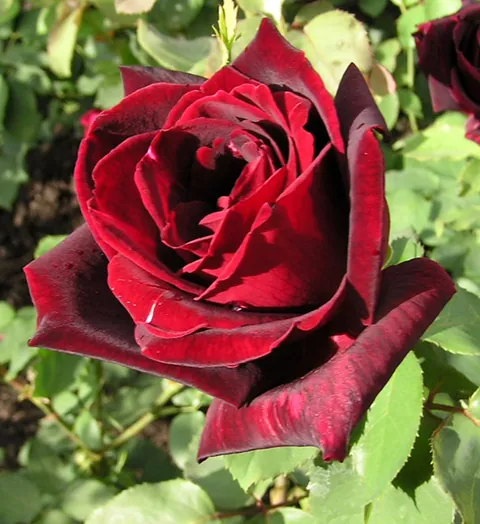
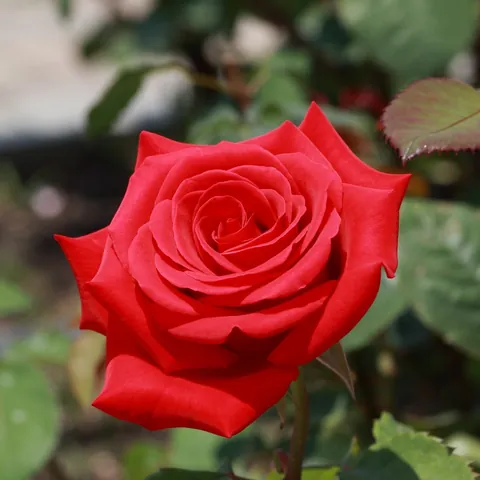




Dame de Coeur, close-up of the flower
Photo: Krzysztof Ziarnek (Kenraiz), CC BY-SA 4.0
Back to catalogue
Hybrid TeaLouis Lens, 1958Red

Dame de Coeur

The classic from Louis Lens: 'Dame de Coeur' has been in production for over 60 years; cherry-red, large (13–14 cm); known for reliability and winter hardiness (to −32 °C); the flower darkens with age rather than fading.

Peace × Independence

Variety profile

Flowering

Repeat, in flushes

Abundant, in waves all season; the flower holds its shape for a long time, both on the bush and in a cut vase. Months are approximate, for the climate of Ukraine.

Awards

Baden-Baden

Silver medal (per the breeder — phrase with care)

Winter hardiness

−32 °C

USDA zone 4b–9b. Very winter-hardy (~−32 °C); standard winter protection in the north, can go without it in the south. Very winter-hardy (~−32 °C) · standard winter protection in the north, can be skipped in the south.

Compare reference temperatures

Plant size

90–120 × 60–70 cm
person 170 cm90–120 cm
Habit
Upright, sturdy, compact and slender
Dimensions
90–120 × 60–70 cm
Support
Not needed; the sturdy straight stems hold the flower up on their own
Shoots
Sturdy and straight; they carry the large flower well, so no support is needed
Branching
No data

Flower

13–14 cm
Bud shape
Bright cherry-red, tall and high-centred
Open flower
Large, 13–14 cm across; it opens from the classic high-centred form into a cupped flower with gracefully curved petal edges
Fullness
~35 petals
Flower carriage
Mostly borne singly, on strong stems; the variety holds up well as a cut flower

Fragrance

Pleasant, sweet; moderate; most noticeable in sunshine

Pleasant, sweet, moderate strength; sources differ in their assessment; most noticeable in sunshine.

Disease resistance

5 out of 5
Black spotresistantPowdery mildewresistant

5/5. The variety is known for reliability: very resistant to powdery mildew and black spot, and heat-tolerant as well.

Sun

Darkens

Does NOT fade in the sun but deepens to dark red; the scent is most noticeable in sunshine.

Thorns

Moderate
thornlessfewmoderatemanyvery many

Little data on thorns; for a large Hybrid Tea a moderate number is typical.

Foliage

No data.

Other names

Herz-Dame, Queen of Hearts, Lady Heart, Röd Peace
All characteristics in a table
Group
Hybrid Tea
Breeder
Louis Lens, Belgium, 1958
Bud shape
Bright cherry-red, tall and high-centred
Open flower
Large, 13–14 cm across; it opens from the classic high-centred form into a cupped flower with gracefully curved petal edges
Colour
Cherry-red: the bud is bright, the open flower a deep velvety cherry. With age it darkens to dark red rather than fading in the sun, a rare and valued trait among red varieties
Fullness
~35 petals
Flower carriage
Mostly borne singly, on strong stems; the variety holds up well as a cut flower
Flowering
Abundant, in waves all season; the flower holds its shape for a long time, both on the bush and in a cut vase
Fragrance
Pleasant, sweet, moderate strength; sources differ in their assessment; most noticeable in sunshine
Hips
No data
Habit
Upright, sturdy, compact and slender
Branching
No data
Shoots
Sturdy and straight; they carry the large flower well, so no support is needed
Thorns
Little data on thorns; for a large Hybrid Tea a moderate number is typical.
Dimensions
90–120 × 60–70 cm
Support
Not needed; the sturdy straight stems hold the flower up on their own
Foliage
No data
Resistance
5/5. The variety is known for reliability: very resistant to powdery mildew and black spot, and heat-tolerant as well
Variations of the variety
No code name; synonyms Herz-Dame, Queen of Hearts, Lady Heart, Röd Peace

Colour scheme

Cherry-red: the bud is bright, the open flower a deep velvety cherry. With age the flower darkens to dark red instead of fading in the sun, a rare and valued trait among red varieties

Rose neighbours

Perennials to plant nearby

Neighbouring roses

Cherry and dark-red Hybrid Teas — the classic red family:

Perennial companions

Cool lilac-blue tones and silver foliage set off the cherry-red bloom:

gypsophilalavendercatmint (Nepeta)Byzantine lamb's ear

Availability worldwide

A classic with more than 60 years in production:

🇧🇪 Belgium: country of origin · Louis Lens🇩🇪 Germany: sold as Herz-Dame🇪🇺 Europe: consistently stocked🇺🇦 Ukraine: found in some nurseries

More about the variety

Hips
No data
Variations of the variety
No code name; synonyms Herz-Dame, Queen of Hearts, Lady Heart, Röd Peace

How to grow

Where to plant. An upright, sturdy bush 90–120 cm tall in a sunny spot, on its own or in a group of red Hybrid Teas. The large cherry-red flowers on strong stems hold their shape well, so the variety looks equally good in a border and as a cut flower. No support needed.

Climate. USDA 4b–9b; very winter-hardy (tolerates about −32 °C). In the north standard winter protection is enough; in the south it can overwinter without cover. Together with high disease resistance and heat tolerance, this makes the variety remarkably easy to grow.

Care. Typical for Hybrid Teas: sun, fertile soil, sanitary and formative pruning. Thanks to strong resistance to powdery mildew and black spot, the need for fungicides is minimal.

About the name

Name. 'Dame de Coeur' means 'Lady of Hearts', i.e. the queen of hearts playing card. Hence the synonyms: German Herz-Dame, English Queen of Hearts and Lady Heart, Swedish Röd Peace ('red Peace').

Breeding. Raised by Louis Lens in Belgium, 1958. Parentage: Peace × Independence; from the legendary 'Peace' it inherited the large flower and sturdiness, and from 'Independence' the rich red colour. It has no code name. According to the breeder it won a silver medal in Baden-Baden (we present this award with caution).

Significance. A true classic of the Lens house; the variety has stayed in production for over 60 years, which in itself shows its reliability. Valued for a trait rare in red roses (it darkens rather than fading in the sun), as well as its large flower, long wave-after-wave flowering all season, and exceptional health and winter hardiness.

Frequently asked questions about Dame de Coeur

Does Dame de Coeur need winter protection?

The cultivar’s reference temperature is −32 °C (USDA zone 4b–9b). Overwintering depends on the conditions. Very winter-hardy (~−32 °C); standard winter protection in the north, can go without it in the south.

How many times a season does Dame de Coeur flower?

Abundant, in waves all season; the flower holds its shape for a long time, both on the bush and in a cut vase.

How big does Dame de Coeur grow?

90–120 cm tall, 60–70 cm wide.

Which diseases affect Dame de Coeur?

Overall resistance: 5 out of 5. Known for reliability; very resistant to powdery mildew and black spot; heat-tolerant.

How much sun does Dame de Coeur need?

Darkens; does NOT fade in the sun but deepens to dark red; the scent is most noticeable in sunshine.

What does Dame de Coeur smell like?

Pleasant, sweet, moderate strength; sources differ in their assessment; most noticeable in sunshine.

Gardeners' photos and reviews

My climate

Choose a reference temperature to compare with the cultivar’s data. This is not an overwintering forecast or advice on winter protection; consider wind, moisture and the duration of frost.

Regional data are generalised. USDA describes average annual extreme minima, not a forecast; the values in the list are rounded. Check the conditions at your site. More information: Roses in Ukraine's climate.