


Back to catalogue
Hybrid Tea; classic American golden HTHerbert C. Swim; Armstrong Nurseries, 1950Yellow

Sutter's Gold

Golden-orange Hybrid Tea with an exceptional fruity fragrance; AARS 1950 + Gamble Fragrance Medal — an award for fragrance in particular; named after California's 1849 gold strike — the gold found at John Sutter's sawmill; parentage Charlotte Armstrong × Signora.

AARS 1950 + Gamble Fragrance Medal + Portland Gold 1946 + Bagatelle Gold 1948

Variety profile

Flowering

Repeat flowering

Generous repeat flowering from June to October. Months are approximate, for the climate of Ukraine.

Legacy

AARS 1950

+ Gamble Fragrance

Winter hardiness

−23 °C

USDA zone 6b. Central and southern Ukraine, with light winter protection.

Compare reference temperatures

Plant size

90–150 × 60–90 cm
person 170 cm90–150 cm
Habit
Upright, powerful — a typical American HT of the 1940s–50s
Dimensions
90–150 cm tall × 60–90 cm wide — a full-size HT for cutting and beds
Support
Not needed — upright shoots hold up on their own
Shoots
Long, straight — ideal for cutting
Branching
Moderately branched, with long straight shoots

Flower

10-12 cm
Bud shape
Long, pointed — the classic American HT silhouette of the 1940s–50s
Open flower
Tall classic Hybrid Tea: 10–12 cm, 28–33 petals
Centre
Densely closed 'goblet-shaped' centre with pointed petals
Fullness
28–33 petals (medium-full)
Flower carriage
Singly on a long stem — ideal for cutting

Fragrance

Strong fruity; Gamble Fragrance Medal

STRONG FRUITY with notes of citrus and peach — Gamble Fragrance Medal (the highest American award for fragrance, the American equivalent of the RNRS Fragrance Award). Noticeable at a distance.

Disease resistance

3 out of 5
Black spotmoderate

Moderate, 3/5 — typical of 1950s HTs; needs moderate prevention against black spot. USDA 6b — central and southern Ukraine with light winter protection.

Sun

Full sun

Thorns

Many
thornlessfewmoderatemanyvery many

Many prickles — typical of 1950s HTs.

Foliage

Medium green, semi-matt.

All characteristics in a table
Group
Hybrid Tea; classic American golden HT
Breeder
Herbert C. Swim; Armstrong Nurseries, USA, 1950
Bud shape
Long, pointed — the classic American HT silhouette of the 1940s–50s
Open flower
Tall classic Hybrid Tea: 10–12 cm, 28–33 petals
Centre
Densely closed 'goblet-shaped' centre with pointed petals
Colour
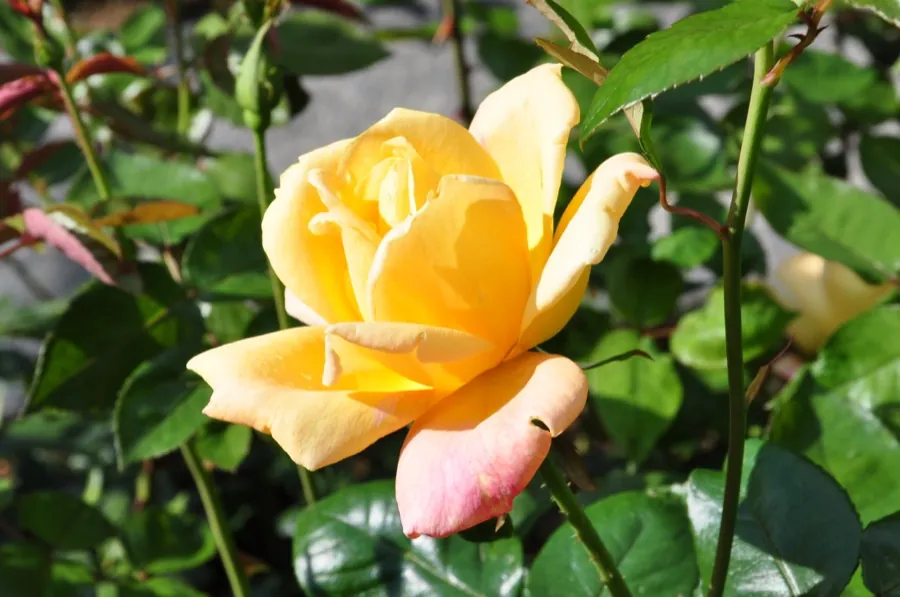
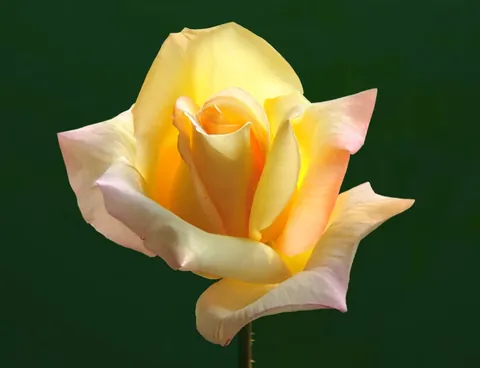
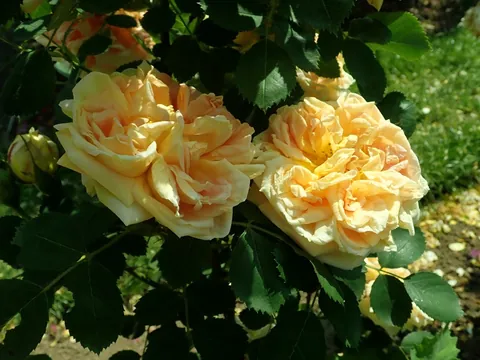
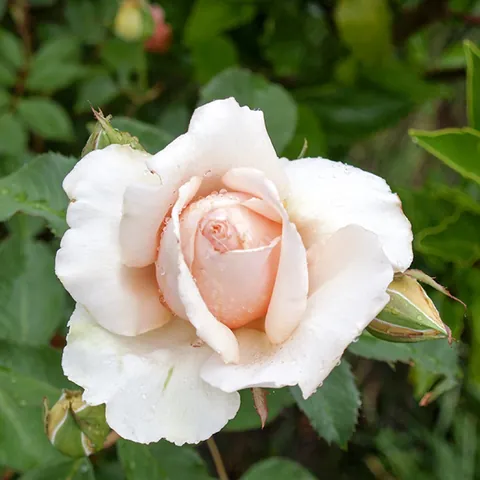
Golden yellow at the centre, with orange-reddish petal edges and a light-yellow reverse. In cool weather the orange deepens; in heat it lightens to clear yellow. A three-colour gradient on a single flower
Fullness
28–33 petals (medium-full)
Flower carriage
Singly on a long stem — ideal for cutting
Flowering
Generous repeat flowering from June to October
Fragrance
STRONG FRUITY with notes of citrus and peach — Gamble Fragrance Medal (the highest American award for fragrance, the American equivalent of the RNRS Fragrance Award). Noticeable at a distance
Hips
Not documented — typically cut
Habit
Upright, powerful — a typical American HT of the 1940s–50s
Branching
Moderately branched, with long straight shoots
Shoots
Long, straight — ideal for cutting
Thorns
Many prickles — typical of 1950s HTs.
Dimensions
90–150 cm tall × 60–90 cm wide — a full-size HT for cutting and beds
Support
Not needed — upright shoots hold up on their own
Foliage
Medium green, semi-matt
Resistance
Moderate, 3/5 — typical of 1950s HTs; needs moderate prevention against black spot. USDA 6b — central and southern Ukraine with light winter protection
Variations of the variety
No original code was assigned in that era (1950s AARS-varieties). Introduced 1950 through Armstrong Nurseries (California). Breeder: Herbert C. Swim (1907–1988) — one of the most influential American rose hybridisers of the twentieth century, creator of Mister Lincoln, Charlotte Armstrong and Mojave. Parentage: 'Charlotte Armstrong' × 'Signora'

Colour scheme

Golden yellow at the centre, with orange-reddish petal edges and a light-yellow reverse. In cool weather the orange deepens; in heat it lightens to clear yellow. A three-colour gradient on a single flower

Rose neighbours

Perennials to plant nearby

Neighbouring roses

'Golden' historic HTs — they make a warm genealogical composition:

Perennial companions

A sunny palette with purple accents — it brings out the gold:

coreopsislavenderStachyscatmint (Nepeta)

Availability worldwide

Classic American HT of the 1950s — essential in historic collections:

  • 🇺🇸 USA: high · home country, AARS classic
  • 🇪🇺 Europe: moderate · collector nurseries
  • 🇬🇧 UK: moderate
  • 🇺🇦 Ukraine: rare · via collectors who import them

More about the variety

Hips
Not documented — typically cut
Variations of the variety
No original code was assigned in that era (1950s AARS-varieties). Introduced 1950 through Armstrong Nurseries (California). Breeder: Herbert C. Swim (1907–1988) — one of the most influential American rose hybridisers of the twentieth century, creator of Mister Lincoln, Charlotte Armstrong and Mojave. Parentage: 'Charlotte Armstrong' × 'Signora'

How to grow

Where to plant. Near places to sit (bench, terrace) to enjoy the fruity fragrance; as a 'golden' solo accent in a bed; in a fragrance corner; in 'genealogical' collections of American HTs alongside Peace, Mister Lincoln and Charlotte Armstrong; for cutting — a bed of long-stemmed plants.

Climate. Central and southern Ukraine with light winter protection (USDA 6b); tolerates summer heat well.

Care. Full sun; prevention of black spot is essential; feed 3× per season; prune by ⅓ in spring; water at the root, not on the leaves.

About the name

Name. 'Sutter's Gold' = 'Sutter's gold'. Named after John August Sutter (1803–1880), a German-Swiss pioneer in California, at whose sawmill James Marshall found the first gold flakes in the American River in 1848 — the official start of the California Gold Rush (1848–1855), which changed the history of the United States. The golden-orange colour of the flower is like those same flakes. A poetic American name linking the rose to a historic event.

Breeding. Bred by Herbert C. Swim (1907–1988) at Armstrong Nurseries (Ontario, California). Introduced 1950. Parentage: 'Charlotte Armstrong' (Lammerts 1940 AARS) × 'Signora' (Aicardi 1936). Herbert Swim was one of the most influential American rose hybridisers of the twentieth century, the creator of Mister Lincoln (1964 AARS), Mojave (1954 AARS) and Helen Traubel (1952 AARS).

Significance. AARS 1950 (All-America Rose Selections — the main American award for garden roses, the analogue of the European ADR). The Gamble Fragrance Medal is the highest American award for rose fragrance, the analogue of the British RNRS Fragrance Award. Sutter's Gold stands among the most fragrant HT XX roses (Hybrid Teas of the twentieth century). Portland Gold Medal 1946 + Bagatelle Gold Medal 1948 (Paris) — awards before its official introduction, a rare occurrence. A classic American golden HT of the 1950s, the peak of the Hybrid Tea era, when AARS-varieties became the standard garden rose around the world. A strong fruity fragrance is a rare quality for yellow HTs (most yellow roses inherit a weak or 'foxy' scent from Soleil d'Or). A three-colour gradient on one flower — gold, orange and a yellow reverse.

Frequently asked questions about Sutter's Gold

Does Sutter's Gold need winter protection?

The cultivar’s reference temperature is −23 °C (USDA zone 6b). Overwintering depends on the conditions. Central and southern Ukraine, with light winter protection.

How many times a season does Sutter's Gold flower?

Generous repeat flowering from June to October.

How big does Sutter's Gold grow?

90–150 cm tall, 60–90 cm wide.

Which diseases affect Sutter's Gold?

Overall resistance: 3 out of 5. Moderate; typical of 1950s HTs; needs prevention.

How much sun does Sutter's Gold need?

Sun; full sun.

What does Sutter's Gold smell like?

STRONG FRUITY with notes of citrus and peach — Gamble Fragrance Medal (the highest American award for fragrance, the American equivalent of the RNRS Fragrance Award). Noticeable at a distance.

Gardeners' photos and reviews

My climate

Choose a reference temperature to compare with the cultivar’s data. This is not an overwintering forecast or advice on winter protection; consider wind, moisture and the duration of frost.

Regional data are generalised. USDA describes average annual extreme minima, not a forecast; the values in the list are rounded. Check the conditions at your site. More information: Roses in Ukraine's climate.