



Back to catalogue
Large-Flowered ClimberMichele Malandrone, 1958Red

Don Juan

US PP1864; parentage New Dawn × New Yorker; the most popular red climber of the second half of the twentieth century in the US, 'popular fame without academic recognition'.

Climbing Hybrid Tea · Jackson & Perkins

Variety profile

Flowering

Repeat, in flushes

In waves throughout the season; repeats well when spent flowers are removed. Months are approximate, for the climate of Ukraine.

Awards

PP1864

US Patent 1959 · a legendary J&P bestseller

Winter hardiness

−23 °C

USDA zone 6b–9b. In Zone 5 with protection; in Ukraine with moderate protection. In Zone 5 with winter cover · in Ukraine with moderate winter cover.

Compare reference temperatures

Plant size

250–425 × 120–180 cm
person 170 cm250–425 cm
Habit
A powerful climber with large, sturdy stems
Dimensions
250–425 cm tall × 120–180 cm wide (8–14 feet)
Support
Needs support: arch, pergola, trellis or south wall
Shoots
Long and sturdy; suitable for cutting, and well formed on a support
Branching
Good; over time it forms a large framework

Flower

10–13 cm
Bud shape
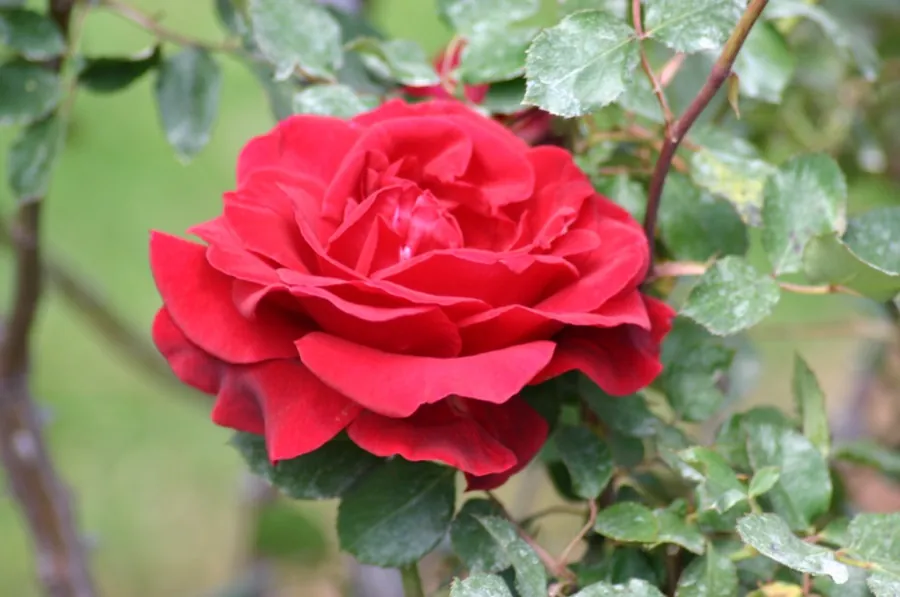
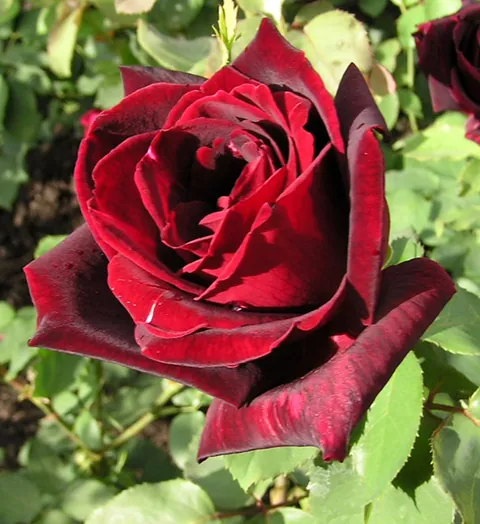
Elongated, high-centred, dark velvety red
Open flower
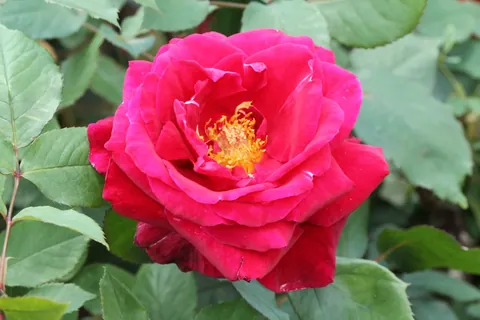
Large, full, cupped, with a highlighted HT-type centre; 10–13 cm across
Centre
Dense dark red heart with contrasting red stamens
Fullness
Full, 30–35 petals (sometimes up to 40)
Flower carriage
Mostly large flowers borne singly on the stem; ideal for cutting

Fragrance

Strong

Medium to strong; one of the few fragrant red climbers; a classic rose scent with fruity notes.

Disease resistance

4 out of 5
Black spotresistant

Good, but not 'armoured'; may need black spot prevention in humid climates.

Sun

6 hours

At least 6 hours of full sun for abundant flowering.

Thorns

Few
thornlessfewmoderatemanyvery many

Large but infrequent thorns.

Foliage

Dark green, leathery.

All characteristics in a table
Group
Large-Flowered Climber
Breeder
Michele Malandrone, 1958
Bud shape
Elongated, high-centred, dark velvety red
Open flower
Large, full, cupped, with a highlighted HT-type centre; 10–13 cm across
Centre
Dense dark red heart with contrasting red stamens
Colour
Deep dark velvety red; it does not 'blacken', keeping its colour evenly throughout the flowering, a rare trait among dark reds
Fullness
Full, 30–35 petals (sometimes up to 40)
Flower carriage
Mostly large flowers borne singly on the stem; ideal for cutting
Flowering
In waves throughout the season; repeats well when spent flowers are removed
Fragrance
Medium to strong; one of the few fragrant red climbers; a classic rose scent with fruity notes
Hips
As a rule does not set hips (because of the fullness of the flower and deadheading)
Habit
A powerful climber with large, sturdy stems
Branching
Good; over time it forms a large framework
Shoots
Long and sturdy; suitable for cutting, and well formed on a support
Thorns
Large but infrequent thorns.
Dimensions
250–425 cm tall × 120–180 cm wide (8–14 feet)
Support
Needs support: arch, pergola, trellis or south wall
Foliage
Dark green, leathery
Resistance
Good, but not 'armoured'; may need black spot prevention in humid climates
Variations of the variety
No official sports

Colour scheme

Deep dark velvety red; it does not 'blacken', keeping its colour evenly throughout the flowering, a rare trait among dark reds

Rose neighbours

Perennials to plant nearby

Neighbouring roses and clematis

Blue and purple clematis — the classic partner for a dark red climber; plus Dortmund as a red partner:

Clematis 'Perle d'Azur'Clematis 'Étoile Violette'Clematis 'Polish Spirit'Dortmund

Perennial companions

Blue and purple underplanting + formal box (Buxus):

catmint 'Walker's Low'lavender 'Hidcote'Geranium 'Rozanne'box (edging)

Availability worldwide

The most popular red climber in the USA — widely available:

  • 🇪🇺 Europe: Pharmarosa · en.rose.it · Italian nurseries
  • 🇺🇸 USA: J&P (originator) · Grace · Heirloom · Wayside · Spring Hill
  • 🇻🇳 Asia: Vietnam (SG Rose Corner, 'Co Hai Phong') · Japan
  • 🇺🇦 Ukraine: Yaskrava Klumba · Megasad · Tsvitsad · Tetianyn Sad

More about the variety

Hips
As a rule does not set hips (because of the fullness of the flower and deadheading)
Variations of the variety
No official sports

How to grow

Where to plant. Arches, pergolas, trellises, south walls of houses; a powerful vertical up to 4 metres; excellent for cutting thanks to its long, sturdy stems.

Climate. Down to −23 °C; in Ukraine with moderate protection in the northern regions, and without cover in the south.

Care. Formative pruning of the climber is light; it is important to train the main shoots horizontally. In humid climates, prevent black spot. Removing spent flowers encourages new waves.

About the name

Name. After Don Juan, the legendary seducer of XVII-century Spanish literature (created by Tirso de Molina in 1630, later used by Mozart, Byron and Pushkin). The name captures the dramatic, passionate, dark-red velvety nature of the variety.

Breeding. Raised by Michele Malandrone in Italy in 1958; introduced to the US through Jackson & Perkins, patent US PP 1,864 (15 September 1959). Parentage: a seedling of 'New Dawn' × 'New Yorker' (Boerner 1947, HT).

Significance. The most popular red climber in the US in the second half of the twentieth century. A little-known Italian breeder created a variety that J&P made a bestseller for a decade: a rare example of a breakthrough, when flower quality, scent and hardiness outweighed the lack of awards. Don Juan has no major official trophies (ADR, WFRS); that is its special feature: 'popular fame without academic recognition'. In Ukraine it is one of the best-selling red climbers.

Frequently asked questions about Don Juan

Does Don Juan need winter protection?

The cultivar’s reference temperature is −23 °C (USDA zone 6b–9b). Overwintering depends on the conditions. In Zone 5 with protection; in Ukraine with moderate protection.

How many times a season does Don Juan flower?

In waves throughout the season; repeats well when spent flowers are removed.

How big does Don Juan grow?

250–425 cm tall, 120–180 cm wide.

Which diseases affect Don Juan?

Overall resistance: 4 out of 5. Good; needs prevention of black spot in humid climates.

How much sun does Don Juan need?

Sun; at least 6 hours of full sun for abundant flowering.

What does Don Juan smell like?

Medium to strong; one of the few fragrant red climbers; a classic rose scent with fruity notes.

Gardeners' photos and reviews

My climate

Choose a reference temperature to compare with the cultivar’s data. This is not an overwintering forecast or advice on winter protection; consider wind, moisture and the duration of frost.

Regional data are generalised. USDA describes average annual extreme minima, not a forecast; the values in the list are rounded. Check the conditions at your site. More information: Roses in Ukraine's climate.